Gefion Fountain
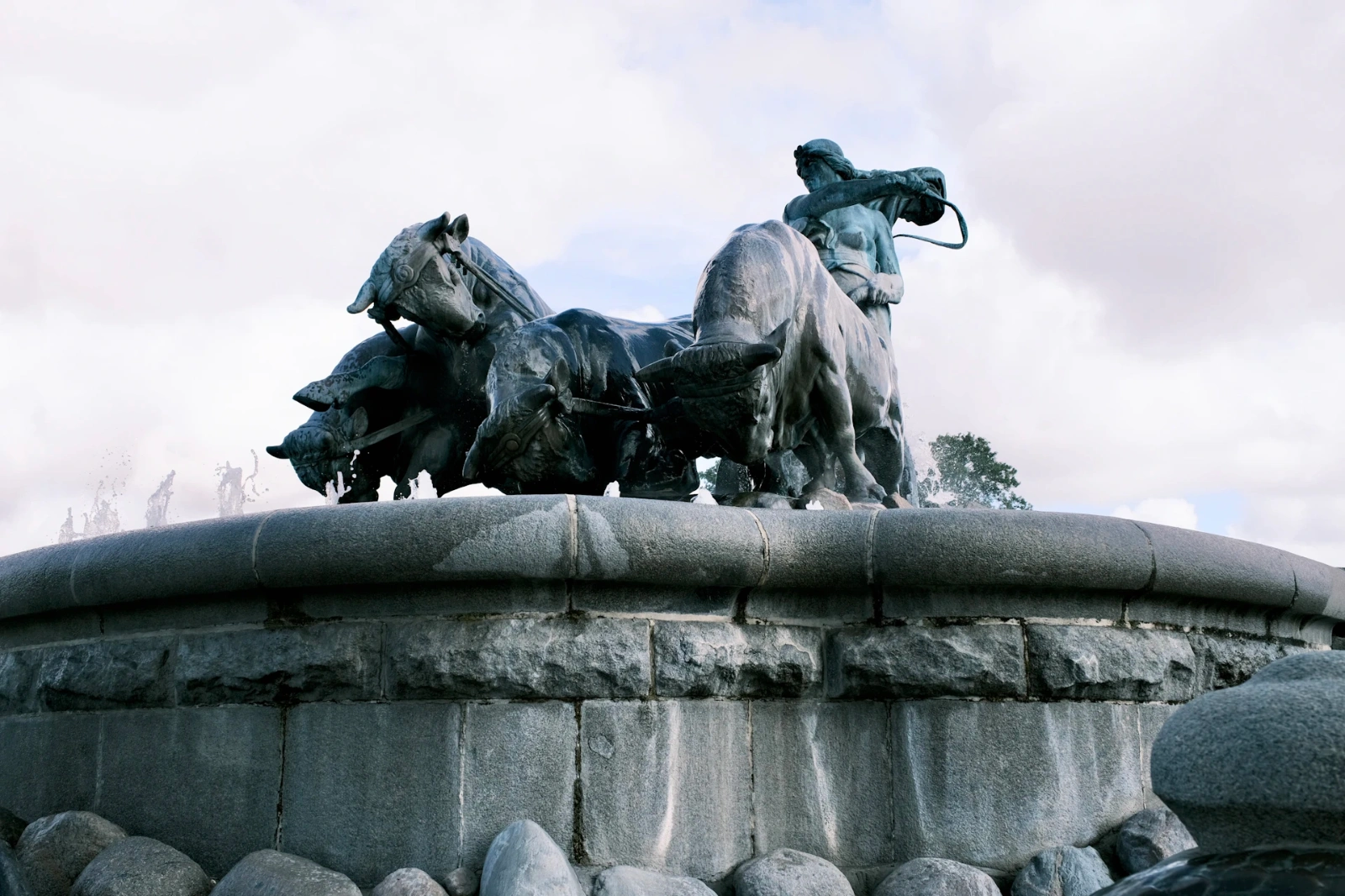
Quick facts: Gefion Fountain is a monumental sculpture in Copenhagen, Denmark, depicting a Norse goddess and her oxen.
- It illustrates the legend of Gefion plowing the island of Zealand from Sweden using her transformed sons.
- Completed in 1908 and funded by the famous Carlsberg Foundation, it’s a significant piece of Danish art.
- The fountain's impressive scale and powerful artistry make it a unique cultural landmark near Kastellet fortress.
The story behind...
Ah, welcome, welcome! So glad you're taking a moment to admire the Gefion Fountain. It's quite a sight, isn't it? Now, there's more to this impressive sculpture than meets the eye.
Let's start with the basics. The fountain depicts the Norse goddess Gefion, who, according to legend, plowed the island of Zealand – that's the very island we're standing on – out of Sweden. She used her four sons, transformed into oxen, for the task. Quite the family workout! Belief in these Norse gods was common until Christianity took root in the Nordics around the year 1000.
The fountain was designed by Anders Bundgaard and completed in 1908. It was initially intended for City Hall Square, but it ended up here, near the Kastellet fortress. And I must say, this location suits it perfectly.
Now, a little about Gefion herself. She's a goddess associated with plowing, fertility, and abundance. In Old Norse, her name means "giving" or "generous." So, this fountain isn't just a pretty picture; it's a nod to the land, its creation, and the gifts it provides.