Agnete Merman Statue
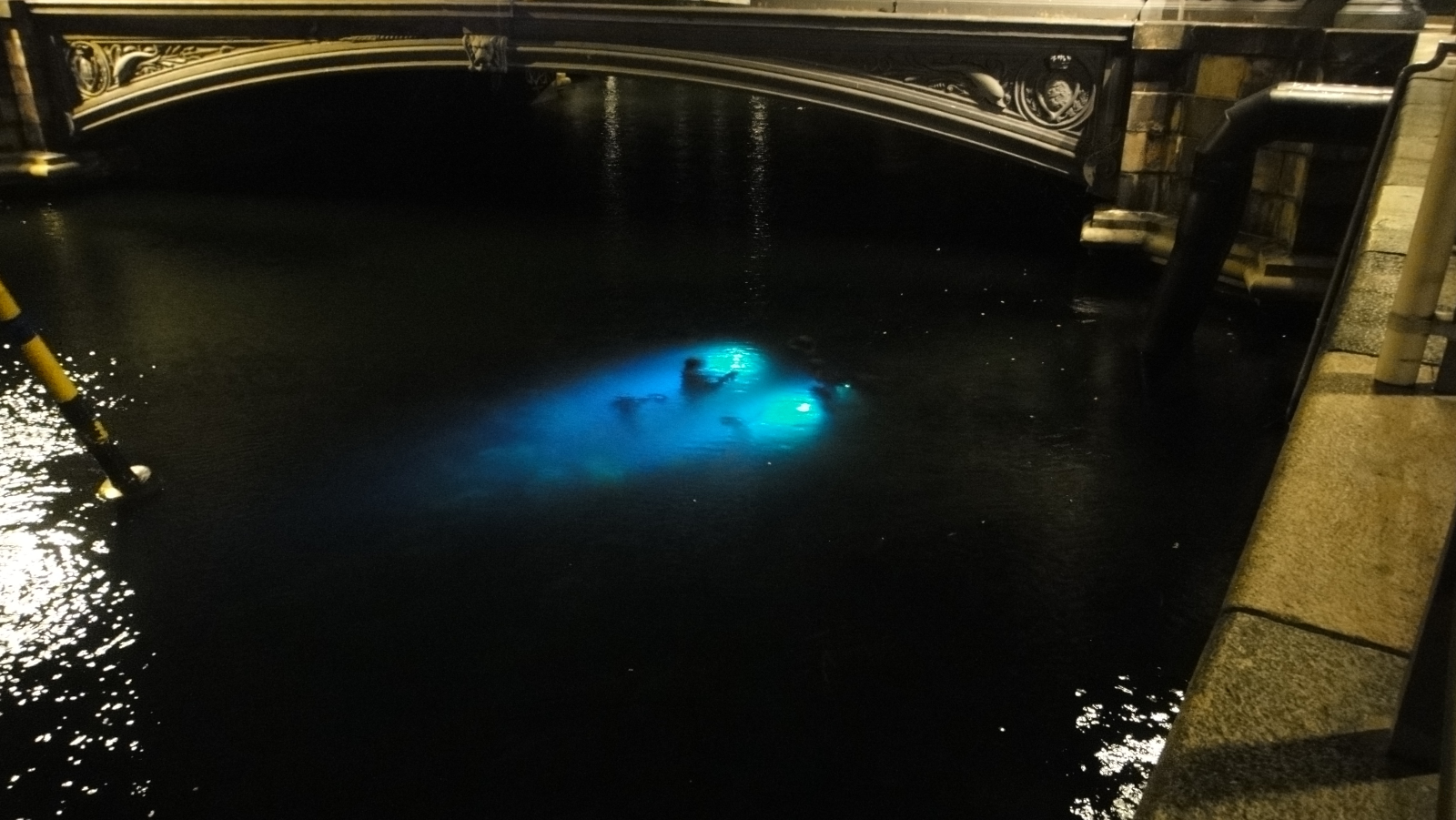
"Agnete and the Merman sculptures" by Nettadi / CC BY-SA 4.0
Quick facts: The Agnete and the Merman Statue in København, Denmark depicts a tragic mythical love story.
- It's uniquely located underwater, adding mystery.
- Inspired by a famous Danish ballad of a human and merman.
- Symbolizes universal themes of lost love and regret.
The story behind...
Here, under the surface of the canal near Christiansborg Palace, you’ll find a rather unique sculptural group depicting Agnete and the Merman. It's not always easy to spot, especially if the water is murky or the level is high, which is part of its intrigue.
Created by artist Suste Bonnén and installed in 1992, these seven bronze figures tell a story from a well-known Danish folk ballad: "Agnete og Havmanden" – Agnete and the Merman. The tale speaks of Agnete, a human woman who falls in love with a merman, goes to live with him underwater, and bears him several children. One day, she hears church bells from the land above. Compelled by the sound, she asks to visit her mother, promising to return. But once on land, she never goes back to her merman husband and their children, choosing her human life over her underwater family.
Suste Bonnén chose to place her figures at the bottom of the canal precisely because of this story. The merman and his children are shown reaching up, forever waiting for Agnete, who has left them. This placement makes the piece feel like a forgotten or hidden part of the city, much like Agnete’s abandoned family.
While many visitors are familiar with The Little Mermaid statue, this artwork offers a different kind of submerged narrative, one that explores themes of choice and abandonment. It quietly tells a part of Danish folklore, reminding us of the enduring power of these old stories, even when they’re tucked away beneath the bustling city. The fact that the figures are often out of sight, beneath the water, truly captures the nature of the ballad – a world half-seen, half-forgotten by the surface dwellers.