.webp)


TLDR: Braga is Portugal's oldest city, founded by Romans in 16 BC. Its highlights include the medieval Sé Cathedral, the Baroque staircase at Bom Jesus do Monte, and Portugal's most dramatic Holy Week processions. One to two days is enough to see the essentials.
Most people visiting northern Portugal make Porto their base and leave it at that. After spending time in Braga, I'd argue that's a mistake.
This city is just 50 minutes from Porto by train, but it feels like a different Portugal entirely. Fewer crowds, fewer tourist traps, more of that slow northern energy where people sit in squares for hours and churches seem to outnumber cafes. It has more than 2,000 years of history layered across a compact, walkable centre, and it's still the country's religious heart.
This article will guide you through the city and tell you everything you need to know about Braga.
What is the story behind Braga?

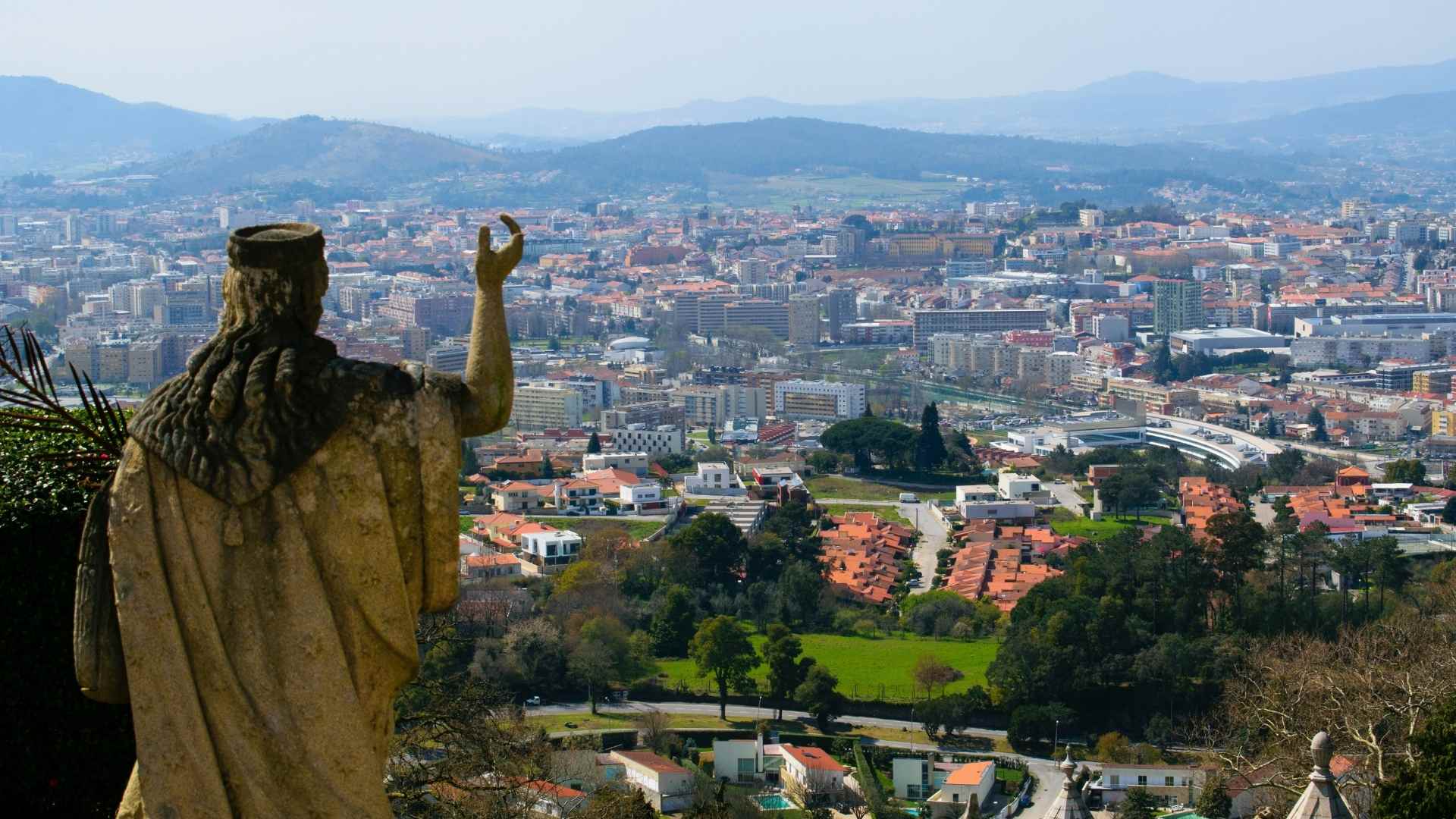
Braga is Portugal's oldest city. The Romans founded it around 16 BC, naming it Bracara Augusta in honour of Emperor Augustus. It served as the capital of the Roman province of Gallaecia and sat at the crossroads of five major Roman military roads. Long before Portugal existed as a country, Braga was already a regional power.
Its Christian roots go back to the 3rd century AD, and the city became an archiepiscopal seat with enormous political and religious influence throughout the Middle Ages. That history explains why Braga earned the nickname the "Rome of Portugal". It's not just a marketing line. For centuries, the Archbishop of Braga wielded both spiritual and temporal authority over much of the Iberian northwest.
Walking through the historic centre, you feel that weight of accumulated history in a way that's hard to pin down but impossible to ignore.
What are the top things to do in Braga?
The top things to do in Braga - which you can read all about in our article here - are concentrated in and around the historic centre, and most are within walking distance of each other.
A few essentials:
- Sé de Braga (Cathedral): Portugal's oldest cathedral, begun in 1070. Admission runs around €2–5 depending on which sections you visit.
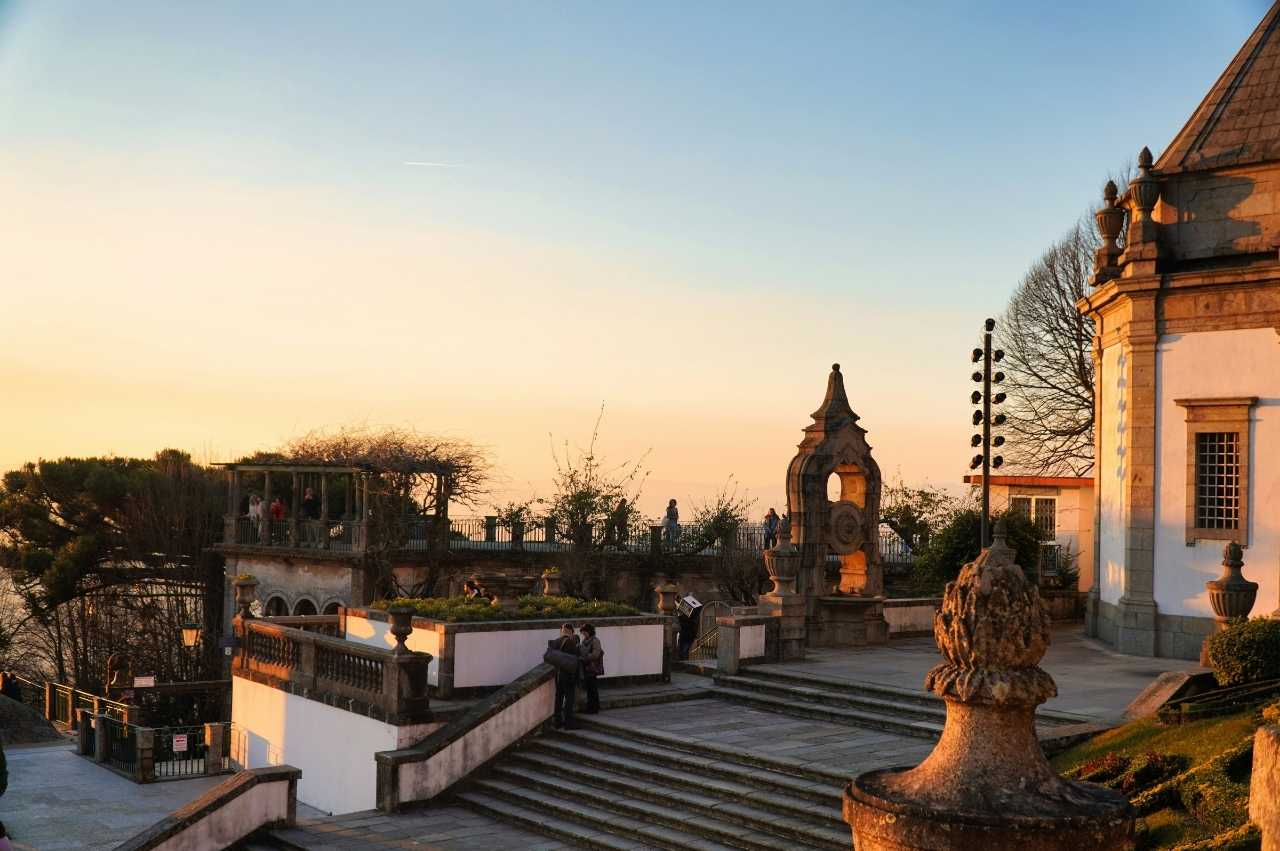
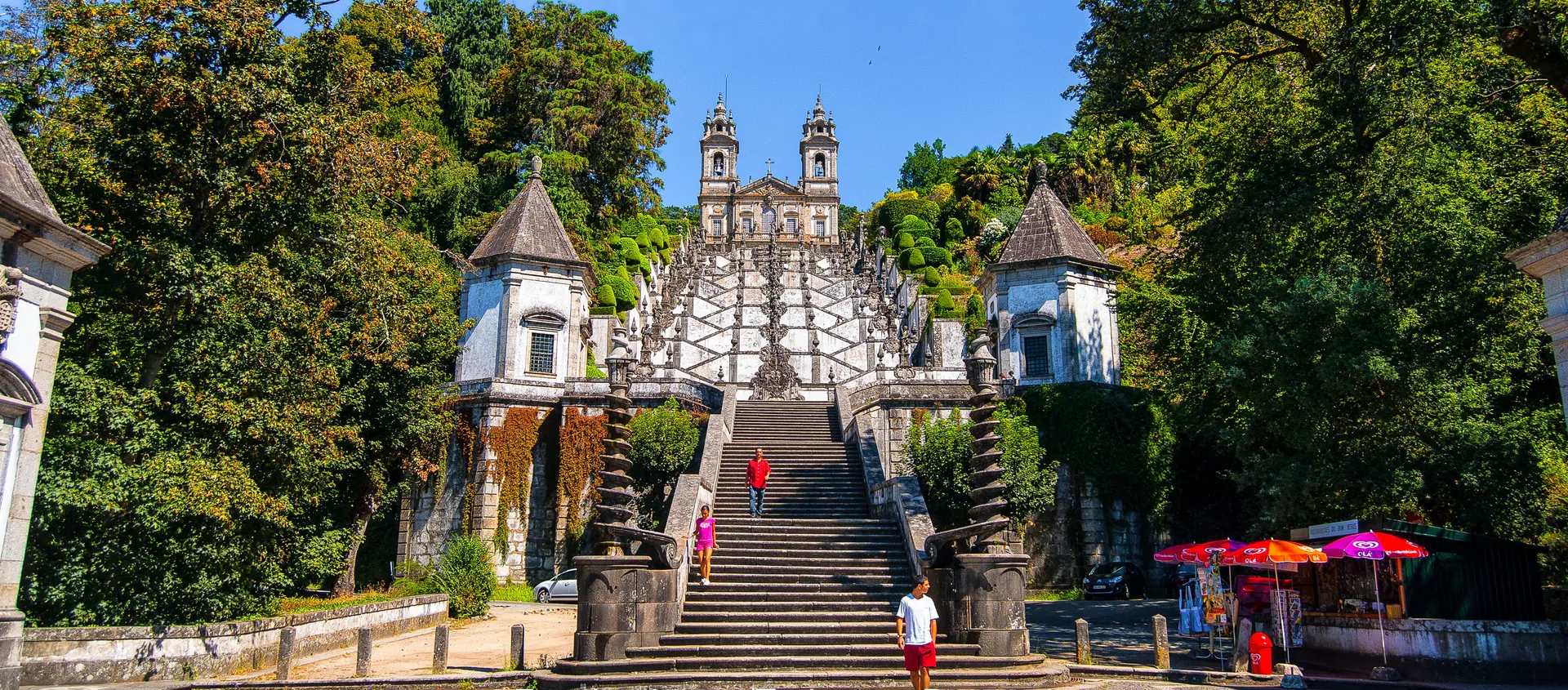
- Bom Jesus do Monte: The city's most photographed landmark, about 6 km from the centre. A Baroque staircase of 573 steps winds up a forested hillside to a neoclassical basilica.
- Jardim de Santa Bárbara: A formal garden tucked beside the ruins of the Archbishop's Palace, arguably one of the prettiest corners in northern Portugal.
- Arco da Porta Nova: The 18th-century Baroque arch that marks the entrance to the old town.
- Bracara Augusta Roman Baths (Alto da Cividade): Excavated ruins of Roman thermal baths covering over 800 square metres, rediscovered in 1977.
The StoryHunt app is a good companion for exploring Braga on foot. You can follow an audio walk at your own pace, picking up stories about the Roman grid that still underlies the modern city, the medieval archbishops, and the Baroque building boom of the 18th century that shaped so much of what you see today. Download StoryHunt for free and start your walk from the cathedral.
Is Bom Jesus do Monte worth the climb?

Yes, and the staircase is more interesting than the church at the top. The Baroque Escadaria dos Cinco Sentidos (Stairway of the Five Senses) zigzags up the hill through fountains representing the five senses and then the three theological virtues. The construction was commissioned by the Archbishop of Braga in 1722 and took over a century to complete. The sanctuary became a UNESCO World Heritage Site in 2019.
If climbing isn't an option, there's the water-powered funicular built in 1882. It's the oldest water-balanced funicular still operating in the Iberian Peninsula, and the three-minute ride up a 42-degree incline is a notable piece of 19th-century engineering in its own right. A single ticket costs around €2. The honest advice is to climb up and take the funicular back down, or vice versa. Skipping the staircase entirely means missing the point of the visit.
What is Braga Cathedral like inside?
The Sé de Braga is Portugal's oldest cathedral, with construction beginning around 1070. What makes it genuinely interesting is the architectural layering. Romanesque structure, Manueline roofing and towers (the same craftsman who built the Jerónimos Monastery in Lisbon worked here), Gothic chapels, and Baroque organs and altarpieces added over centuries. It's a slow accumulation rather than a unified design.
The Treasury Museum inside holds a chalice said to have been used during the first Mass celebrated in Brazil, along with religious artefacts spanning several centuries. The tomb of Henry of Burgundy and his wife Teresa, parents of Portugal's first king, is in the Chapel of the Kings. That alone gives the cathedral an outsized role in Portuguese national history.
Opening hours are roughly 9:30–12:30 and 14:30–17:30 daily, though these can shift around religious events.
When is the best time to visit Braga?

Spring and early autumn are the most comfortable months. May and June offer warm days, manageable crowds, and green surroundings around Bom Jesus. September keeps that warmth while the summer peak drops off. July and August are hotter and busier, though Braga never reaches Lisbon-level saturation with tourists.
If you're interested in Portuguese religious tradition, visiting during Holy Week is worth planning around. Braga's Semana Santa is the most elaborate in Portugal, with large nocturnal processions winding through medieval streets, thousands of participants, and centuries-old ritual elements. It draws significant visitor numbers, so book accommodation well in advance if that's your target. Winter is quiet and affordable, but rain is frequent in December and January, and the city feels significantly less alive.
How do you get to Braga from Porto?
The train is the most straightforward option. From Porto's São Bento or Campanhã stations, services run regularly throughout the day, with the journey taking around 50–75 minutes depending on the type of service. A single ticket costs approximately €3.60. If you're travelling from Porto Airport, the Getbus service connects directly to Braga in around 50 minutes for €9.
Braga works well as a day trip from Porto, though an overnight stay gives you a different experience. The squares fill with university students in the evening, the light on the old buildings changes completely, and you get a sense of the city beyond its tourist footprint. One full day covers the cathedral and the historic centre comfortably. Add attractions like Praca da Republica, Palacio Do Raio, and Museu dos Biscainhos, and it becomes a long day.
Two days is the right amount if you want to move at a reasonable pace.
Where should you eat in Braga?

Northern Portuguese food is hearty and unapologetic. Rojões à Minhota (pork fried in lard with chestnuts and blood sausage) and Bacalhau à Braga (salt cod with onions and hard-boiled eggs) are the regional standards worth trying. Wash either down with Vinho Verde, the lightly sparkling young wine that comes from the surrounding Minho region.
The best restaurant in Braga for traditional Minho cooking tends to be found on side streets away from Praça da República, where prices are lower and the rooms are quieter.
Braga also has a large student population from the University of Minho, which keeps the cafe culture strong and the neighbourhood restaurant scene honest. Lunch menus (prato do dia) at small tascas run €7–10 and include soup, a main course, and sometimes dessert. That's where locals eat.
Are there hidden gems in Braga?
Quite a few. Most visitors stick to the cathedral and Bom Jesus, which means several things get overlooked. The hidden gems in Braga worth seeking out include the Fonte do Ídolo, a Roman shrine carved directly into a rock face and dedicated to a local pre-Roman deity. It's one of the best-preserved Roman monuments in the city and most people walk past it.
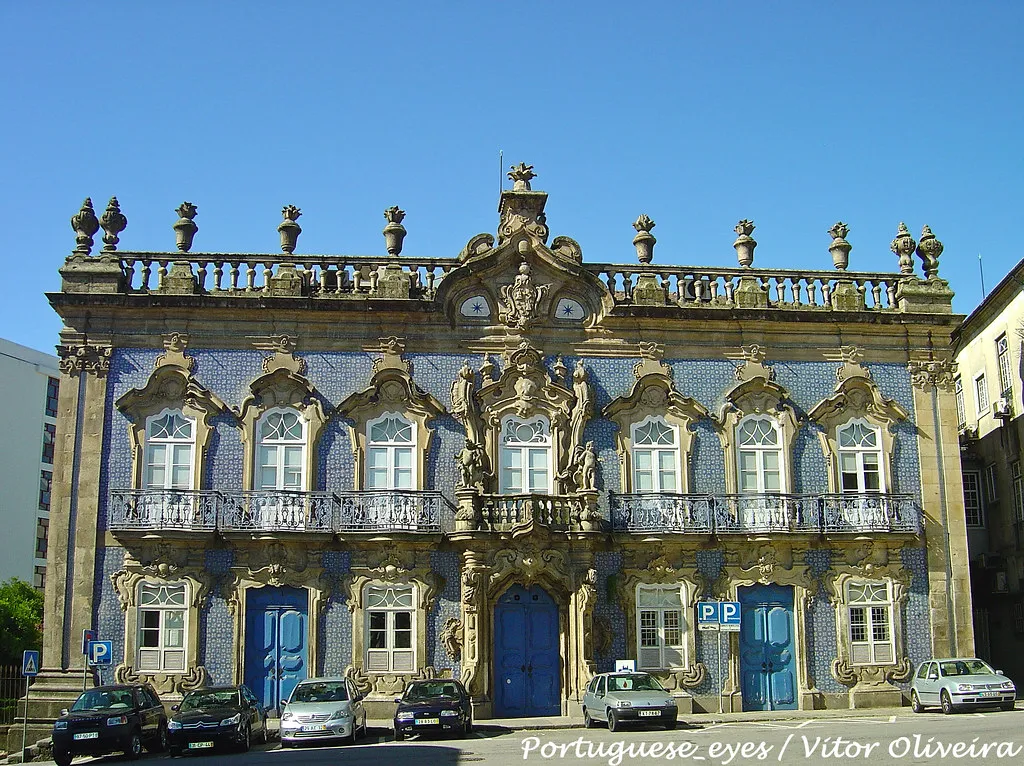
The Palácio do Raio is another one. This blue-tiled Baroque facade on a busy street stops you in your tracks. The azulejo tilework is extraordinary, and it doesn't get the attention it would in Lisbon or Porto. The Jardim dos Biscainhos, an 18th-century garden attached to a Baroque palace, is open to the public and almost always quiet.
If you want guidance to spots like these, the StoryHunt app maps routes that go beyond the main circuit and include the context that makes these places make sense.
Is Braga worth visiting?
Yes, especially if you're spending more than three days in northern Portugal. Braga doesn't have the harbour drama of Porto or the Atlantic coastline nearby, but it offers something harder to find: a Portuguese city that still functions primarily for its own residents rather than its visitors. The historic centre is genuinely old, the food is regional and unfussy, and the religious heritage goes beyond decoration. It's not the most spectacular city in Portugal, but it might be the most genuinely lived-in.
Families with young children may find the church-heavy itinerary less engaging. History lovers, architecture enthusiasts, and anyone interested in Portuguese religious culture will get more out of it than most. One full day is the minimum. Two days is better.
Braga rewards the visitor who does a little preparation. Knowing that the cathedral contains the tomb of Portugal's founding dynasty, or that the Bom Jesus staircase was designed as a physical representation of spiritual purification, changes how you experience those places. Download the StoryHunt app for a free audio walk through Braga's historic centre. The interactive map connects the Roman ruins, the medieval cathedral, and the Baroque churches with the stories that hold them together, and you can follow it entirely at your own pace.





.avif)


