
.webp)


TLDR: Braga packs a cathedral older than Portugal itself, a UNESCO-listed Baroque staircase, Roman ruins, and some of the finest Baroque architecture in the country into a compact, walkable historic centre. These are the top attractions worth building your visit around.
Braga tends to reward visitors who arrive with low expectations and leave surprised. It doesn’t try to sell itself the way Lisbon or Porto do. The streets are quieter, the crowds are manageable, and the history runs deeper than most people realise when they step off the train.
After spending real time in this city, these are the attractions that actually stick - the ones worth seeing on their own terms, not just because they appear on every listicle.
Use this article and the interactive map in the bottom to plan your perfect day in Braga.
1. StoryHunt: Discover the city with an interactive map

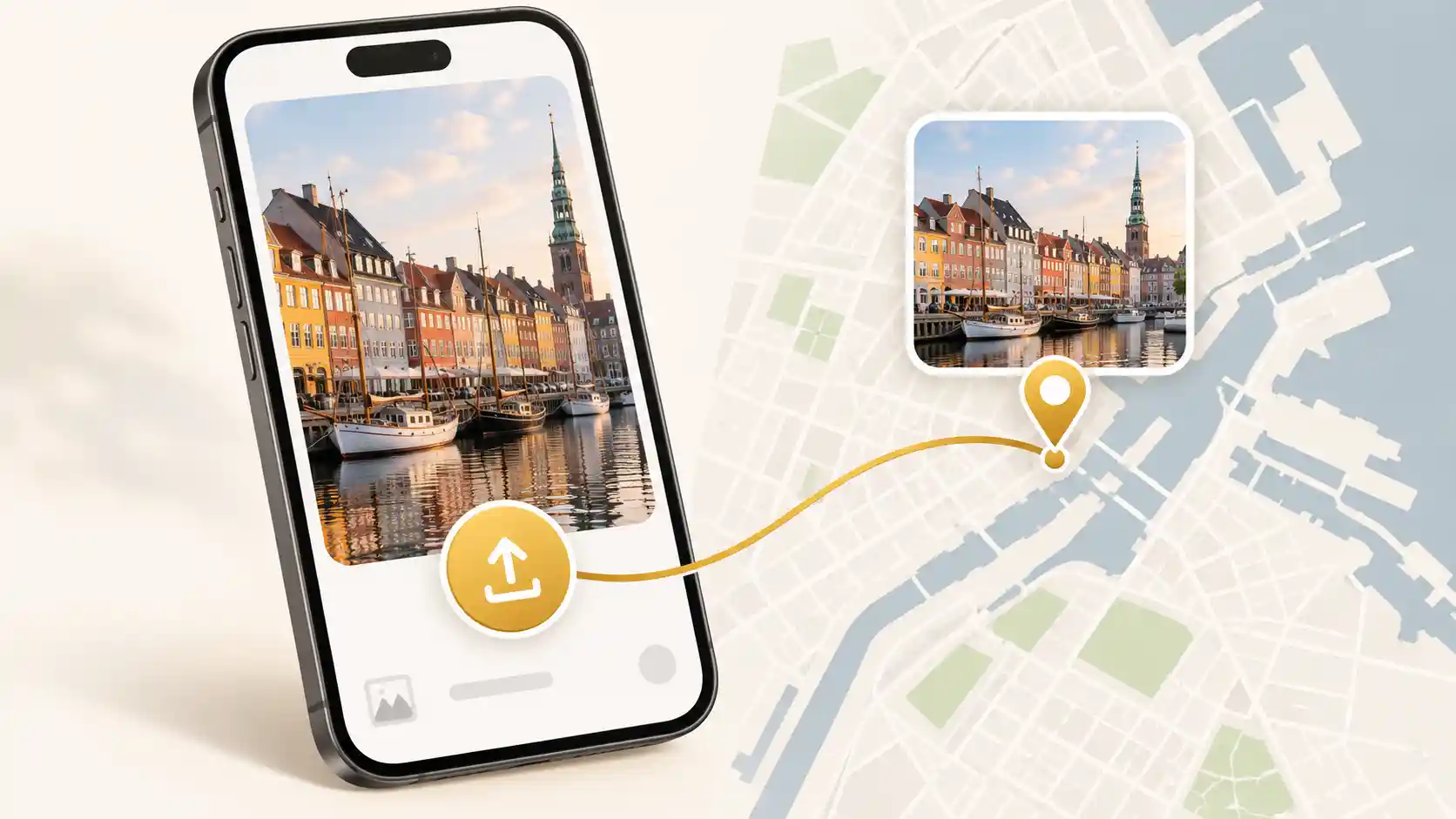
Before heading out, download the StoryHunt app. The interactive map plots Braga’s top attractions - the cathedral, Bom Jesus, the Roman baths, the Baroque gardens, and more - so you can navigate the city at your own pace while the audio guide fills in the history and stories behind each place. It’s the difference between walking past something old and actually understanding what you’re looking at.
StoryHunt works especially well in a city like Braga, where the interesting details are layered beneath the surface. The Roman street grid that still shapes modern Braga, the cathedral that predates the Portuguese nation, the Archbishop’s grip on politics for 500 years - none of it is obvious from the outside. The app surfaces those stories as you walk.
2. Bom Jesus do Monte

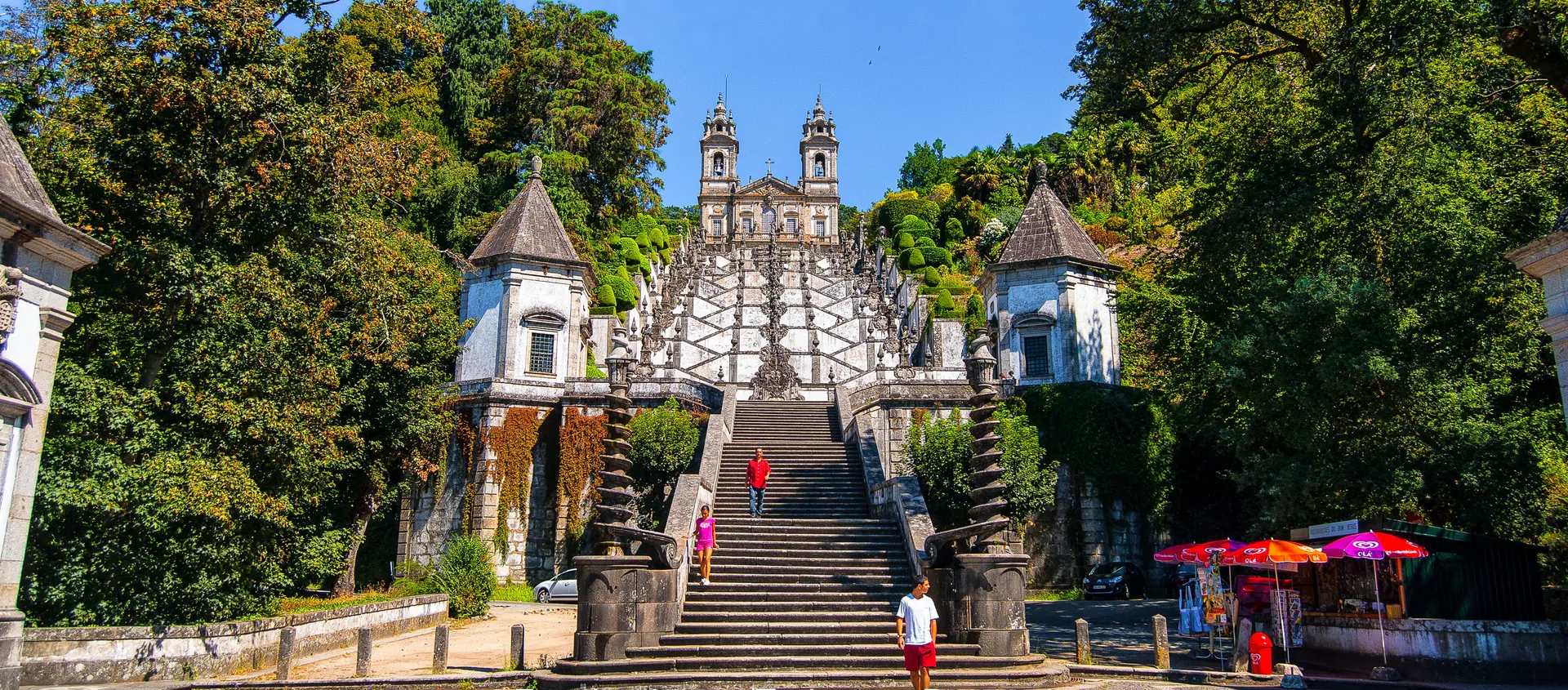
Braga’s most photographed landmark sits, Bom Jesus do Monte, 6 km east of the city centre: a neoclassical basilica perched on a forested hilltop, reached by a Baroque staircase of 573 steps. The Escadaria dos Cinco Sentidos (Stairway of the Five Senses) zigzags up through fountains representing the five senses and then the three theological virtues. It’s more interesting than the church at the top.
Construction was commissioned by the Archbishop of Braga in 1722 and took over a century to complete. For those who can’t or won’t climb, a water-powered funicular built in 1882 makes the ascent in three minutes. The honest advice: walk up, take the funicular down. The sanctuary became a UNESCO World Heritage Site in 2019.
Did You Know? The Bom Jesus funicular runs entirely on gravity and spring water, making it the oldest water-balanced funicular still in operation in the Iberian Peninsula.
3. Sé de Braga

Se de Braga is Portugal’s oldest cathedral, and it begun around 1070, predates the country itself. What makes it worth more than a quick look is the architectural layering: a Romanesque core, Manueline towers and roofline added in the early 16th century (by the same craftsman who built the Jerónimos Monastery in Lisbon), Gothic chapels, and Baroque organs and altarpieces added over subsequent centuries.
Inside, the Treasury Museum holds a chalice said to have been used during the first Mass in Brazil and a 16th-century statue of the Virgin breastfeeding the infant Christ. The Chapel of the Kings contains the tombs of Henry of Burgundy and his wife Teresa, parents of Portugal’s first king. Admission is around €2–5 depending on which sections you visit; opening hours are roughly 9:30-12:30 and 14:30-17:30 daily.
Did You Know? The Sé de Braga has been in continuous use for over 900 years, making it one of the oldest functioning cathedrals in the world.
4. Jardim de Santa Bárbara

Jardim de Santa Barbara is tucked beside the eastern wing of the Archbishop’s Palace, and this formal garden is one of the most quietly beautiful corners in northern Portugal. Geometric boxwood hedges, seasonal flower beds arranged in careful colour palettes, and Gothic arches from the ruined palace wall make it a place worth sitting in rather than rushing through.
At the centre stands a 17th-century fountain topped with a statue of Saint Barbara. The garden is free, open year-round, and at its best in late spring when the roses and hydrangeas are in bloom. It’s also one of the best spots in Braga for photography, particularly in the early morning before the tour groups arrive.
Did You Know? The medieval tower adjacent to the garden was historically associated with Saint Barbara, who was invoked as a protector against lightning. The tower’s connection to the saint gave the garden its name.
5. Praça da República

Braga’s main square has been the social and commercial heart of the city since the Middle Ages. Locals call it the Arcada, after the long arcaded building on the north side that dates from 1885, though it replaced a 16th-century structure where grain merchants once sheltered. Beneath the arches you’ll find Café Vianna, one of Portugal’s oldest cafés, opened in 1871.
The square is also where the Torre de Menagem stands - a 30-metre granite tower and the last surviving fragment of Braga’s demolished medieval castle. It’s a good place to start or end a day: buy a coffee at Café Vianna, watch the square fill up, then head out into the old town from here.
Did You Know? During the First World War, Café Vianna issued its own vouchers as makeshift currency when small change ran short throughout the city.
6. Palácio do Raio

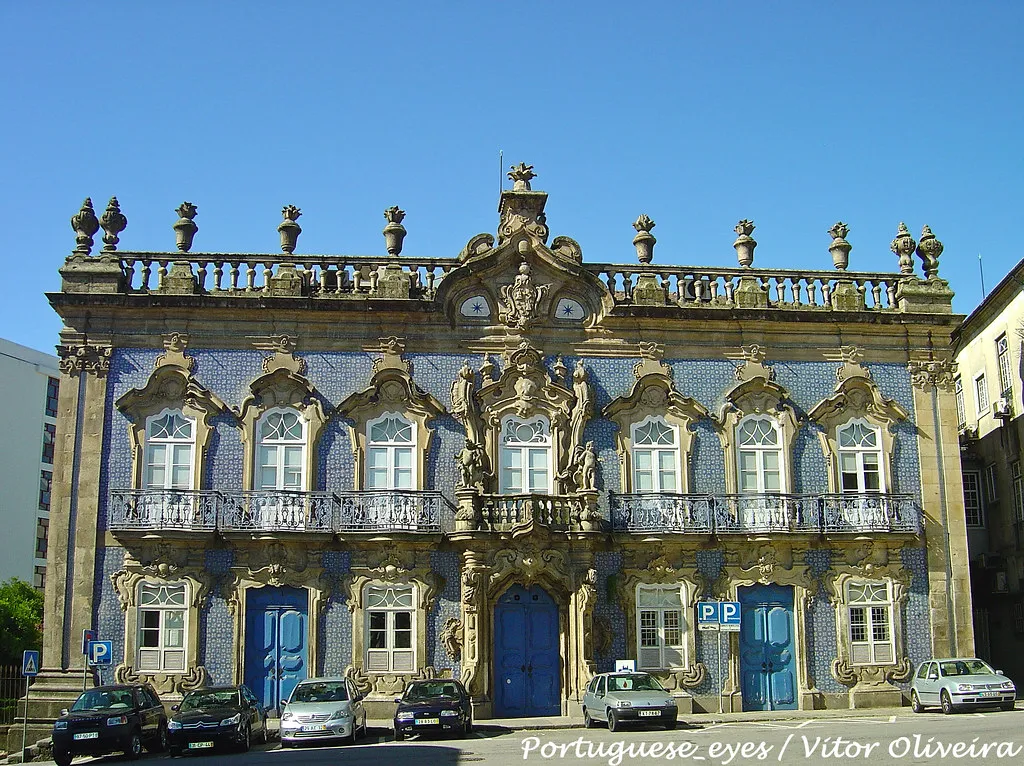
Palacia do Raio is designed by architect André Soares and built in the 1750s for a wealthy merchant named João Duarte de Faria, and this Baroque palace has one of the finest tiled façades in Portugal. The entire frontage is covered in blue-and-white azulejos depicting allegorical scenes, making it stand out sharply on a busy street in the old town. Most people stop and stare for a moment without quite knowing why.
The palace is classified as a Property of Public Interest and now houses the Centro Interpretativo das Memórias da Misericórdia de Braga, a small museum covering the history of Braga’s charitable institution and its collection of sacred art and medical heritage. Admission is charged; check current hours at scmbraga.pt before visiting.
Did You Know? Palácio do Raio takes its current name from Miguel José Raio, Viscount of São Lázaro, who purchased the building in 1834 - more than 80 years after it was built.
7. Bracara Augusta Roman Baths (Termas Romanas do Alto da Cividade)

Braga was founded by the Romans around 16 BC as Bracara Augusta, and the evidence sits beneath the modern city. The Roman baths at Alto da Cividade were rediscovered in 1977 during construction work and cover over 800 square metres. The excavated complex includes hot and cold pools, a steam room, and a gymnasium - a substantial public facility that speaks to how important this city was in the Roman province of Gallaecia.
The site is managed by the D. Diogo de Sousa Museum and is open to visitors. It’s one of the most significant Roman remains in northern Portugal, and far less visited than it deserves to be. Most tourists walk straight past on their way to the cathedral.
Did You Know? Five major Roman military roads converged on Bracara Augusta, making it one of the most strategically important cities in the Roman northwest of the Iberian Peninsula.
8. Arco da Porta Nova

This 18th-century Baroque arch marks the western entrance to Braga’s historic centre and is one of its most photographed landmarks. Redesigned in 1772 by architect André Soares - the same man who designed Palácio do Raio - the arch is carved with the royal Portuguese coat of arms and still frames the view down Rua do Souto, the main shopping street of the old town.
It’s free to walk through, takes about five minutes to appreciate properly, and makes a natural starting point for exploring the historic centre on foot. The StoryHunt map uses it as one of the orientation points for the Braga audio walk.
Did You Know? The original medieval gate that stood on this site was part of Braga’s city walls. Of those walls, only the arch, the Torre de Menagem, and one other tower survive today.
9. Museu dos Biscainhos

Museu dos Biscainhos is a 17th-century Baroque palace and one of the best-preserved examples of Portuguese aristocratic architecture in the north. Carriages once drove directly through the ground floor to drop passengers inside, a detail you can still see in the flagstone-paved entrance hall. The upper floors are furnished with period pieces, painted ceilings, and azulejo panels that give a genuine sense of how wealthy noble families lived in 18th-century Braga.
The gardens behind the palace are formal, terraced, and dotted with trick fountains - the kind that would have surprised guests at aristocratic parties. The museum is often quiet even in summer, making it a good option on a busy day when the more famous sites are crowded. Admission is modest.
Did You Know? The palace is named after the Biscainhos family, who were of Basque origin. ‘Biscainhos’ is the Portuguese rendering of ‘Vizcainos’, meaning people from the Basque region of Vizcaya.
Explore Braga’s top attractions with StoryHunt
The best way to connect these attractions is with the StoryHunt app. The interactive map links each site to audio stories covering the history, the characters, and the details that guidebooks leave out - from the Roman city buried beneath modern Braga to the Archbishop who turned a hilltop into a pilgrimage site.
Download StoryHunt for free and start your walk from anywhere in the city.




.avif)


