
.webp)


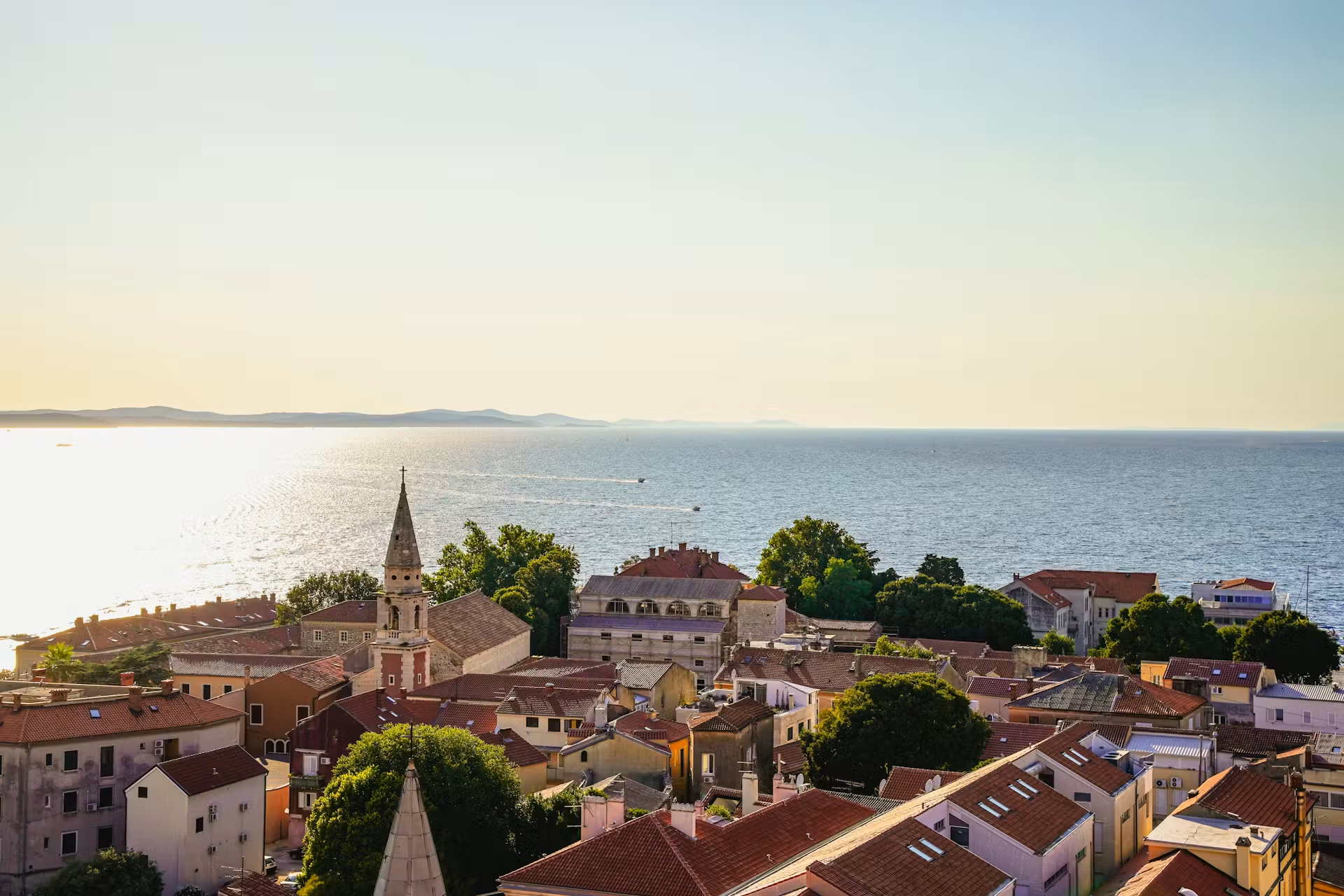
TLDR: The Zadar Sea Organ uses hidden pipes and waves to create spontaneous, "whale-like" melodies. It's a free, sensory experience best at sunset. You can swim right from its marble steps. Ideal for visitors seeking something different in Zadar.
The Zadar Sea Organ draws you to the waterfront with sound. Here, the Adriatic plays its own music. You can explore Zadar's places and hear their stories on a map in the StoryHunt app.
What is the story behind Zadar Sea Organ?

Zadar's waterfront was destroyed in World War II. Its post-war reconstruction used plain concrete. This cut off the city from the sea.
In 2005, architect Nikola Bašić changed this. He created the Sea Organ, or "Morske Orgulje".
This transformed a neglected area into a public space. Beneath its elegant white marble steps, 35 pipes are hidden. Waves push air through these tubes.
This creates haunting, unpredictable melodies. It's a symphony played by nature. The sound often resembles a deep, melancholic hum, or a distant whale song.
This creation helped reconnect Zadar with the Adriatic.
What is the Ocean Organ in Zadar?
The Zadar Sea Organ is an instrument built into the city's waterfront. It is not just a sculpture.
Wide, white marble steps descend into the clear Adriatic. The instrument's pipes are completely hidden beneath them.
This sound art relies on the sea's natural rhythm. As waves push air through submerged pipes, distinct notes emerge. They come through small openings in the stone.
No two waves are the same. This means the organ's song is spontaneous and always evolving.
The experience is particularly atmospheric at sunset. Its melancholic tones blend with Zadar's sky.
Right beside it, the Greeting to the Sun light installation adds a visual show as dusk falls.
How does the Sea Organ in Zadar work?
The Sea Organ's design is both simple and complex.
Thirty-five polyethylene pipes, each a different length and diameter, sit discreetly under 75 meters of marble steps.
As Adriatic waves and tides surge, they push air into these pipes. This air then forces its way through a series of whistles, called "labiums". These are similar to those found in a traditional organ.
The musical tones then travel up. They emerge through small, perforated openings in the stone steps. This is where you sit or stand.
The sounds, often called "ethereal" or "whale-like", are based on specific chords. These come from traditional Dalmatian klapa songs. Acoustician Ivica Stamać arranged them to ensure harmony despite their randomness.
The sea's movement constantly changes. This ensures the organ produces an endless, non-repeating symphony.
Can you swim at the Sea Organ in Zadar?
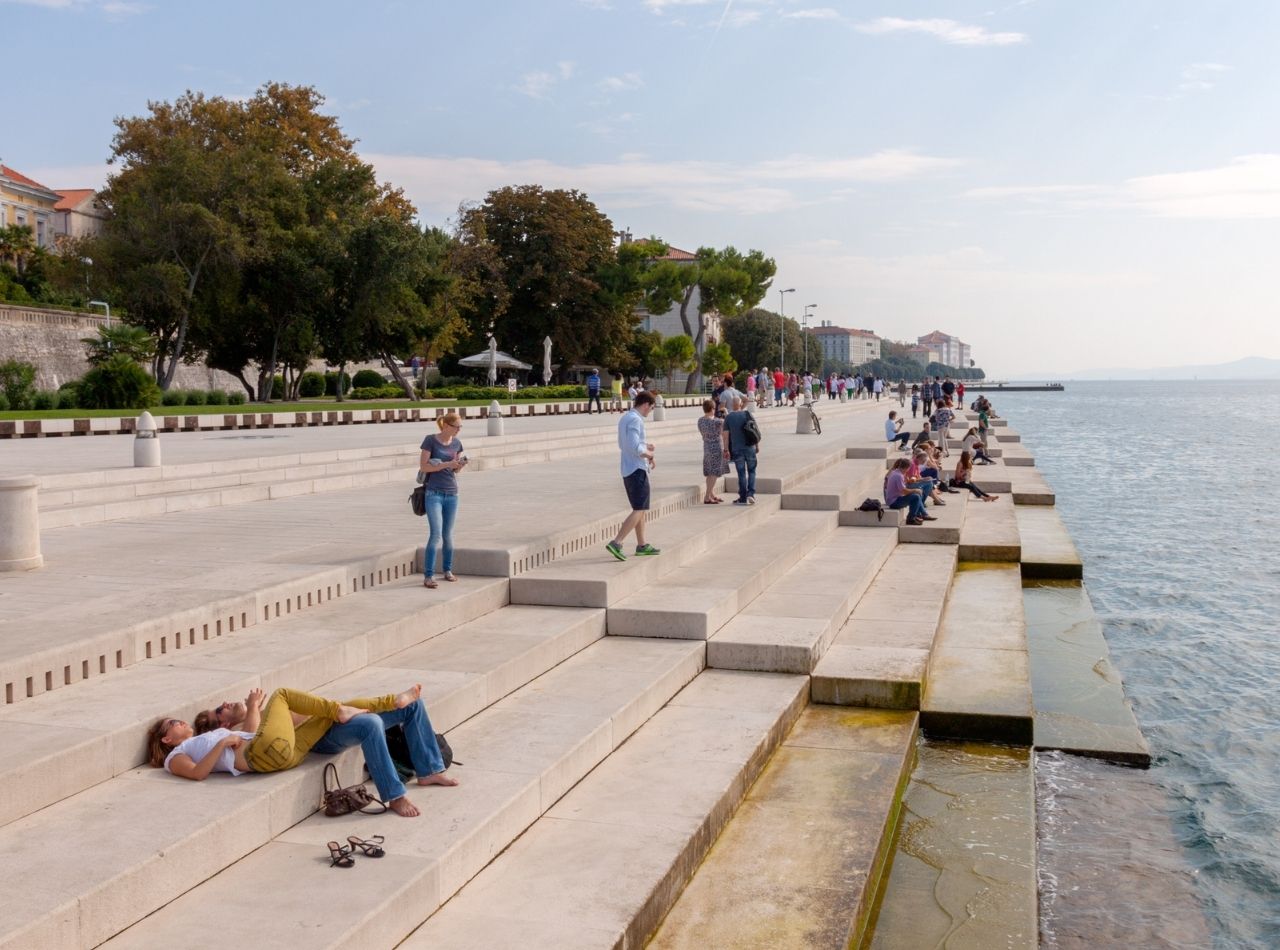
Yes, you can. Many visitors swim directly from the Sea Organ's marble steps. The water is clean and clear.
Floating in the Adriatic, listening to the sea play its own music, is a unique experience.
This is a public promenade, not a designated beach. You won't find lifeguards or changing rooms.
The wet marble steps can be slippery. Always be mindful of them. Also, watch for any local boat traffic.
Swimming here, especially at sunset, adds a multi-sensory layer to your Zadar visit. And it costs nothing.
Is the Sea Organ free to visit?
Yes, the Zadar Sea Organ is completely free.
It is a public art installation. It's open around the clock, every day. There are no tickets, no gates, and no specific opening hours.
You can simply walk up, find a spot on the marble steps, and listen.
Visit at dawn for a peaceful, solitary experience. During the day, you'll feel the general energy. Join the crowds at sunset for the most atmospheric performance.
Because the sea powers it, the melodies are always active. Every visit offers a fresh, unpredictable auditory experience.
Is it worth visiting Zadar Sea Organ?
The Zadar Sea Organ offers a distinct, sensory, and free experience. It brings together modern art and nature.
You'll likely enjoy it if:
- You appreciate innovative public art and unique encounters.
- You like quiet moments by the sea, or listening to unusual sounds.
- You're looking for a kid-friendly spot. Children often find the sounds and steps fascinating.
- You want to see Zadar's famed sunsets from a specific spot, especially with the Greeting to the Sun nearby.
- You prefer attractions that are free, accessible 24/7, and don't require much time (though many choose to linger).
You might want to skip it if:
- You are mainly interested in traditional historical monuments or high-adrenaline activities. It has a backstory linked to Zadar’s post-war reconstruction, but it's not a historical museum.
- You dislike crowds. Sunset can get quite busy. Early mornings are much quieter.
- You dislike unexpected sounds. While many find them soothing, some describe the "eerie" or "whale-like" calls as not to their taste.
It's an atmospheric and auditory wonder. It's less about visual spectacle and more about the feeling it creates. If you decide to go, you'll find other things to explore nearby.
What else can I do in Zadar?
Beyond the Sea Organ's melodies, Zadar offers history, culture, and discoveries. You'll find plenty within walking distance:
- Greeting to the Sun: Immediately next to the Sea Organ, this solar-powered light installation activates after dark. It creates a visual show that complements the organ's sounds.
- Riva Zadar: Take a walk along the promenade. You can see the Adriatic and nearby islands.
- Roman Forum: A short walk into the Old Town. Explore the largest Roman archaeological site on the eastern Adriatic coast. It has ruins dating back to Emperor Augustus.
- Church of St. Donatus: Next to the Forum. This 9th-century church is known for its unique circular shape.
- Museum of Ancient Glass: Discover glass artifacts. You might catch a live glassblowing demonstration. This shows ancient craftsmanship. For more, consider visiting the Zadar Glass Museum.
- Queen Jelena Madijevka Park: For a moment of quiet, visit this 19th-century park. Built atop old city fortifications, it offers shaded paths and a cafe.
- Five Wells Square: This square features five ornamental wells from the 16th century. It was once part of the city's defense system. You can find its story and location on the StoryHunt map.
Zadar rewards exploration. To plan your own route connecting these sites and other spots, open the StoryHunt app. You can see nearby places and stories on a map, listen to location-based audio, or create a self-guided walk.


.avif)


