| | Wander & Wonder Travel Newsletter |
|
|
|---|
|
|
 | Hey StoryHunter While there’s many good reasons to choose Kraków as your Polish city break, there might be an even more fascinating place to visit: Wrocław.
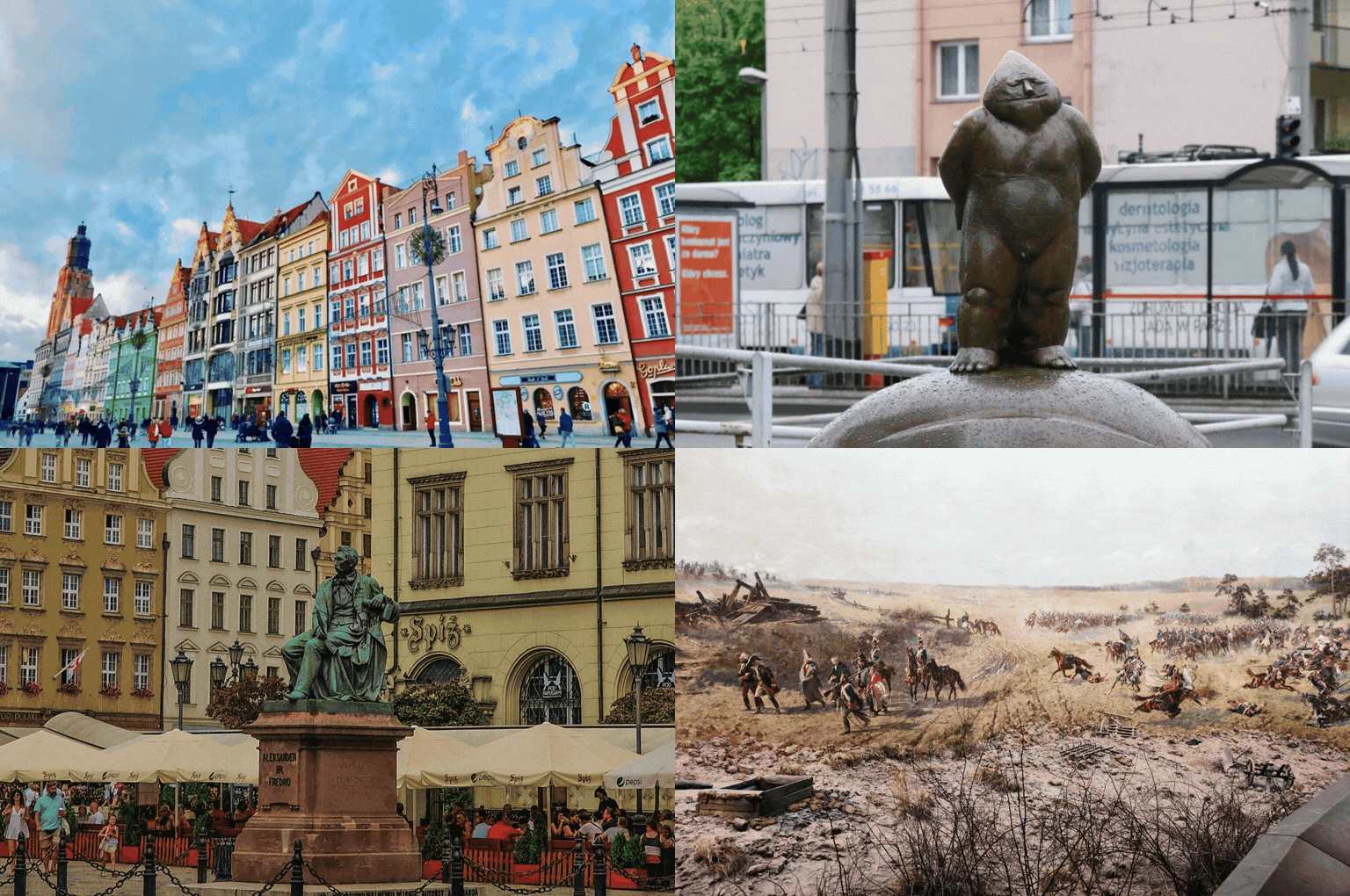
It sits on a dozen islands stitched together by more than a hundred bridges, it has one of the largest medieval market squares in Europe, and it is - by a comfortable margin - the strangest city in Poland.
Read on and you’ll see why (dwarfs are a big part of it).
But in August, the strangeness is beautifully accompanied by warm evenings, where you can enjoy streets without tourist hordes and – especially – the Multimedia Fountain, with its 300 water jets, 800 lights and three fire jets set to music.
Read on to learn about:
🎨 The painting hidden away for 40 years 🎩 The gnomes that helped bring down a regime 🔥 The man who lights 100 lamps by hand every night | | |
|
|
|---|
|
|
| | Explore with the new StoryHunt app | Now you can get tailored tours anywhere in the world 🌍
We've launched the new StoryHunt app, and we're so excited for you to try it!
It has a lot more features, a cool interactive map, and everything you need to explore the world in a new, exciting way. | | |
| | |
|
|---|
|
|
| | 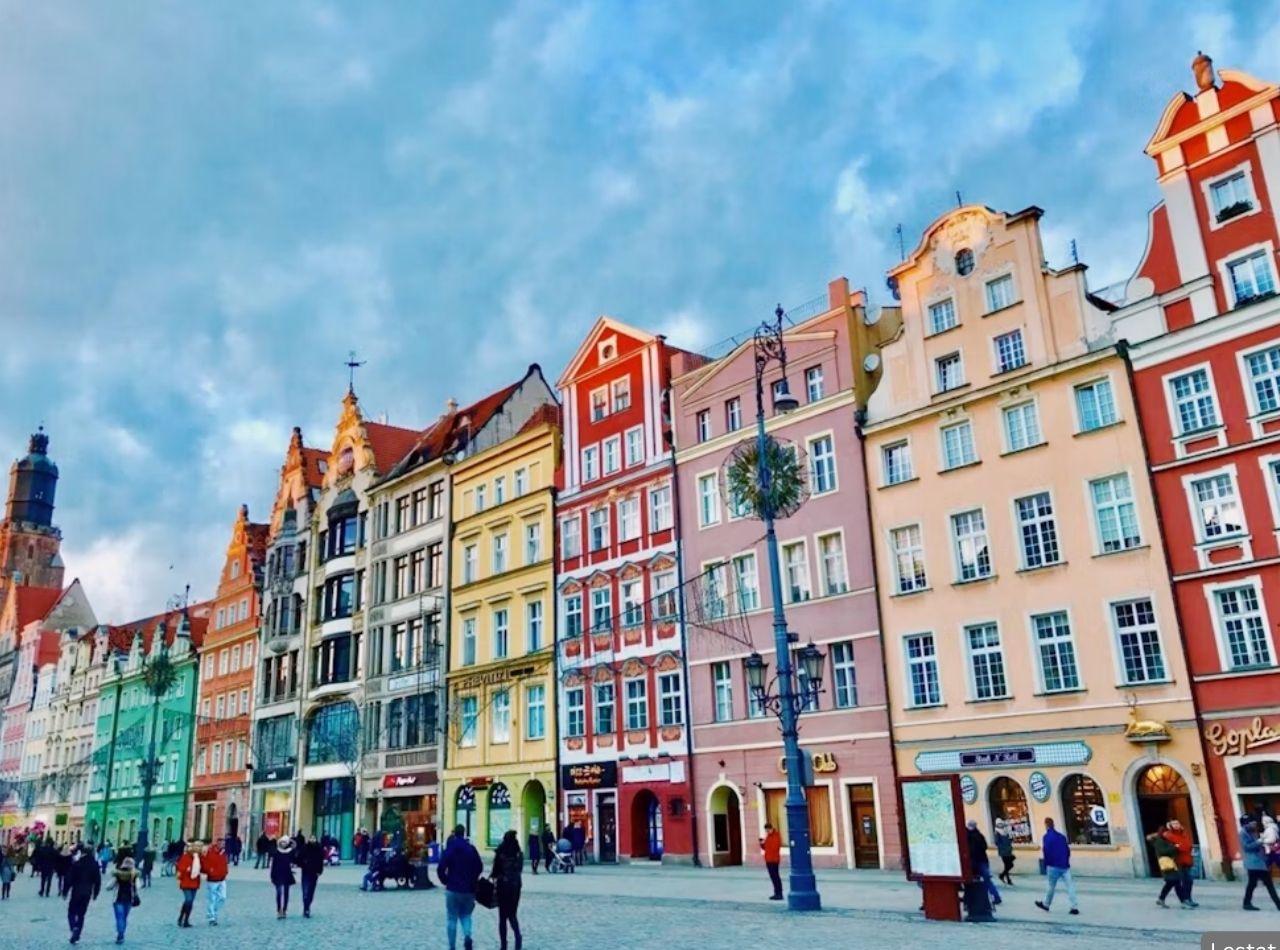 | Here is the thing about Wrocław: the city and its people did not arrive together.
Until 1945, this was known as the German vity Breslau.
Then the borders shifted and almost the entire population was replaced - many of the newcomers was Poles from Lviv in Ukraine, who had just lost their own city to the Soviet Union.
They arrived in a bombed-out German town and brought their old city with them: libraries, archives, whole museum collections, shipped west by train.
German bones. Lviv soul. Polish everything else.
That’s what you sense, when you start your walk at the Market Square, where the pastel townhouses look far too intact for a city that was 70% destroyed - because most of it was painstakingly rebuilt. | | |
|
|
|---|
|
|
| | 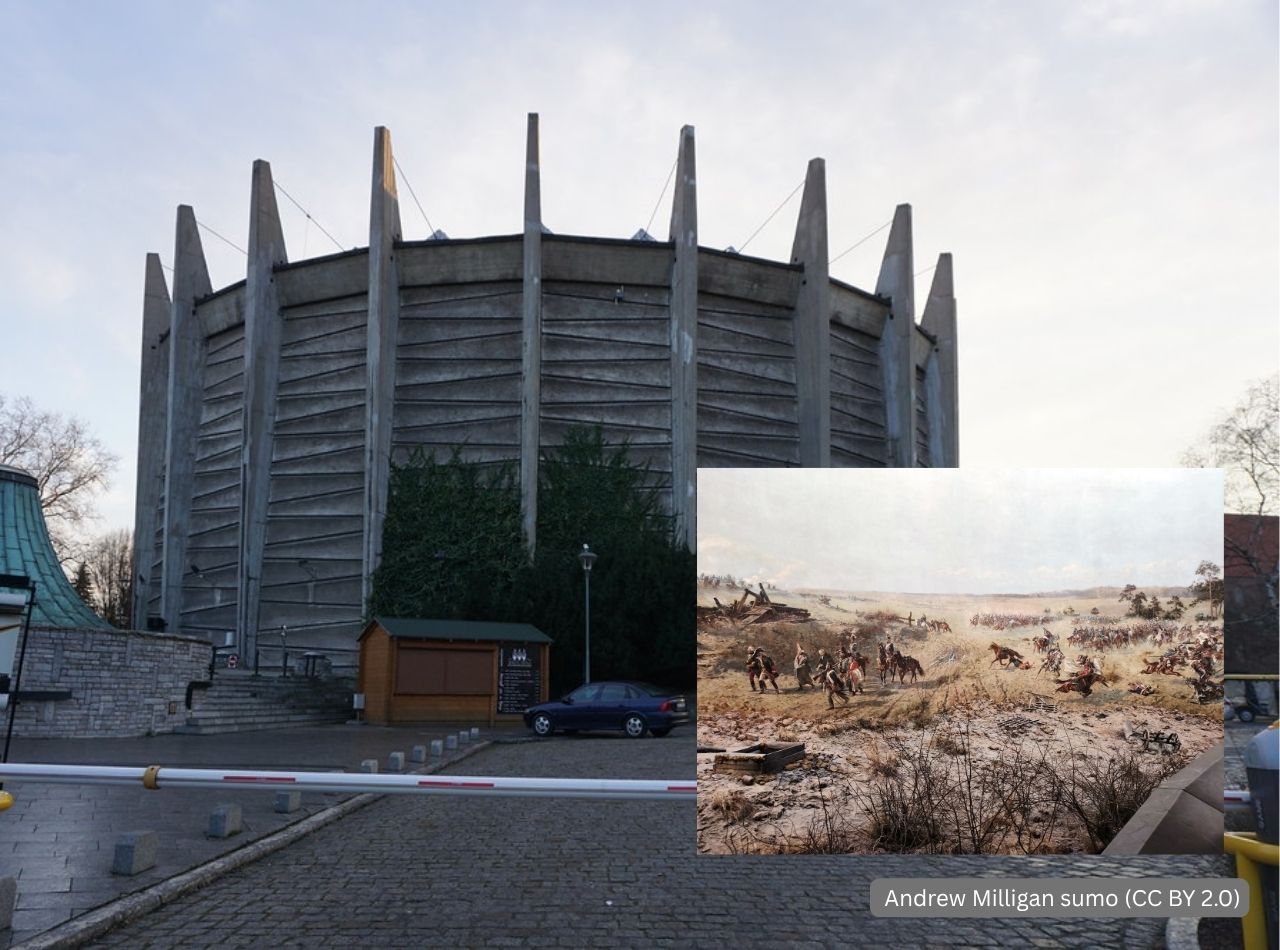 | In a rotunda near the centre hangs the Racławice Panorama - and it’s unlike any museum you have been to.
It is a single painting, 15 metres tall and 114 metres around, and you stand in the middle of it.
But the story of how it got here is better than the painting. It was painted in Lwów in 1894 to show Polish peasants with scythes defeating a Russian army.
It survived a bomb in 1944, was rolled up and hidden in a monastery, and was shipped to Wrocław after the war.
And then it went into storage. For four decades. (who’d guess that a giant painting of Poles beating Russians was not something the communist authorities wanted anyone to see)
It finally went on display in 1985 - and the queues went round the block. | | |
|
|
|---|
|
|
| |  | In the 1980s, under martial law, the police in Wrocław had a routine: whenever anti-government graffiti appeared, they painted over it with a fresh white square.
So an underground movement called the Orange Alternative started painting something on the white squares. A small, grinning dwarf.
The logic was perfect. You cannot arrest a man for painting a gnome without looking completely ridiculous.
It escalated. By 1988, over 10,000 people marched through Wrocław in orange pointy hats, chanting for dwarfs’ rights.
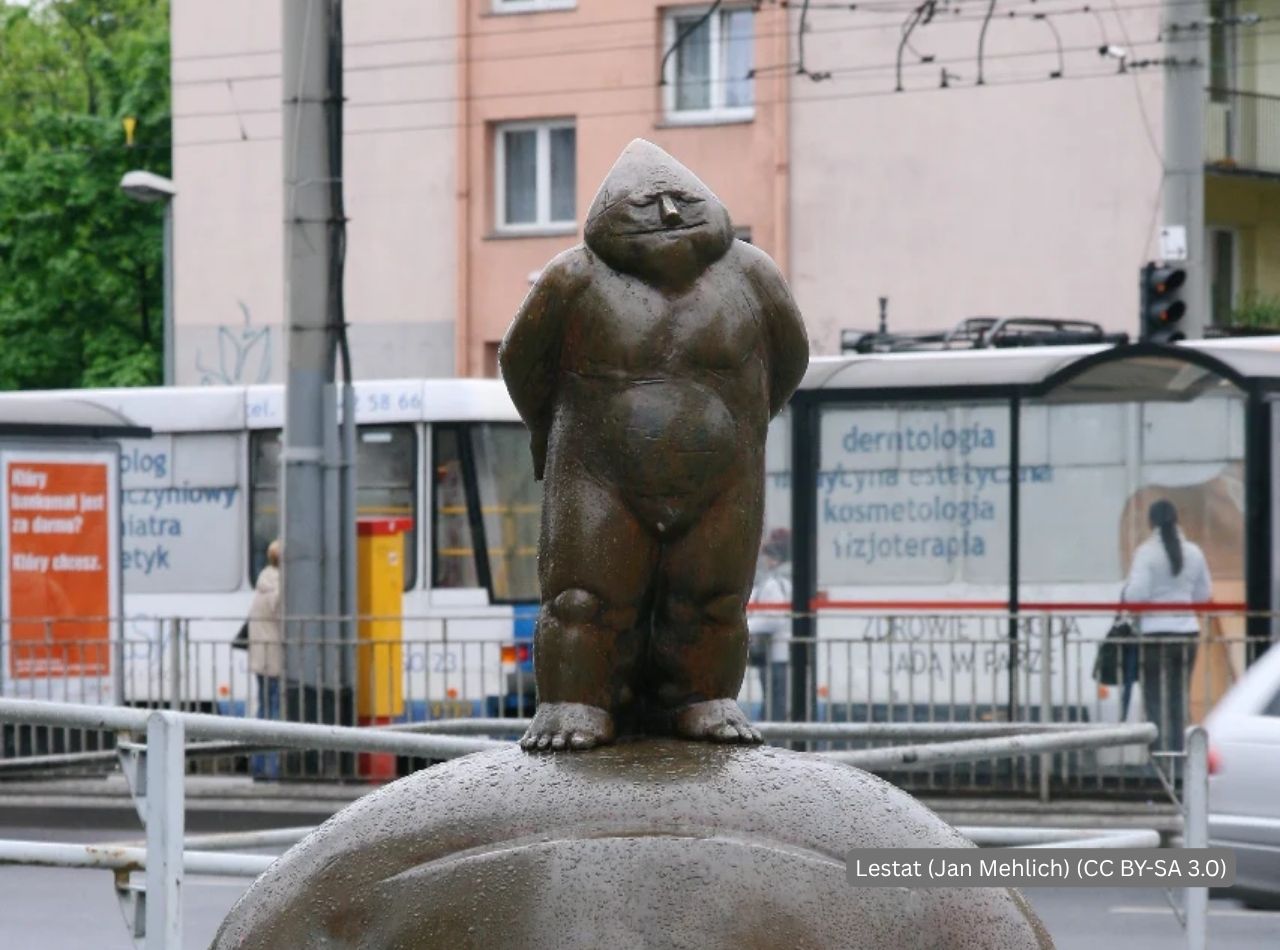
In 2001, the city put up a bronze dwarf on Świdnicka Street - Papa Krasnal - to remember it. Then five more appeared. Then dozens.
Today there are around a thousand, each with a name and a job: pushing boulders, playing cello, sleeping, sitting outside the bank. | | |
|
|
|---|
|
|
The Trendy Traveler Tip |  | Cross the Tumski Bridge about half an hour after sunset and wait.
You are on Ostrów Tumski, the oldest corner of Wrocław - the island where the whole city started, full of Gothic churches and cobbles.
The streets here are still lit by real gas lanterns. Not electric replicas. Gas.
Which means that every single evening, a lamplighter in a long black cloak and top hat walks the island and lights around a hundred lamps by hand - then comes back before dawn to put them out again.
It is one of the last places in Europe where the job still exists.
In August that means turning up around 21:00. Listen for the hiss of the burner - that is how you know he is close. | | |
|
|
|---|
|
|
| |  | | |
| Flæsketorvet 28, 1711, Copenhagen |
| | | | |
|
|
|---|
|
|
|