Tour erstellt von
Copenhagen Municipality
Teste dein Wissen und mach unterwegs ein Quiz – ideal für Gruppen!
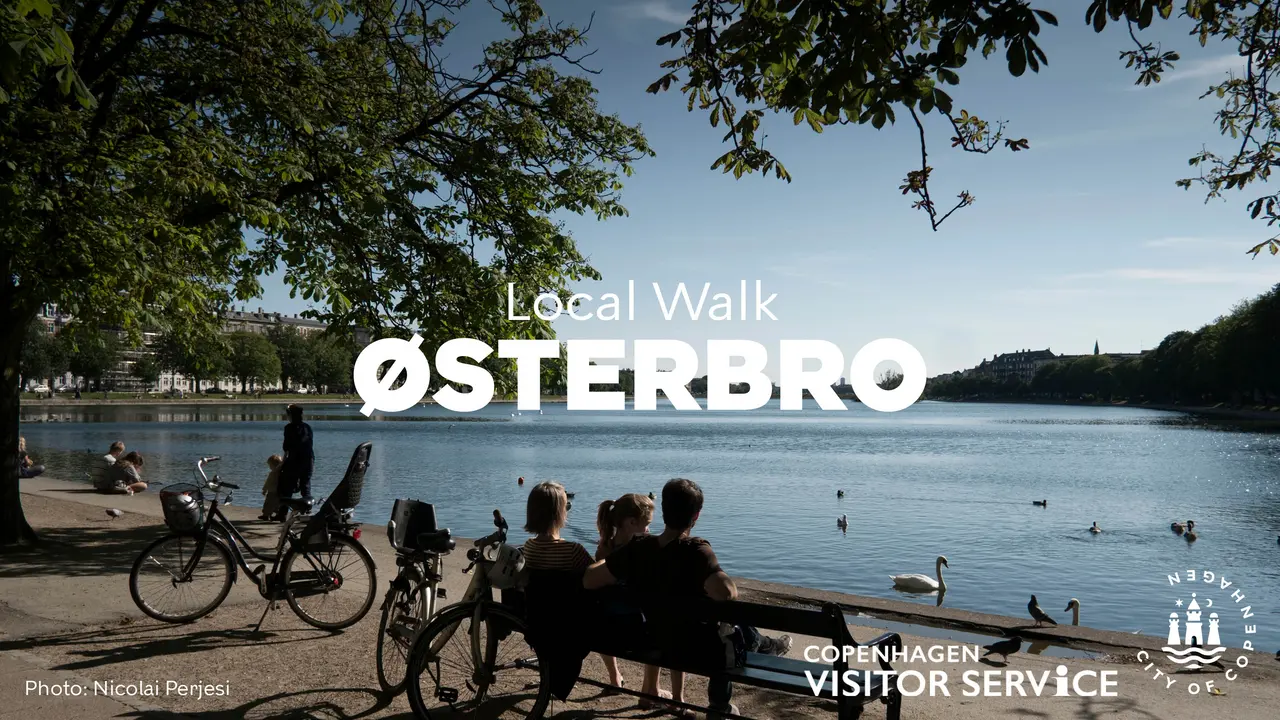
Østerbro is known as a peaceful neighbourhood and not least for the young families who choose to settle down here. Østerbro, however, has much more to offer, including dramatic war tales, Danish workers' history, a progressive climate movement and even a legend about a sea monster.
The name ‘Østerbro’, which means ‘Eastern Bridge’ in Danish, is known all the way back to the 1770s, when it supposedly referred to a small bridge outside the eastern city gate. Until the middle of the 19th century, the area was sparsely populated, unlike the working-class districts of Vesterbro and Nørrebro where development began earlier. This was an advantage, as new regulations did not allow dense constructions, resulting in significantly wider streets. But when the expansion took off, the population grew rapidly from approx. 1,500 in 1850 to 66,000 in 1906. The first to move to Østerbro were wealthy families from the posh street Bredgade in the city center. They built large villas in the then rural, green and swampy Østerbro. Along the current Østerbrogade, high-rise buildings shot up with spacious apartments. The ‘Rosenvænget’ area with its magnificent villas was for the richest only.
Østerbro is located on the coast but with the construction of Copenhagen's Freeport, the neighbourhood was cut off from the sea. It is only in recent years that residents have benefited from the coastline, and they diligently use both the harbour bath in Nordhavn and the beach in Svanemøllen. Today, Østerbro is a lively neighbourhood with many good restaurants, specialty boutiques and secondhand shops for the quality conscious. At the same time, Østerbro is one of the city's greenest neighbourhoods with plenty of space for play and movement.
Unten kannst du dir eine Hörprobe anhören, um zu sehen, ob die Tour das Richtige für dich ist.

Die Tour ist komplett kostenlos. Nutze unsere App für das beste Erlebnis oder fahre im Browser fort.



Nein. Du musst dein Tivoli-Ticket separat kaufen. Tickets erhältst du auf www.tivoli.dk.
Ja. Wenn deine Freunde auf ihrem eigenen Gerät hören möchten, benötigen sie ein eigenes Ticket.
Ja. Du kannst so viele Freunde mitbringen, wie du möchtest! Die Tour ist für alle 100 % kostenlos.
Ja. Sobald du die Tour gekauft hast, erhältst du Anweisungen, wie du sie verschenken kannst.
Du kannst die Tour machen, wann immer du möchtest. Sobald du sie gekauft hast, gehört sie dir für immer.
Nein. Diese Tour ist selbstgeführt, es gibt also keinen physischen Reiseführer. Stattdessen kannst du in deinem eigenen Tempo mit der StoryHunt-App erkunden.
Ja. Wenn du eine Tour kaufst, erhältst du lebenslangen Zugang und kannst sie so oft machen, wie du möchtest.
Ja. Die Tour wird über die StoryHunt-App erlebt, die du hier herunterladen kannst.
Du kannst die Tour vorher herunterladen und Geschichten offline anhören. Offline kannst du der Route folgen, erhältst aber keine Live-Navigation und Kartenaktualisierungen.
Wir freuen uns von dir zu hören! Sag uns, welche Fragen du hast, und wir melden uns so schnell wie möglich. 🤩
Antworten finden