
.webp)

TLDR: Padua packs an extraordinary amount of history into a walkable city center; Giotto's revolutionary frescoes, one of Italy's largest squares, a 500-year-old palm tree, and the world's first anatomical theatre.
Padua sits quietly in the Veneto, only 30 minutes from Venice by train, and most visitors pass through without stopping. That's their loss.
After spending time exploring this city across multiple visits, I've come to think of it as one of the most rewarding places in northern Italy for anyone who wants genuine history rather than a tourist performance.
Here are the top attractions that keep me coming back.
1. Go on a guided walk

Before you head out to explore Padua's streets, squares, and chapels, it's worth having the right tool in your pocket. The StoryHunt app lets you create a personalized audio walk through the city with an interactive map, so the context for everything you're looking at arrives exactly when you need it.
You set the pace, choose your interests, and explore on your terms. It's free to try, and it works across Padua and dozens of other cities. Try StoryHunt for free right here.
Did You Know? StoryHunt is available for both iOS and Android and you can look up any attraction and get the full story with a narrated guide.
2. Scrovegni Chapel (Cappella degli Scrovegni)

Scrovegni Chapel is the reason serious travelers put Padua on the map. Commissioned around 1300 by Enrico Scrovegni as a private family chapel, it was decorated entirely by Giotto di Bondone between 1303 and 1305 with a fresco cycle covering every inch of the interior walls. The scenes narrate the lives of the Virgin Mary and Christ and end with a monumental Last Judgment on the west wall.
What makes it a turning point in art history isn't just the beauty of the paintings. Giotto introduced perspective, emotional depth, and believable human figures at a time when painting was still flat and symbolic. The chapel is UNESCO-listed, strictly limited to small groups, and you'll get about 15 minutes inside.
Book tickets well in advance. Adult admission is 11 euros plus a 1-euro booking fee.
Did You Know? Enrico Scrovegni's father, Reginaldo, appears in Dante's Inferno as a usurer condemned to hell. The chapel was partly Enrico's attempt to atone for the family's reputation through an extraordinary act of religious patronage.
3. Basilica di Sant'Antonio

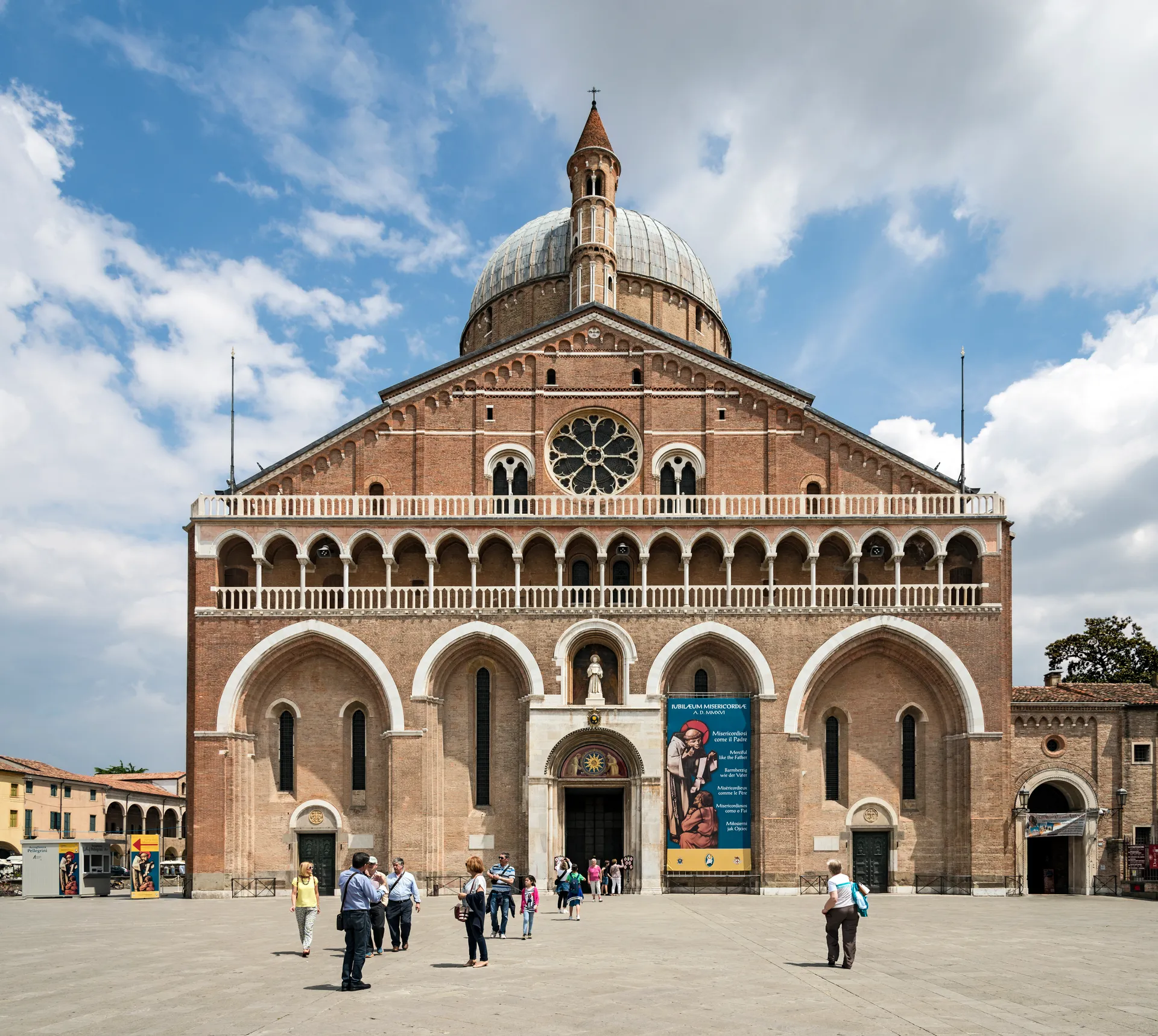
Known locally as Il Santo, this basilica draws around 6.5 million visitors a year, making it one of the most visited pilgrimage sites in the world. Saint Anthony of Padua died here in 1231, and construction of the basilica began almost immediately. The result is an extraordinary mix of Romanesque, Gothic, and Byzantine architecture, with a roofline of domes and towers that looks unlike anything else in northern Italy.
Inside, the high altar features bronze sculptures by Donatello, including relief panels depicting miracles of Saint Anthony. The Treasury chapel houses the saint's relics, which remain an active focus of pilgrimage. Entry is free. Dress code is enforced: covered shoulders and knees are required.
Did You Know? Outside the basilica stands Donatello's equestrian bronze of the condottiere Erasmo da Narni, known as Gattamelata, cast in 1453. It was the first full-size bronze equestrian statue created since antiquity, predating Michelangelo and influencing European sculpture for centuries.
4. Prato della Valle

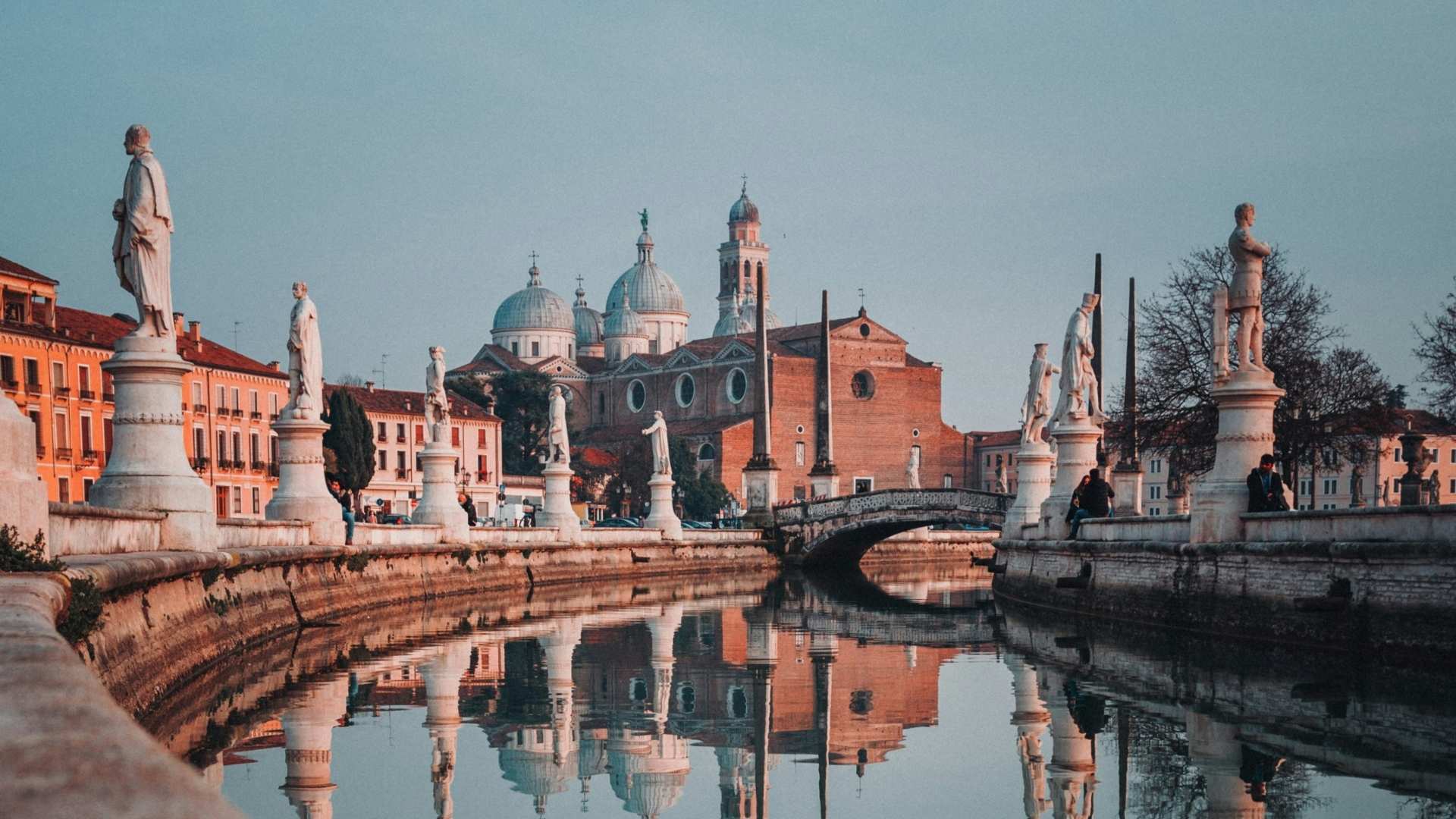
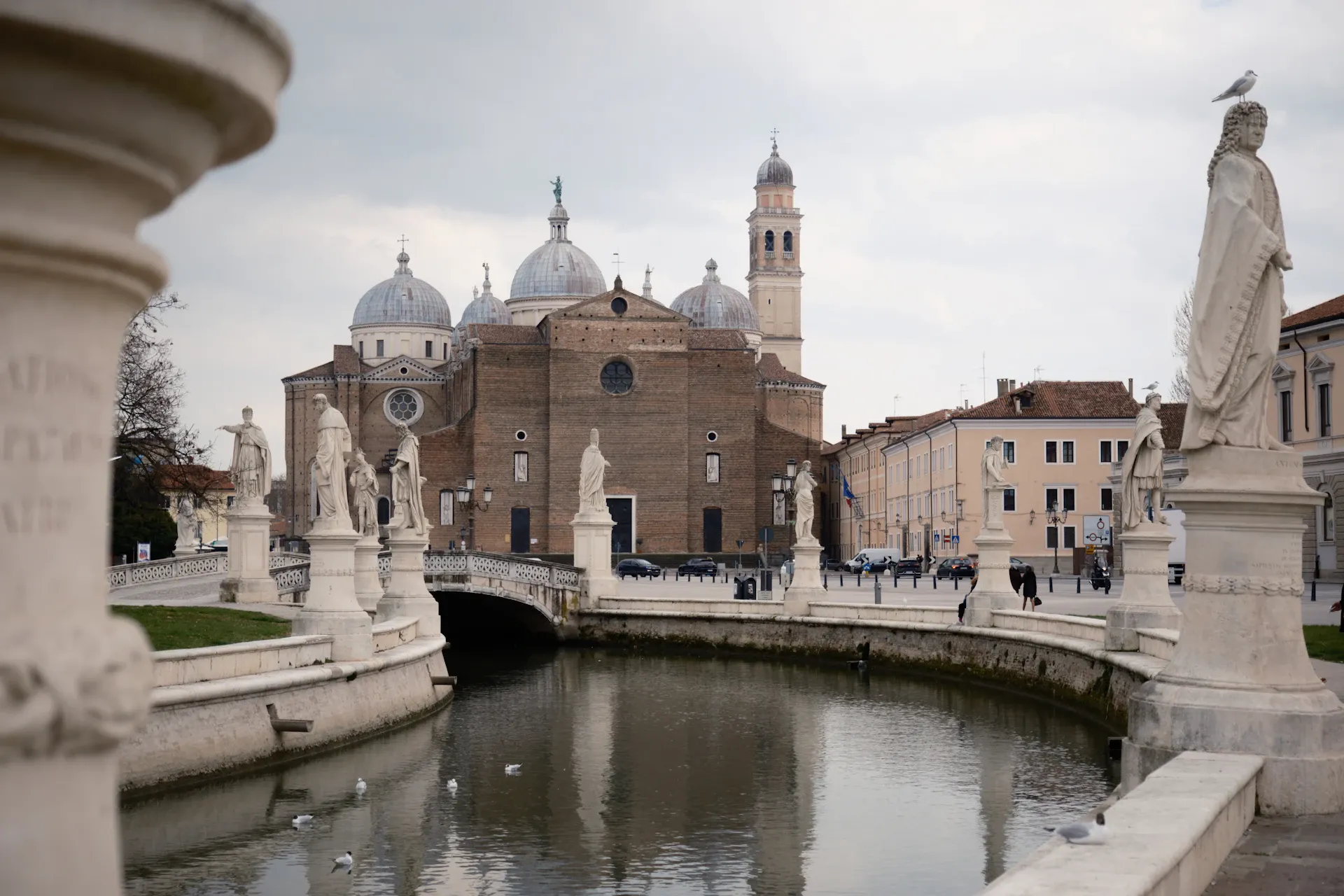
Prato della Valle is an elliptical square that covers 90,000 square meters, making it the largest in Italy and one of the largest in Europe. That scale doesn't fully register until you're standing in it. At its center lies the Isola Memmia, a green island surrounded by a canal, which is in turn bordered by two rings of 78 statues depicting scholars, artists, and rulers connected to Padua's history. Galileo Galilei has a statue here.
The square was a marshy, neglected wasteland until the late 18th century, when Venetian diplomat Andrea Memmo oversaw its transformation. Today it functions as Padua's outdoor living room: students, families, and joggers use it daily, and a Sunday antique market sets up on the outer ring. Entry is free and the square is open around the clock.
Did You Know? When archaeologists drained the canal in 2017 to carry out restoration work, they found the remains of a Roman theatre underneath, a semicircular orchestra pit and rows of seating that had been buried since antiquity.
5. Palazzo della Ragione

Built from 1218, this triple-decker Gothic palace Palazzo della Ragione sits between the twin market squares of Piazza delle Erbe and Piazza della Frutta, and both markets have been running here without interruption since the Middle Ages. The building served as parliament, courthouse, and administrative center, and its upper floor, the Salone, is one of the largest medieval halls in Europe without internal columns: 82 meters long with a wooden ship-hull ceiling.
The Salone walls are covered with 14th-century frescoes depicting an elaborate astrological cycle based on the theories of Paduan professor Pietro d'Abano. At one end stands a giant wooden horse built in 1466 for a public tournament. Admission to the Salone costs around 8 euros; the market below is free.
Did You Know? The original frescoes in the Salone were painted by Giotto, but a fire in 1420 destroyed them. The current cycle, repainted by Nicolo Miretto and Stefano da Ferrara between 1425 and 1440, reproduces the astrological scheme from memory, making it one of the most ambitious fresco restoration projects of the medieval period.
6. Palazzo del Bo and the Anatomical Theatre

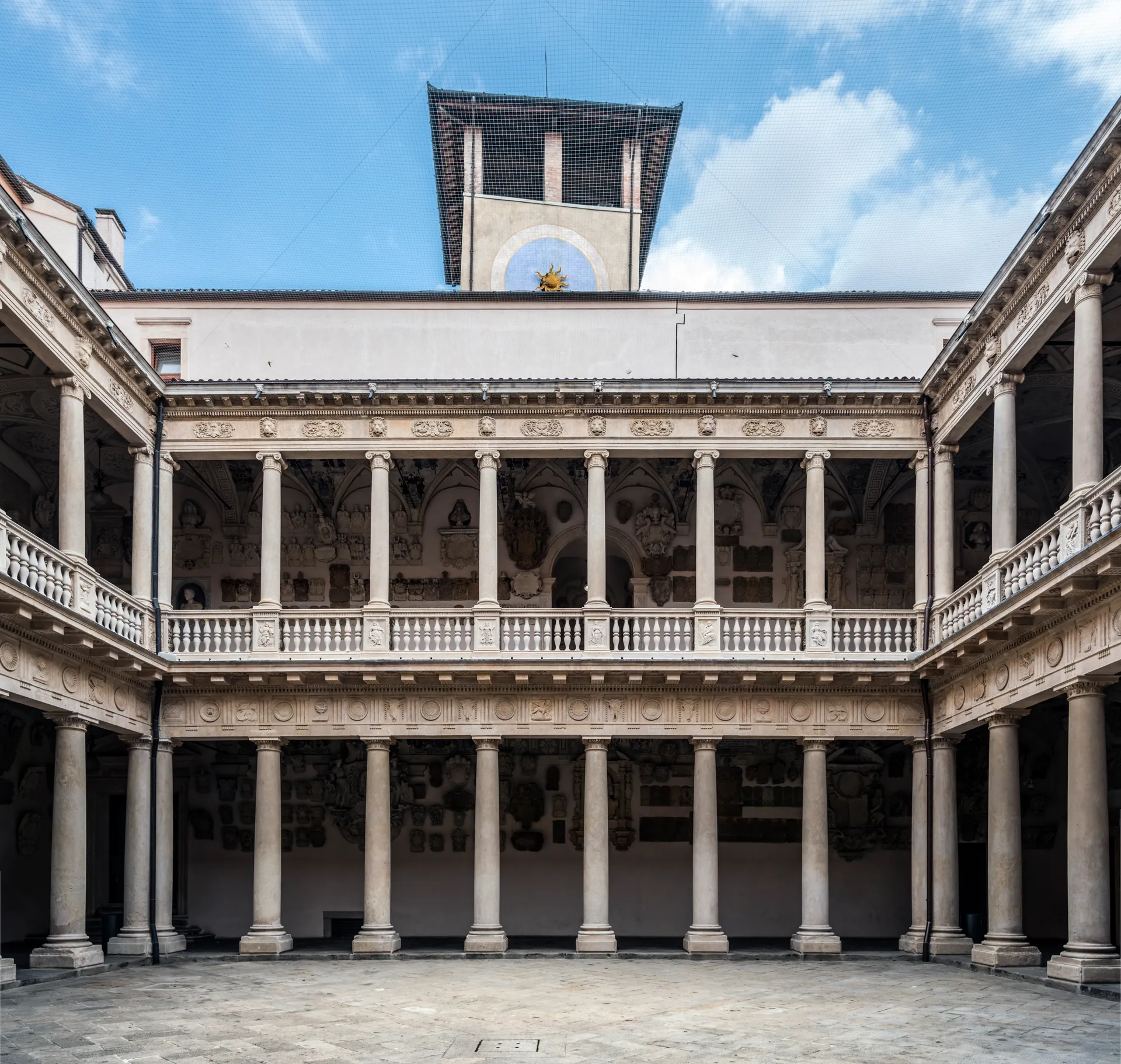
Palazzo del Bo is the historic headquarters of the University of Padua and takes its name from an inn, the Hospitium Bovis or 'Inn of the Ox', that stood on this site in the 14th century. The university moved here in 1493 and hasn't left since. The building's courtyards are lined with hundreds of noble coats of arms, and its most famous room, the Sala dei Quaranta, contains the original wooden lectern from which Galileo Galilei taught mathematics between 1592 and 1610.
The real draw is the Anatomical Theatre, built in 1594 and inaugurated in January 1595. It's the oldest permanent anatomical theatre in the world: a steep wooden funnel of six tiered elliptical galleries surrounding a central dissection table, designed so that up to 300 students could observe cadaver dissections simultaneously. Visits are by guided tour only. Book ahead through the university's website.
Did You Know? In 1678, Elena Lucrezia Cornaro Piscopia graduated from the University of Padua in philosophy, becoming the first woman in history to receive a university degree anywhere in the world. A statue of her stands in the Palazzo del Bo.
7. Orto Botanico (Botanical Garden)
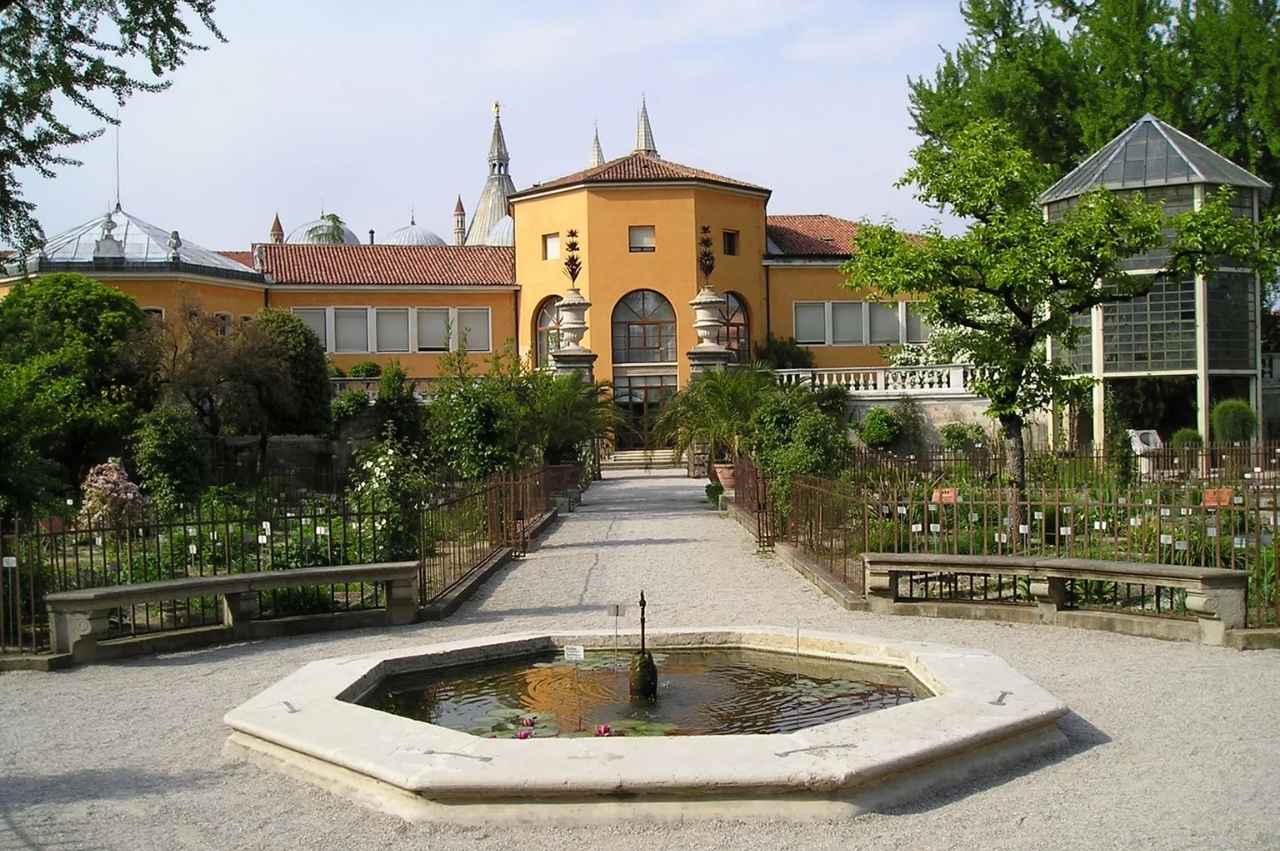
Orto Botanico was founded in 1545 by the University of Padua's medical faculty to grow and study medicinal plants, and this is the world's oldest academic botanical garden still on its original site. It's a UNESCO World Heritage Site and genuinely worth an hour of your time, especially if you want a quiet break from the city's busier piazzas. The circular central garden retains its original Renaissance layout, and the surrounding greenhouses hold over 3,500 species.
The garden is a short walk from both the Basilica di Sant'Antonio and Prato della Valle, so it fits naturally into any circuit of the southern part of the city. Admission is around 10 euros for adults.
Did You Know? The oldest plant in the garden is a fan palm planted in 1585, now housed in a greenhouse. It's known as Goethe's Palm because the German poet visited on 27 September 1786 and, after studying it, developed the ideas that became his 1790 essay on the metamorphosis of plants.
8. Caffe Pedrocchi

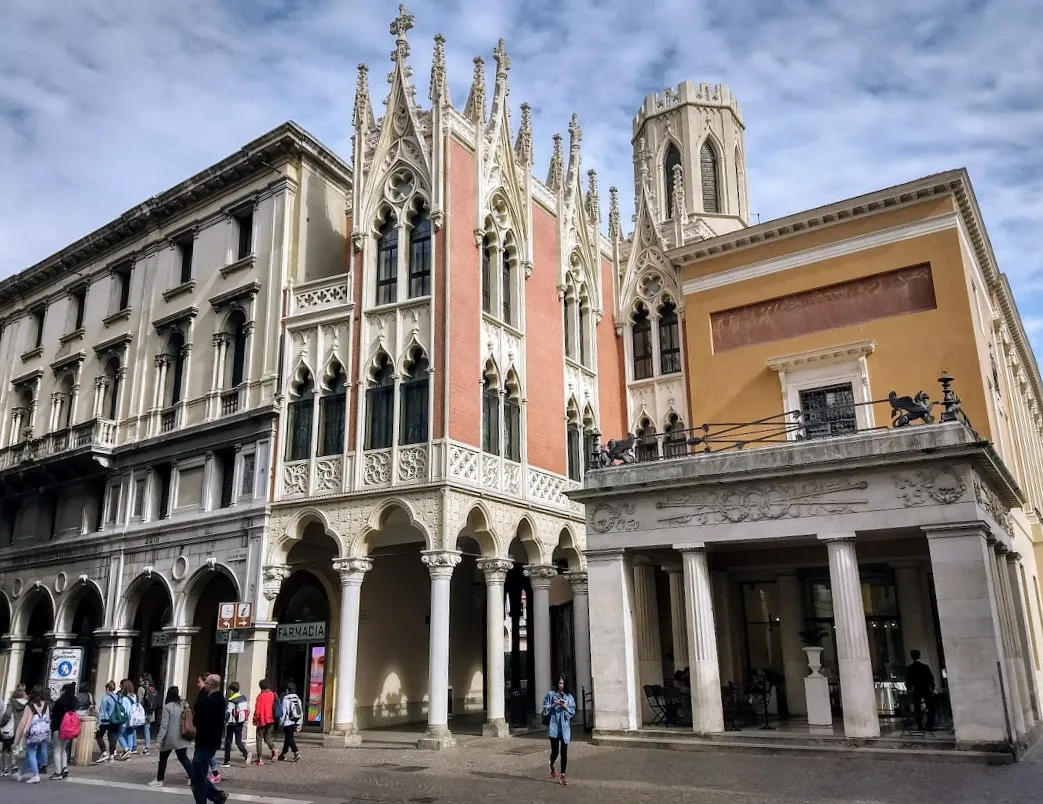
Caffe Pedrocchi was built in 1831 by architect Giuseppe Jappelli, and this neoclassical cafe near the university became one of the most significant intellectual gathering points in 19th-century Italy. Its three main rooms are decorated in white, red, and green, colors that reflect the Italian flag. The Green Room was historically open to anyone, including penniless students who could sit and read a newspaper without ordering. Some trace the Italian phrase 'restare al verde', meaning to be broke, to this practice.
Stop here for a coffee or the house aperitivo. The building also contains a museum dedicated to the Risorgimento on the upper floor.
Did You Know? On 8 February 1848, Austro-Hungarian soldiers fired into the cafe to suppress a student uprising against Habsburg rule. The bullet hole is still visible in the plaster of the White Room, marked with a commemorative plaque.
9. Piazza delle Erbe and Piazza della Frutta

These twin squares flanking the Palazzo della Ragione form the real social heart of Padua. Both host daily outdoor markets: Piazza delle Erbe (herbs and vegetables) and Piazza della Frutta (fruit) have been running here since the Middle Ages, and they still feel like a living part of the city rather than a tourist attraction. The stalls sell local produce, cheese, cured meats, and seasonal ingredients from the Veneto plains.
The best time to visit is weekday mornings when the markets are at their busiest. By midday the stalls wind down. The surrounding bars and osterie are good spots for a cheap lunch, a glass of local wine, or a spritz with locals.
Did You Know? The covered market beneath the Palazzo della Ragione, known as the Sotto il Salone, has been in continuous operation since the 13th century, making it one of the longest-running covered markets in Italy.
Explore Padua at your own pace
Padua rewards visitors who slow down and pay attention. A city this dense with history, art, and genuine local life is best explored with curiosity rather than a checklist. You can read our full guide to Padua right here.
Remember to download the StoryHunt app before you go: create your own audio walk, follow an interactive map through the city's medieval streets, and let the stories behind these places arrive exactly when you're standing in front of them. Available for download for iOS and Android.



.jpg)


.avif)


