
.webp)


TLDR: Most visitors to Kensington spend their time at the grand museums - and miss everything else. This guide covers eight spots that are less obvious but often more memorable: a Victorian artist's private palace, a Cold War spy church, a Japanese garden donated by Kyoto, and a pub so covered in flowers it barely looks like a building.
Kensington is one of those neighbourhoods where the well-known things are genuinely excellent, which makes it easy to overlook everything else. Sure, the Natural History Museum and the V&A deserve the attention they get.
But after several visits spent deliberately stepping off Exhibition Road, I've found that the Kensington neighbourhood - which you can learn more about here - has a second layer that most people never get to. And a lot of it is free.
These eight places won't show up at the top of most "things to do in Kensington" lists. That's half the point.
1. Leighton House Museum

Leighton House is, without question, one of the most extraordinary interiors in London - and most visitors to Kensington never go near it. The house at 12 Holland Park Road was built from 1866 onwards as a combined home and studio for Victorian painter Frederic Leighton (1830-1896), who served as President of the Royal Academy. It's the only purpose-built artist's studio-house open to the public in the UK.
The main draw is the Arab Hall, completed in 1881 and built around Leighton's collection of Islamic tiles gathered during travels to Damascus, Turkey, Egypt, and Sicily. The tiles line the walls beneath a gilded dome, surrounded by intricate mosaics and a central fountain. When it was completed, it reportedly cost more to build than the rest of the original house and caused an immediate sensation. It still does.
2026 marks 100 years since the house opened as a public museum, and the centenary programme includes a major new exhibition on the Arab Hall's history running until October 2026.
Did you know? The Arab Hall's tiles were collected by Leighton during travels to Damascus in 1873, with further examples sourced by the explorer Sir Richard Burton on his behalf. The hall took four years to complete.
2. Brompton Oratory
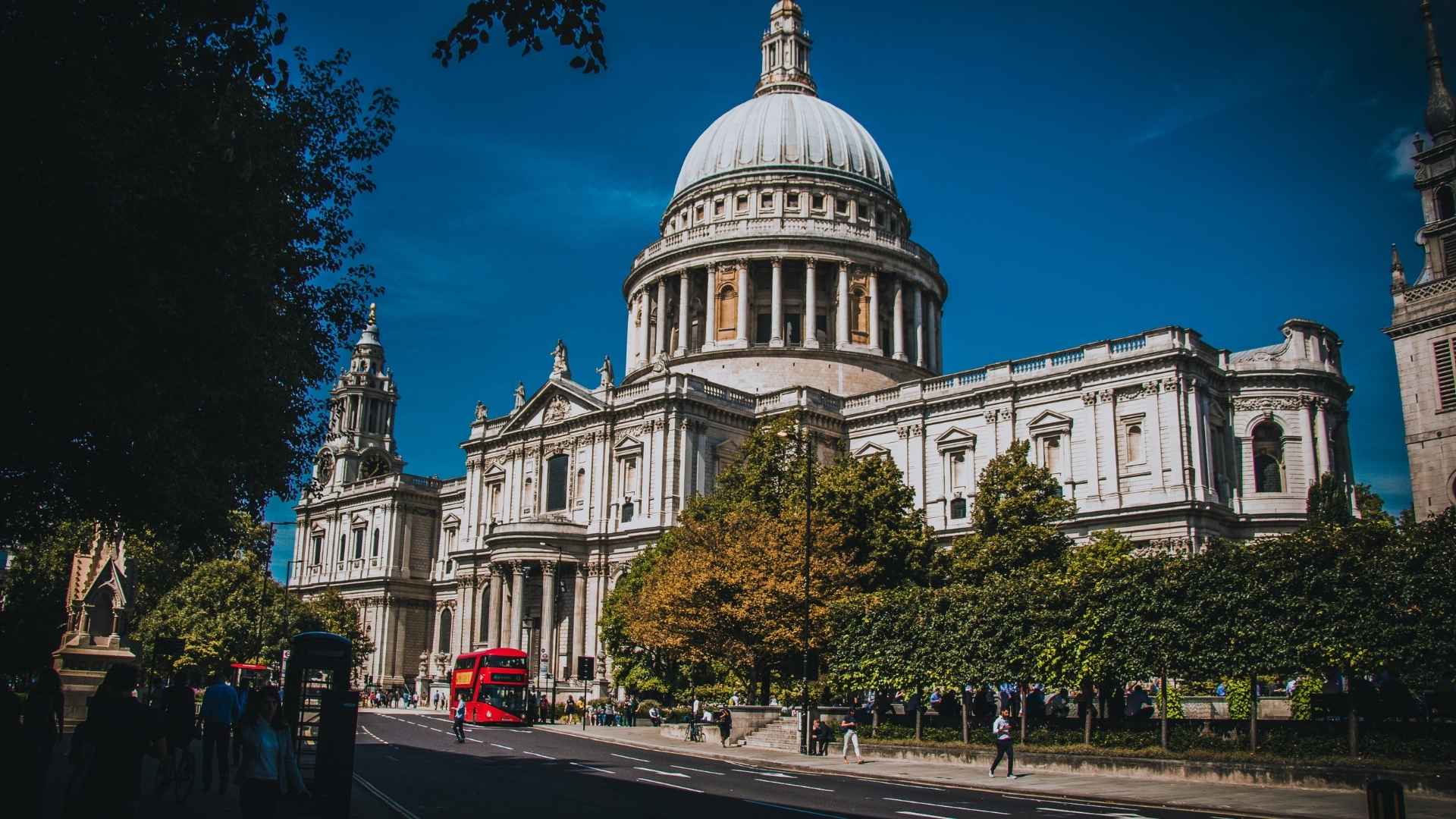
The Brompton Oratory sits on Brompton Road, right next to the V&A, and most people walk past it without a second glance. That's a mistake. The interior - consecrated in 1884 in the neo-baroque style - has a nave wider than that of St Paul's Cathedral, with marble everywhere and painted side chapels that feel closer to Rome than west London. It's completely free to enter.
The spy angle is well documented. During the Cold War, the covered pillared entrance to the Oratory was used by Soviet KGB intelligence officers as a dead drop - a location where agents left documents and packages for their handlers to collect. The church's position close to Harrods was part of the appeal: if an agent thought they were being followed, they could disappear into Harrods' 330-department labyrinth and lose any tail.
Even without the espionage history, it's one of the finest Catholic church interiors in England and genuinely worth twenty minutes of your time.
Did you know? The Brompton Oratory's nave is wider than the nave at St Paul's Cathedral. The church has been a noted centre for choral music since the 1930s, with the London Oratory Choir regarded as one of England's senior professional Catholic choirs.
3. Kyoto Garden, Holland Park

Hyde Park gets all the attention in this part of London, but Holland Park - a 22-hectare park ten minutes' walk west of Kensington High Street - is considerably quieter and arguably more beautiful. The centrepiece is the Kyoto Garden, a traditional Japanese garden opened in 1991 as a gift from the city of Kyoto to celebrate the friendship between Japan and the United Kingdom, and created in advance of the Japan Festival held in London in 1992.
The garden features a tiered waterfall feeding into a koi pond, stone lanterns, Japanese maple trees, and a resident population of peacocks that wander the paths with absolutely no self-consciousness. It's free, open daily from 7:30 AM, and consistently one of the most photographed spots in west London - which means going early, before 9 AM, makes a significant difference to how peaceful it actually feels.
Holland Park itself is also worth lingering in. The ruins of Holland House - a Jacobean mansion severely bombed in the Blitz in 1940 - are incorporated into the park's landscape, and Opera Holland Park runs an outdoor summer opera season under a temporary canopy each year.
Did you know? The bridge across the Kyoto Garden pond was originally designed with a deliberate gap in the middle - a traditional Japanese feature based on the belief that evil spirits can only travel in straight lines. It had to be filled 48 hours before the opening ceremony after failing a safety inspection.
4. 18 Stafford Terrace (Linley Sambourne House)
Two streets south of Kensington High Street, 18 Stafford Terrace is the preserved Victorian home of Punch cartoonist Linley Sambourne, left almost completely intact since his death in 1910. The house is a rare surviving example of the Aesthetic Movement interior - every room packed with stained glass, William Morris wallpaper, blue-and-white china, paintings, photographs, and Sambourne's own cartoons. It operates as a companion museum to Leighton House, managed by the same Royal Borough of Kensington and Chelsea.
Unlike Leighton House, which was extensively restored and extended, Stafford Terrace hasn't changed much. It feels genuinely lived-in rather than curated. Guided tours run at weekends; check the RBKC Museums website for current schedules and admission prices. If you're visiting Leighton House, the two are a natural pair.
Did you know? Linley Sambourne was a regular contributor to Punch magazine for over 40 years and was known for his politically charged cartoons. His granddaughter, Anne Messel, later became Countess of Rosse and helped save the house from redevelopment.
5. Discover Kensington's Hidden Layer With StoryHunt

The places in this guide aren't obviously connected on foot - Leighton House and Stafford Terrace are in one direction, the Kyoto Garden in another, Brompton Oratory in a third. Without a route, it's easy to spend half the day retracing steps.
With the StoryHunt app you can build a custom audio walk through Kensington that connects these less-visited spots with context delivered as you walk - including the history behind Leighton's Arab Hall, the Cold War story at Brompton Oratory, and the Kyoto Garden's origins.
You set the pace and the route. Download StoryHunt free here.
6. The Serpentine Galleries
The Serpentine Gallery sits inside Kensington Gardens - not in a separate building, but in a 1934 tearoom that was converted into a gallery in 1970. Entry to the permanent programme is free. The Serpentine North Gallery (formerly the Sackler Gallery) is a ten-minute walk away across the park in a restored 1805 gunpowder store. Between them, they make up one of London's most respected contemporary art spaces.
The annual Serpentine Pavilion commission is the main event - each summer, a different architect who has never built in the UK is invited to design a temporary structure in the grounds. Past commissions have come from Zaha Hadid, Frank Gehry, and Rem Koolhaas. The pavilion is free to visit and typically runs June through October. Even if contemporary art isn't your main interest, the pavilion alone is usually worth a detour.
Did you know? The Serpentine Pavilion commission began in 2000 with a structure by Zaha Hadid and has since become one of the most anticipated annual architecture events in the world. Every commissioned architect must be someone who has not yet completed a building in the UK at the time of commission.
7. Kensington Church Street Antiques
Kensington Church Street, running north from Kensington High Street toward Notting Hill Gate, is one of the longest continuous antiques streets in London - roughly a kilometre of independent dealers selling furniture, ceramics, silver, prints, and art from various periods. It's not a tourist attraction in the conventional sense; it's just a very good street to walk along if you're interested in antiques or just want to look at things.
The quality is generally high because the market is London-facing rather than tourist-facing. Many dealers are specialists - a few shops focus entirely on 18th-century English ceramics, or Japanese netsuke, or Georgian silver. You don't need to buy anything. Most shops are open Tuesday to Saturday.
8. The Churchill Arms Pub
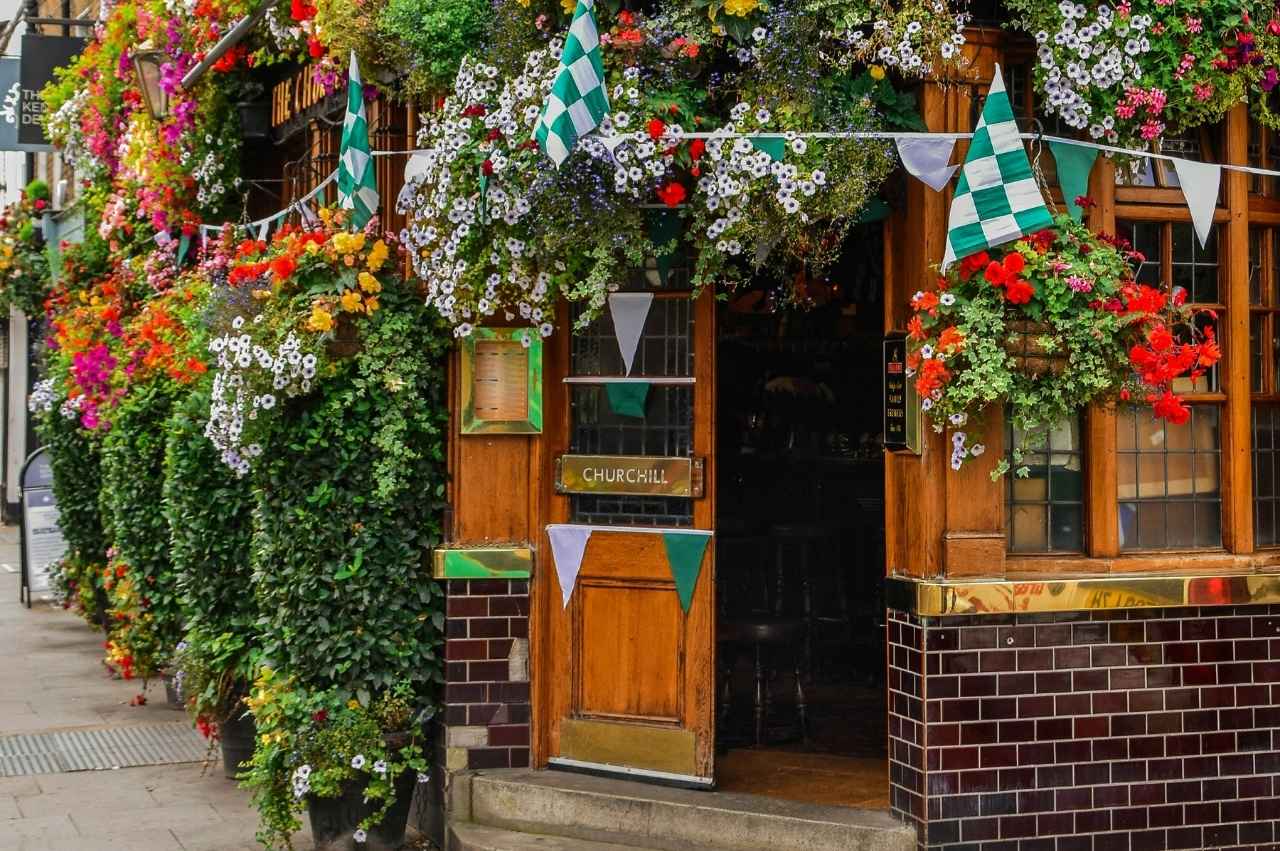
The Churchill Arms on Kensington Church Street is, depending on your mood, either London's most extraordinary pub exterior or a useful landmark for navigating the antiques strip. The building is covered in somewhere upward of 80 hanging flower baskets - seasonal plantings changed regularly - plus window boxes, barrels, and a permanent mass of floral decoration that makes the Victorian brickwork almost invisible in summer. It has won various "best floral display" awards and is reliably one of the most photographed pub exteriors in the city.
Inside, it's a Fuller's pub with reasonable beer prices for Kensington and, unexpectedly, a Thai kitchen in a conservatory at the back. The food is unpretentious and popular enough that there's usually a queue at the hatch at lunchtime. Worth knowing about if you're spending a morning on Kensington Church Street.
Did you know? The Churchill Arms has been on Kensington Church Street since 1750, making it one of the older continuously operating pub sites in the neighbourhood. The current landlord has been responsible for the floral displays for decades, and the pub holds multiple records from London in Bloom competitions.
How to best find Kensington's hidden side?
With the StoryHunt app you can get custom audio walks through Kensington's less-visited spots - from Leighton House's Arab Hall to the Kyoto Garden, the Brompton Oratory spy drop, and the Serpentine Pavilion - with stories and context delivered as you walk. Download StoryHunt for Android and iOS here.



.jpg)




.jpg)






.avif)
.avif)

.avif)


