.webp)


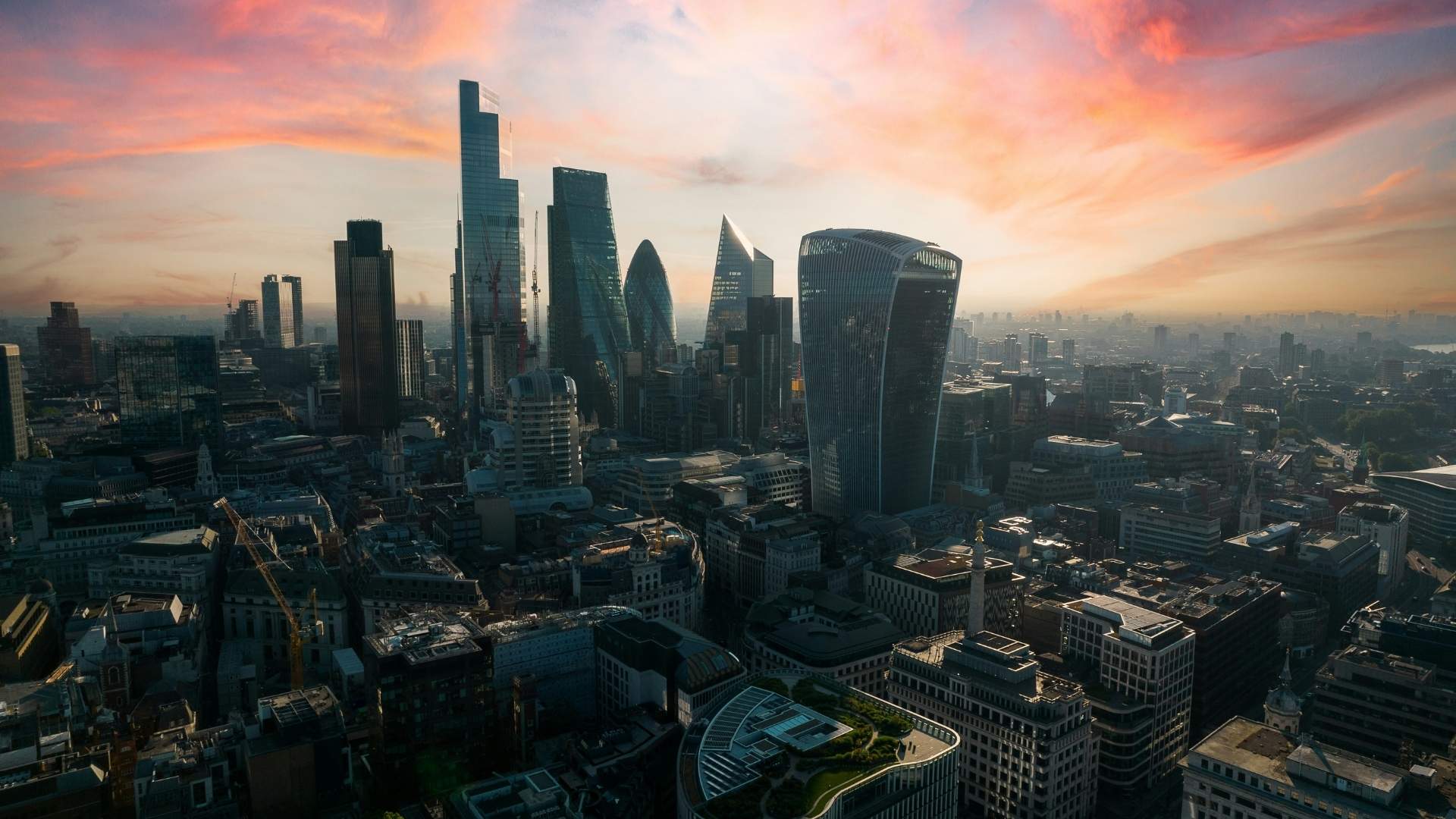
TLDR: The City of London packs an extraordinary number of worthwhile attractions into 1.12 square miles - from a Norman castle with the Crown Jewels to a free rooftop garden on the 35th floor of a glass tower. Most of the best things here are free or cheap. Visit on a weekday for the energy; visit on a weekend for the breathing room.
The Square Mile doesn't always get treated as a neighbourhood worth exploring properly. Most visitors come for the Tower of London, get a photo of St Paul's from the Millennium Bridge, and move on. That's understandable - the obvious things are very good. But after several visits spent going deeper into the side streets and basements, I'd argue the City of London has more hidden depth per square metre than almost any comparable area in Europe.
These 8 entries cover the major sights and the less-obvious ones, with honest assessments of what's worth the time and what the trade-offs are. We’ve also added a map in the bottom to make it easier for you to find all the attractions.
1. Tower of London
.jpg)
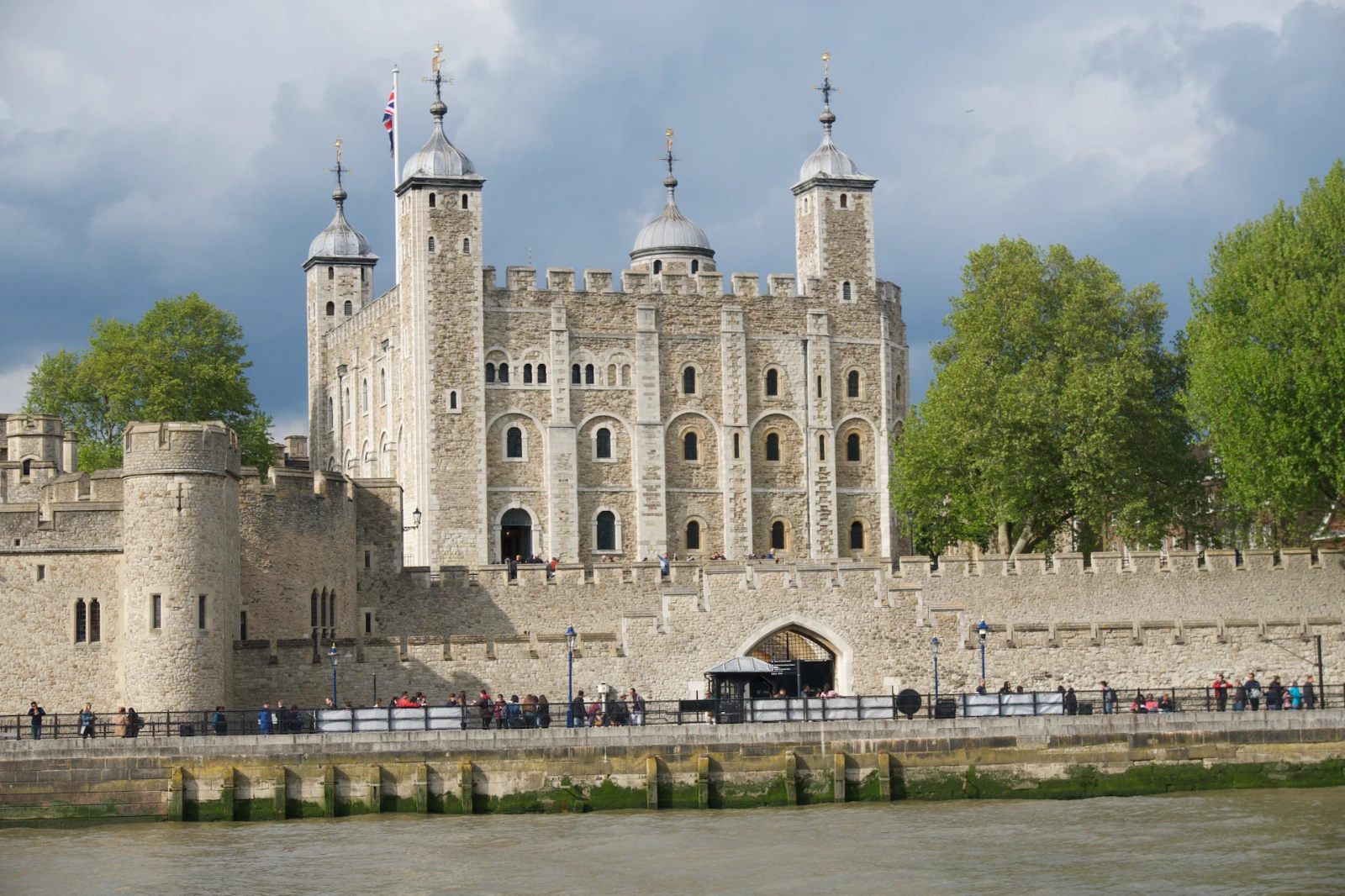
The Tower of London is the City's anchor attraction. It's a Norman castle begun by William the Conqueror in 1078 that has served, at various points, as a royal palace, a political prison, a place of execution, an armoury, a royal mint, a public records office, a menagerie, and a treasury. Visitor numbers approach three million a year, which makes it one of the busiest paid attractions in the country.
Book tickets in advance (around £34 for adults) and arrive at opening time, particularly in summer.
The Crown Jewels are the main draw - a working collection of royal regalia including crowns, orbs, and sceptres used in coronations, displayed in the Jewel House on a slow-moving travelator that means most people see them briefly. Allowing extra time for the queue is worth it. The medieval palace, the Bloody Tower, and the Wall Walk are all included in the ticket price and less crowded than the Jewel House.
The ravens are real. By Royal Decree, at least six must be kept at the Tower at all times; legend holds that if the ravens ever leave, the Crown and the Tower will fall. There are currently nine.
Did you know? Anne Boleyn, Catherine Howard, Lady Jane Grey, Sir Thomas More, and Sir Walter Raleigh are among those executed at the Tower. Sir Walter Raleigh was held prisoner there three separate times.
2. St Paul's Cathedral
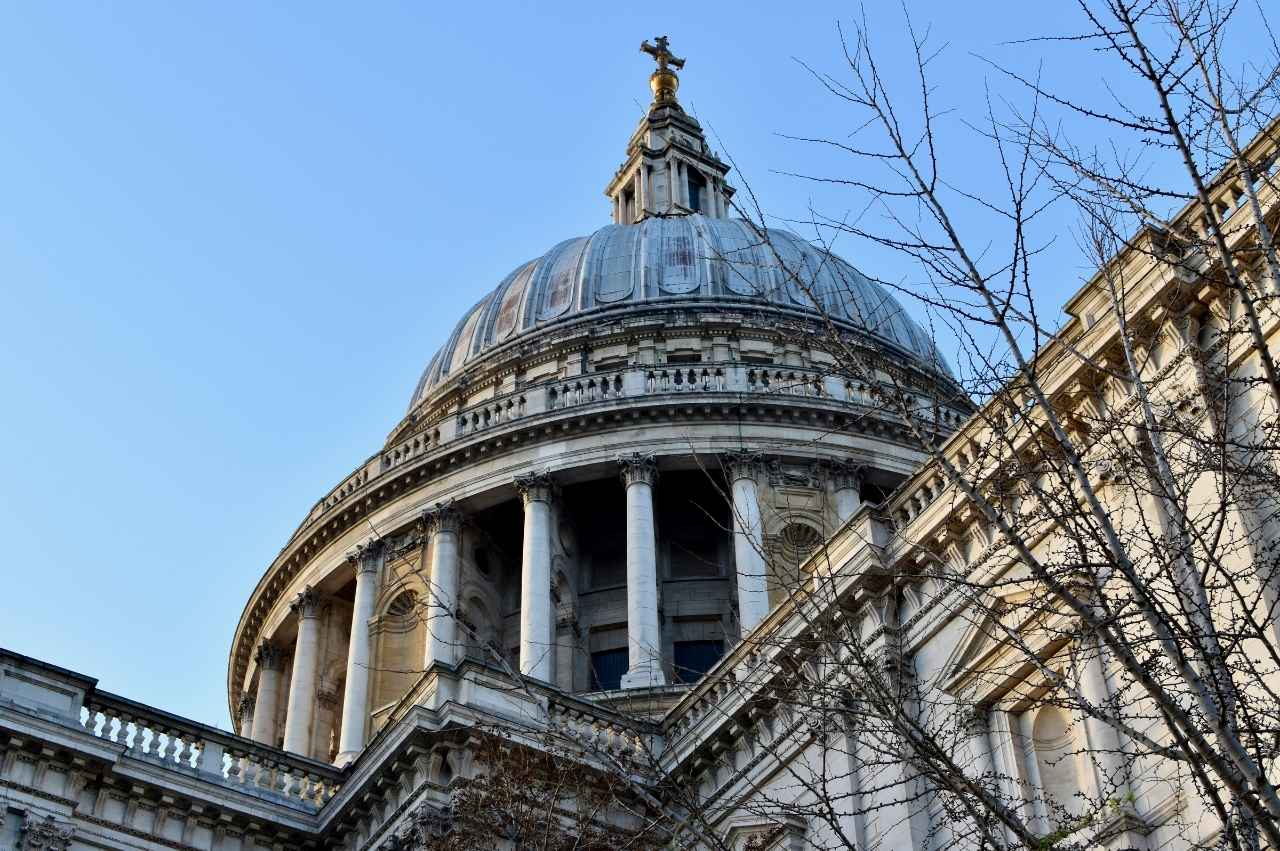
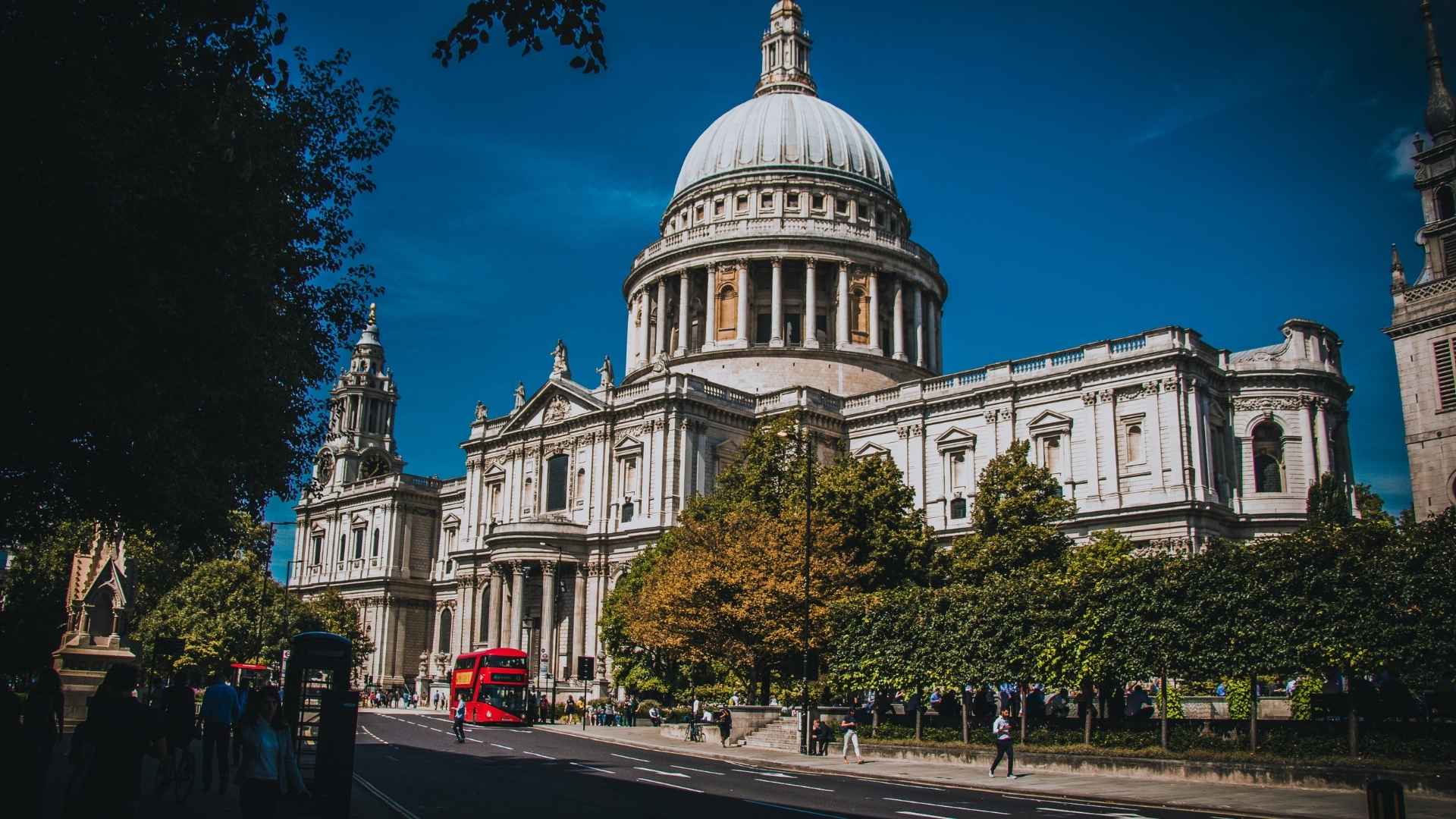
St Paul's Cathedral is Wren's defining achievement; a building that took 35 years to complete and was finally consecrated in 1708. The dome, at 111 metres, was the tallest building in London from its completion until 1967. It's still the second-tallest church in England.
The interior rewards more time than most visitors give it. The Whispering Gallery, 30 metres above the cathedral floor inside the dome, is where the physics become theatrical: a whisper directed at the curved wall carries clearly to the opposite side, 34 metres away.
Above it are the Stone Gallery (outdoor, 53 metres up) and the Golden Gallery (outdoor, 85 metres up, reached via 528 steps in total). The view from the Golden Gallery is one of the best elevated perspectives on London - you're looking out over the City, along the Thames, and across to South London.
Admission is around £23 for adults.
Did you know? Wren's original design for St Paul's, known as the Great Model design, was rejected by the church commissioners. The building we see today was Wren's third attempt to find a design they would accept. He subsequently made changes during construction without telling the commissioners.
3. Sky Garden
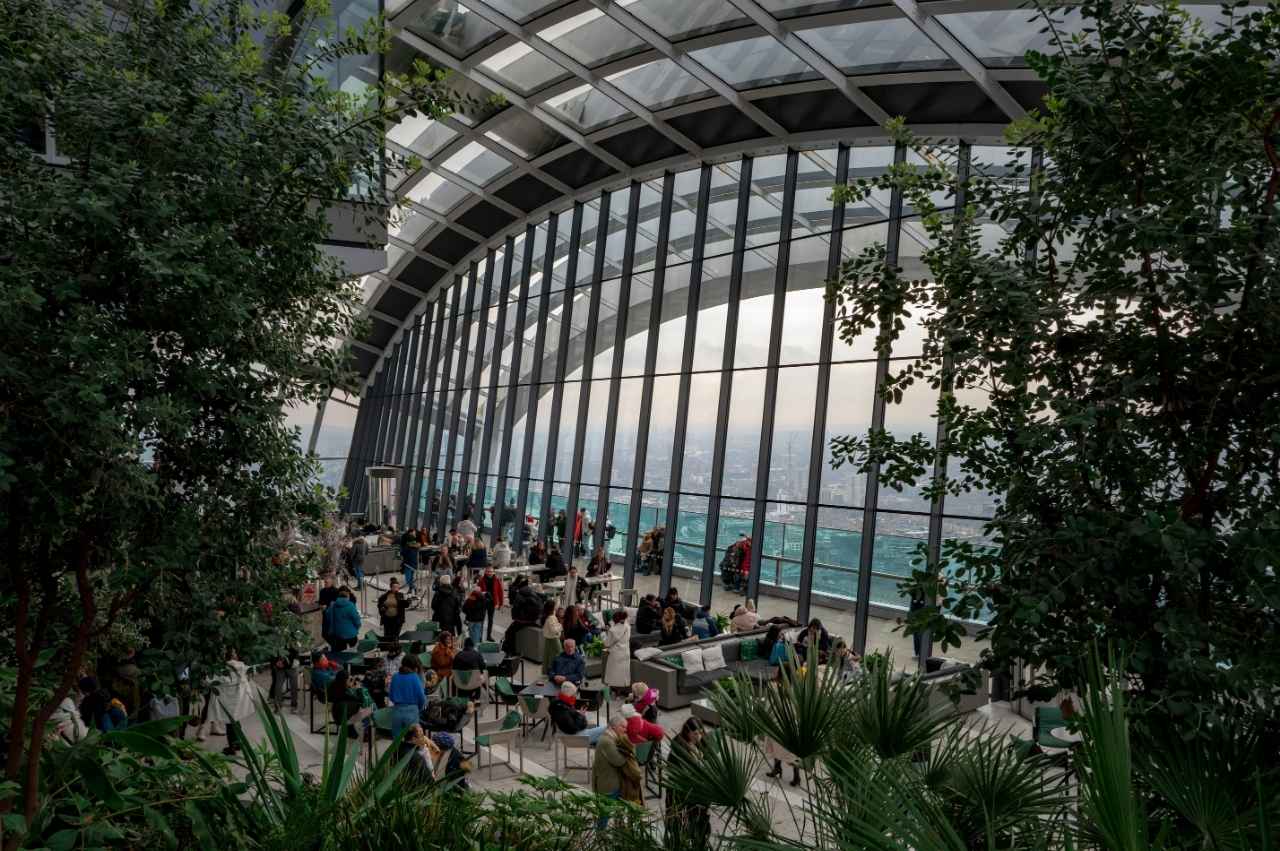
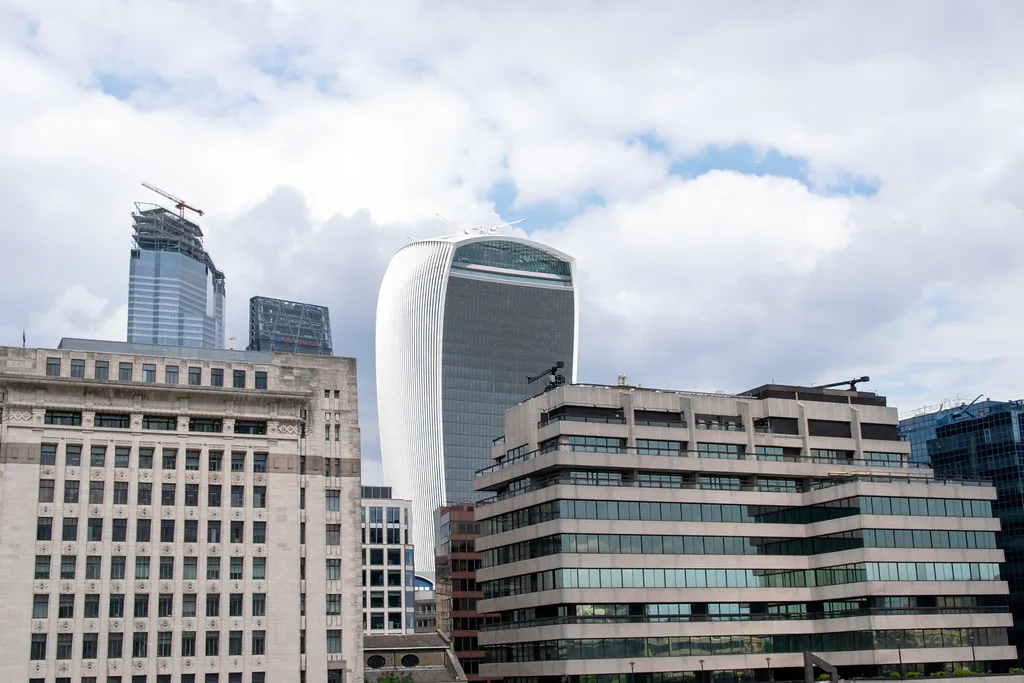
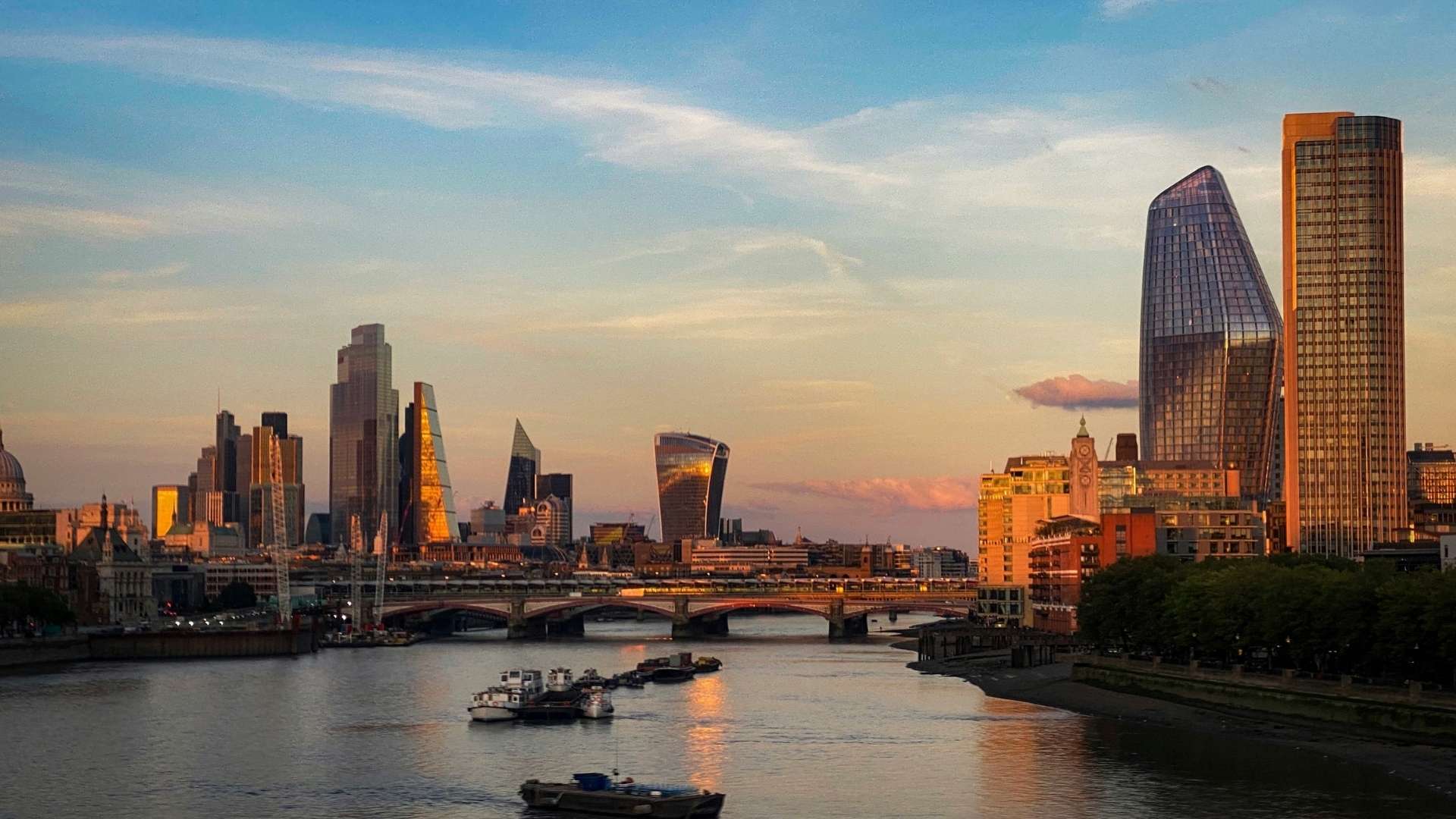
Sky Garden occupies the top three floors (35th to 37th) of 20 Fenchurch Street - the building Londoners call the "Walkie Talkie2 for its distinctive upward taper. The landscaped gardens at 155 metres look out over the Thames, the City, and south London in every direction.
Entry is free, which makes it one of the better deals in London - but it must be booked in advance through the Sky Garden website. Same-day tickets are rare; booking a week ahead is more reliable during peak season.
The gardens themselves are genuine - the're planted with Mediterranean and South African species across a tiered layout - rather than just an observation platform with a few pot plants. The restaurants and bars on the same floors don't require Sky Garden booking and are worth knowing about if you want a drink with the same view at the cost of a glass of wine rather than advance planning.
Did you know? The Walkie Talkie building has a name for a reason - its shape isn't arbitrary. The upper floors are significantly wider than the lower floors because they contain more floor space, which is more valuable as rental property. The solar panel issue during construction was an unintended consequence of that geometry.
4. The Monument
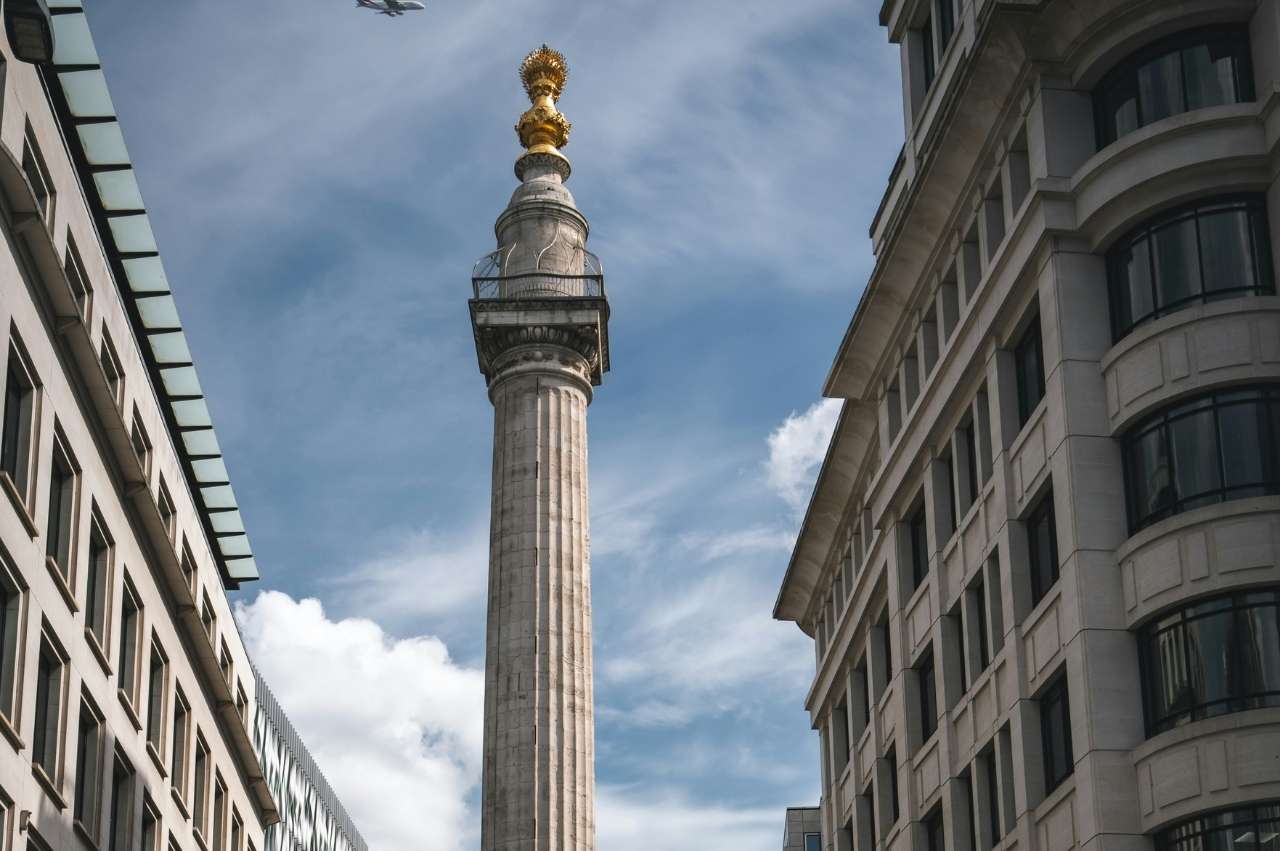
The Monument to the Great Fire of London stands 62 metres tall on Monument Street - 202 feet exactly, which is the precise distance from its base to the bakery on Pudding Lane where the fire started on 2 September 1666. That measurement isn't accidental; Wren and Robert Hooke designed the monument so that if it were tipped over to the west, its top would fall exactly on the site of the fire.
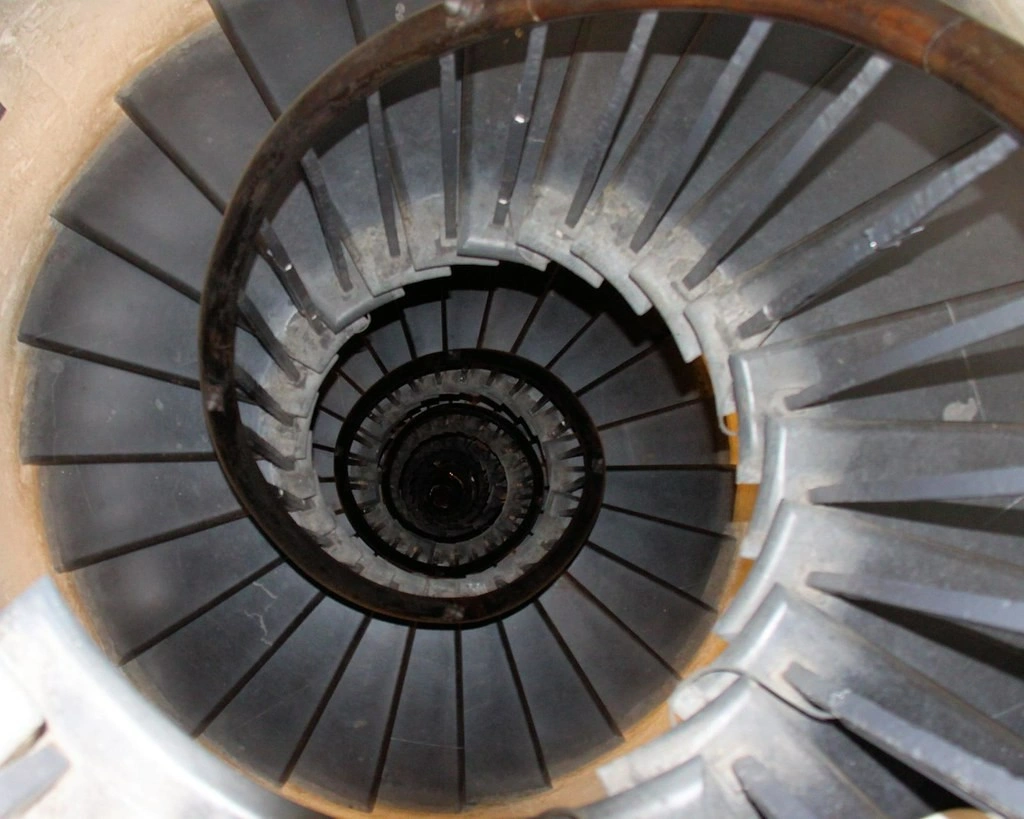
Climbing the 311 spiral steps to the viewing platform costs around £6 for adults and takes about ten minutes at a steady pace. The platform view from inside is good, looking across the City toward the Thames. The certificate awarded on completion has been given to climbers since the monument opened. Children appreciate this considerably.
The Monument is often combined with a walk to Leadenhall Market or across London Bridge. It's uncrowded most mornings.
Did you know? The monument was used as a scientific instrument. Wren and Hooke installed a zenith telescope in the shaft - a 62-metre drop designed to allow astronomical observations from a completely stable platform. The experiment didn't work as planned due to vibrations from passing traffic, but the monument retains the telescope shaft to this day.
5. Explore London with StoryHunt

The City of London's attractions are tightly clustered but not always obviously connected.
The StoryHunt app is free to download and lets you build a custom audio walk through the Square Mile that connects these sites - from the castle at Tower Hill to Wren's cathedral and to the Victorian market hall - with context delivered as you walk. You set the pace and the route.
Try out StoryHunt for free here.
6. Leadenhall Market

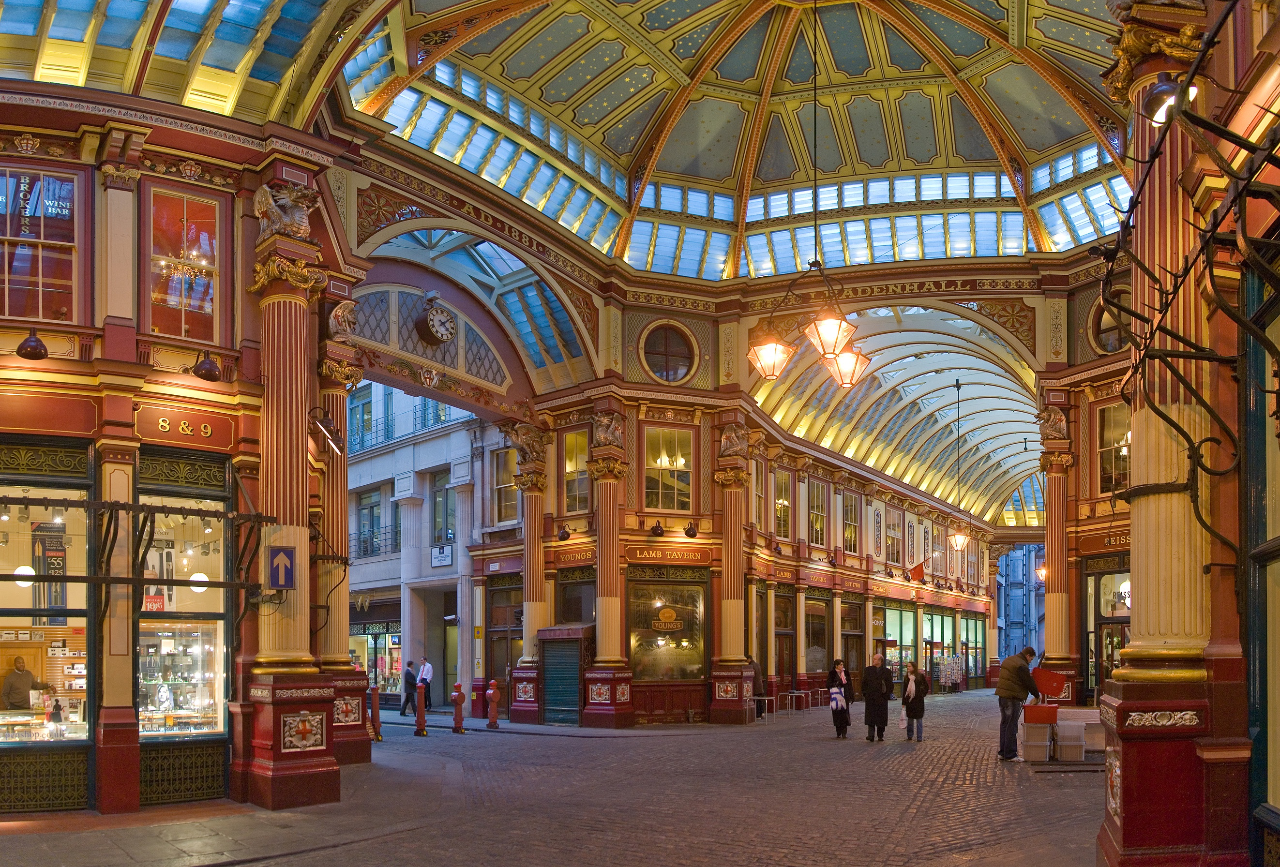
Leadenhall Market is a Victorian covered market at the heart of the financial district, built in 1881 on a site that has hosted a market since the 14th century - and before that, stood on the site of the Roman basilica and forum that was the civic centre of Londinium. The ornate painted ironwork in burgundy, cream, and green, combined with cobbled lanes and a vaulted roof, makes it one of the most photogenic spots in the City.
It appeared in the Harry Potter films as the entrance to Diagon Alley (the optician's shop at the market's Lime Street entrance stood in for the Leaky Cauldron). The cobbles and architecture still look recognisably like the film set, which draws fans who weren't expecting to find it in the middle of a working financial district.
On weekday lunchtimes, the lanes fill with office workers and the dozen or so restaurants trade seriously. On weekend afternoons, the market is quieter and more photogenic.
Did you know? The name "Leadenhall" comes from a 14th-century mansion with a lead roof that once stood on the site. The current building replaced an earlier Victorian market structure and was designed by City architect Horace Jones - the same architect who designed Tower Bridge.
7. Bank of England Museum

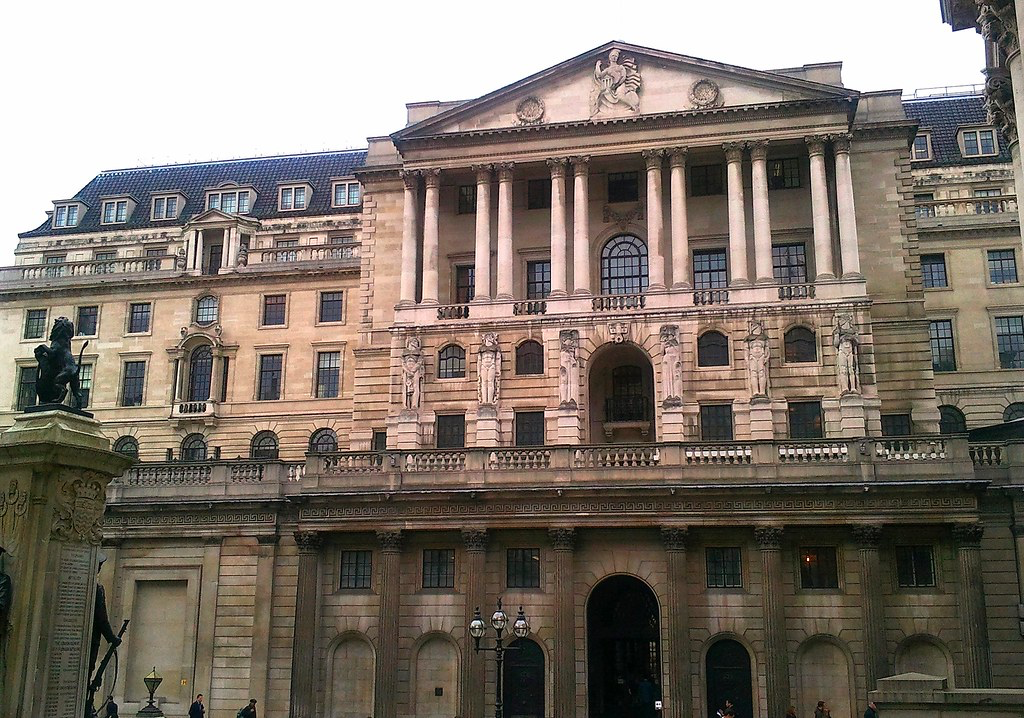
The Bank of England Museum is free, consistently uncrowded, and considerably more interesting than its name suggests. The Bank was founded in 1694, originally to raise money to fund a war against France, and the museum tells that 330-year story in a building that was part of the original Sir John Soane-designed bank before the current structure was built in the 19th century.
The gold bars are the main draw - genuine gold bars from the Bank's reserves that visitors can try to lift through a security case. A standard gold bar weighs around 13 kg. Most people discover this is heavier than it looks.
The museum also covers the history of banknotes, the role of the Bank during financial crises including 2008, and the original charter. It's small - budget about an hour - and well curated.
Did you know? The Bank of England sits on top of a Roman road and parts of the Roman wall. During the construction of the current building in the early 20th century, significant Roman remains were found beneath the site, including parts of the original city walls.
8. The Gherkin
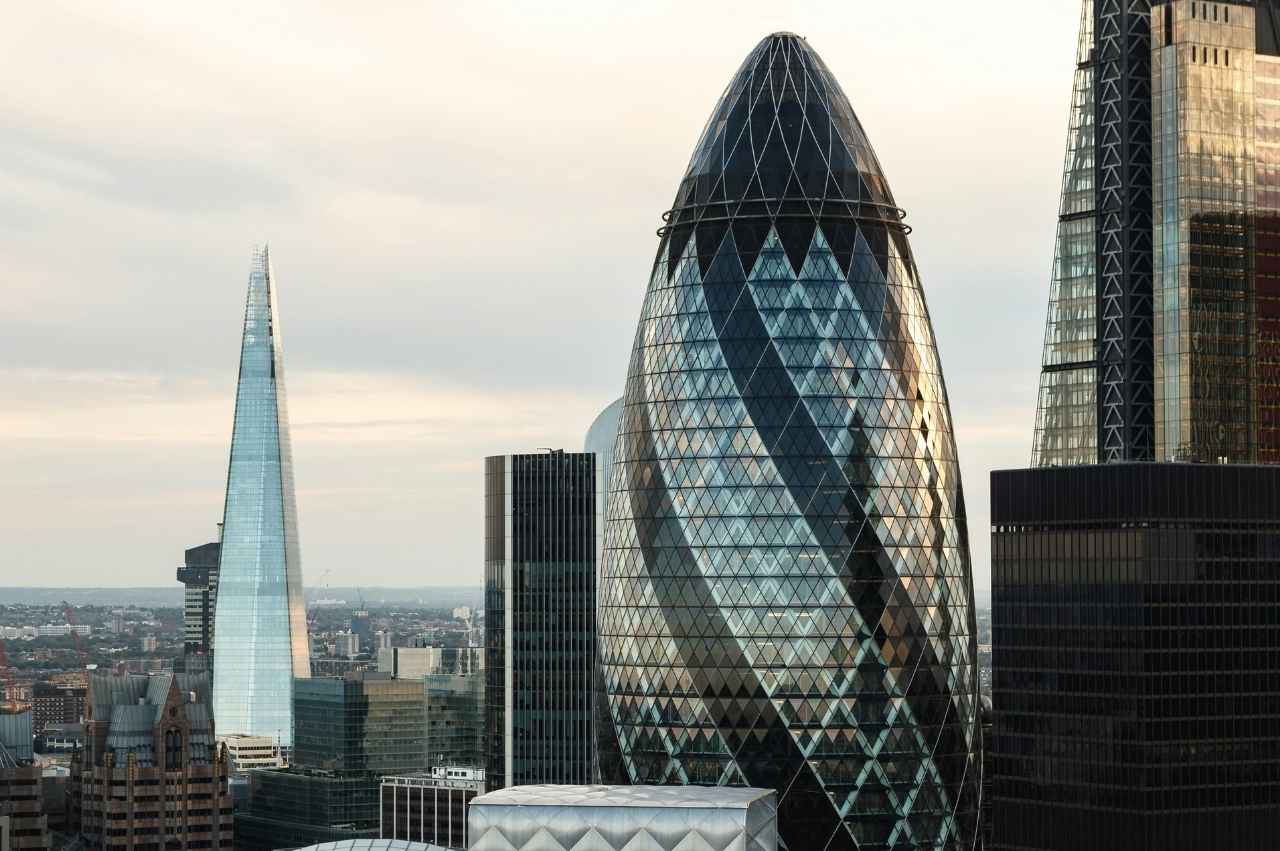
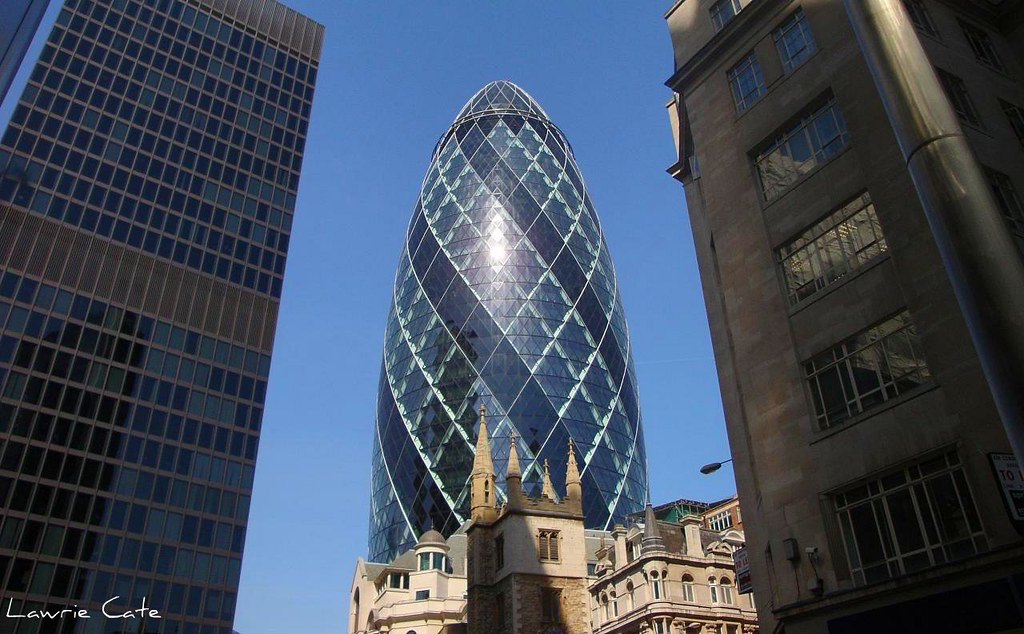
30 St Mary Axe - universally known as The Gherkin - was completed in 2003 and designed by Norman Foster and Partners. At 180 metres, it's no longer the tallest building in the City, but it remains the most immediately recognisable. The glass-and-steel diagrid exoskeleton - a structural system of diagonal intersecting tubes - eliminates the need for internal support columns, creating clear, column-free floor space across all 41 floors.
The interior is not open to the public for general visits, but the building is worth spending time with from street level. The geometry changes depending on your angle and the light: circular in cross-section but tapering at both the top and the base, it was one of the first major buildings in London to establish the now-familiar conversation between modern glass towers and the Victorian and Georgian city around them.
Did you know? The Gherkin is built on the site of the Baltic Exchange, which was severely damaged by an IRA bomb in 1992. Attempts to restore the Victorian building failed, and the site was eventually redeveloped. Some of the Baltic Exchange's historic glass panels were salvaged and incorporated into the new Gherkin lobby.
Is it worth visiting the top attractions in the City of London?
Yes - and the combination of free and paid attractions makes the City one of the better-value areas in London for a full day out. You can read all about the neighborhood right here.
The City of London's 2,000 years of history are best understood on foot. With the StoryHunt app you can build a custom audio walk connecting the Tower of London, St Paul's, The Monument, Leadenhall Market, and everything in between - with stories and context delivered as you walk. Download StoryHunt for Android and iOS here.










.avif)

.jpg)


.avif)

.jpg)
.avif)


