
.webp)


TLDR: Christianshavn is Copenhagen's canal district, built by King Christian IV in the 1600s as a Dutch-inspired merchant town. Key attractions include Freetown Christiania and waterfront street food. Less touristy, more charming.
Imagine stepping into a district that feels both distinctly Danish and wonderfully out of time, where the calm rhythm of canals meets a vibrant, independent spirit. That's Christianshavn for you, a captivating corner of Copenhagen.
It feels like a separate town, which makes sense because it was one. This former fortified merchant district sits on artificial islands between Zealand and Amager, connected to the city centre but stubbornly holding onto its own character.
This article will be your practical guide, sharing my first-hand observations on its intriguing past, its well-known spots, hidden nooks, and, of course, where to savor some fantastic food.
What is the story behind Christianshavn?

King Christian IV founded Christianshavn in 1639 as an independent merchant town, modelled after Dutch canal cities like Amsterdam. The area was built on reclaimed marshland between 1618 and 1623, originally as part of Copenhagen's southern fortification system with earthen ramparts and bastions.
Competition from Copenhagen proved too strong, and by 1674 Christianshavn was absorbed into the larger city. For much of the 20th century it was a working-class neighbourhood. The bohemian reputation arrived in the 1970s, and today it's a fashionable but still diverse district where old sailor bars sit next to upscale restaurants.
What is Christianshavn known for?
Christianshavn is renowned for its charming blend of history and bohemian flair. You'll quickly notice its iconic canals, where colorful historic houses, old warehouses, and even a few houseboats line the water, giving the area a definite nautical feel. It's often compared to Amsterdam, and you'll immediately see why as you cross its many small bridges.
The self-proclaimed Freetown Christiania is perhaps its most famous resident, drawing visitors with its alternative lifestyle, unique art, and vibrant atmosphere. Another key landmark is the Church of Our Saviour, with its distinctive spiraling spire that promises incredible city views.
I also find the peaceful green space of Christianshavns Vold, the old 17th-century ramparts, a refreshing spot for a quiet moment. And if you’re a food lover, Broens Gadekøkken, a bustling street food market, has become a popular spot by the Inner Harbour.
What to do in Christianshavn?
If you visit Christianshavn, there are a few must-do activities that really capture its essence. The top things to do in Christianshavn centre around the canals, the church, and the neighbourhood's alternative side:
- Church of Our Saviour: Climb 400 steps to the top of the spiral spire (the last 150 are outside) for Copenhagen's best panoramic view.
- Christianshavn Canal: Walk along Overgaden Oven Vandet and Overgaden Neden Vandet, the streets flanking the main canal.
- Freetown Christiania: Copenhagen's self-governing community, founded in 1971 in abandoned military barracks.
- The Ramparts: Some of Denmark's best-preserved 17th-century fortifications, now a green park for walking and jogging.
The Opera House is also worth a visit, and if you want something out of the ordinary, turn your gaze to either CopenHill og the BLOX building.
You can read our full guide to the top attractions in Christianshavn here.
What are the hidden gems in Christianshavn?

Beyond the main attractions, Christianshavn holds some lovely surprises that reveal its deeper character.
I thoroughly enjoy the peaceful retreat of Christianshavns Vold; it’s a historical defense system perfect for quiet walks and picnics, far from the city's buzz. Another delightful discovery is Lille Mølle, an octagonal windmill that once served as a unique residence and now functions as a charming, small museum.
For a taste of Nordic culture beyond Denmark, the North Atlantic House is fascinating, showcasing the heritage of the Faroe Islands, Greenland, and Iceland. I also love wandering along Laksegade, or "Salmon Street", where you'll stumble upon hidden murals. Keep your eyes peeled for "Green George," one of Thomas Dambo's whimsical troll sculptures, adding a playful touch to the landscape.
You might also find interesting street art in the Sydområdet area. And while Broens Gadekøkken is gaining popularity, its waterfront location still feels like a gem for diverse culinary delights.
One charming to notice: the streets lining the main canal are called "Overgaden Oven Vandet" and "Overgaden Neden Vandet," literally "the street above the water" and "the street below the water," a quirky nod to its origins as a fortified merchant town designed around water.
If you want to discover these quieter corners with context, StoryHunt creates custom audio walks based on your interests, from maritime history to architecture to Copenhagen's alternative culture. Try out StoryHunt for free by clicking here.
Where are the best places to eat in Christianshavn?

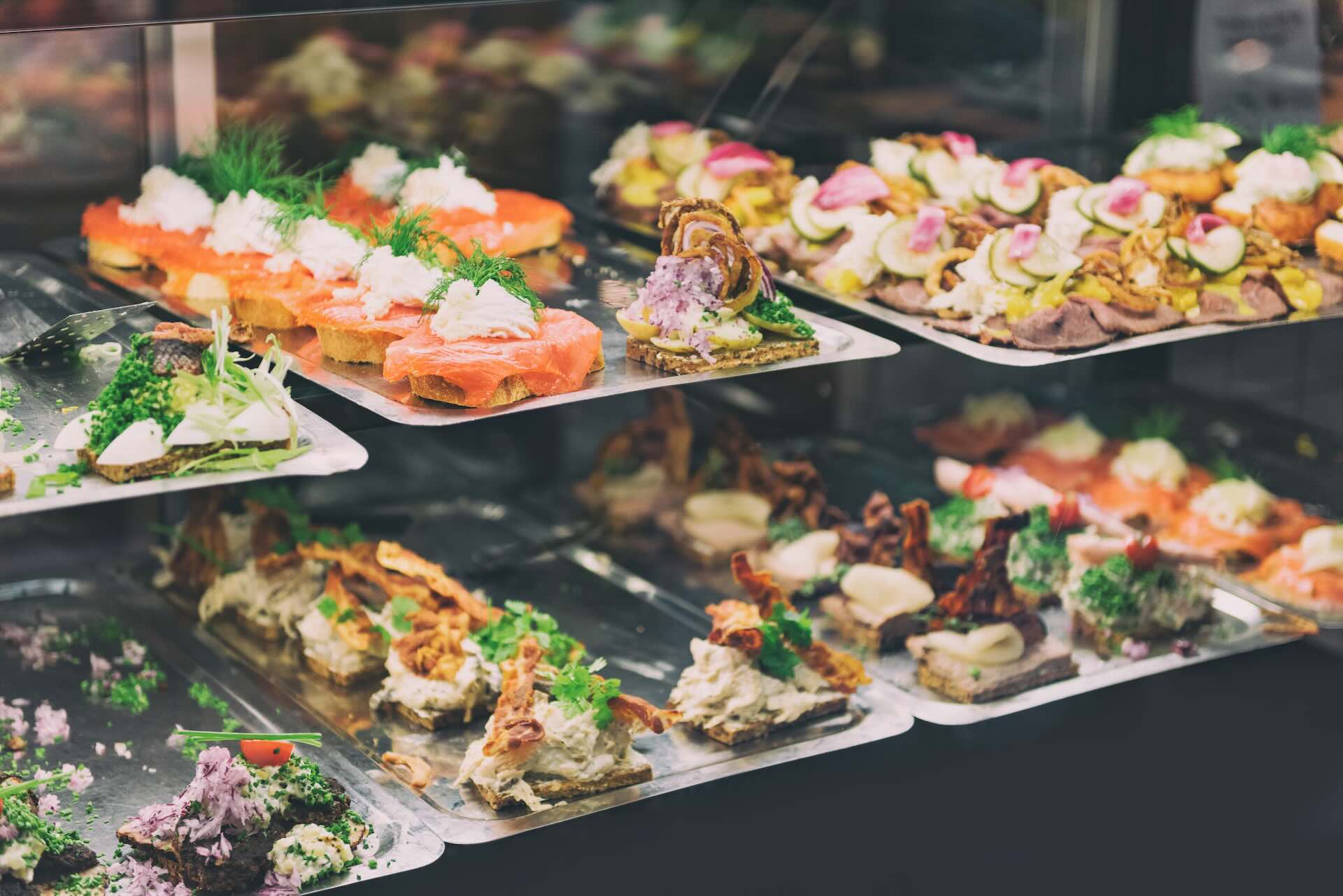
Christianshavn boasts an incredible range of dining options, from world-class to wonderfully casual.
For a truly memorable experience, two Michelin-starred restaurants, Kadeau and Restaurant Aure, offer exceptional, creative cuisine. Noma, another two-Michelin-starred spot, is also nearby, but be prepared for a long wait for reservations and a significant price tag.
If you’re craving traditional Danish fare, Christianshavns Færgecafé is a charming choice. They serve classic dishes, often with a glass of aquavit, in a beautiful, historic setting that feels like it’s been there forever. For something more casual, Cafe Wilder is a popular spot for lunch and dinner, known for its understated charm and its appearance in the Danish TV drama Borgen.
You’ll find specialized spots too: Grød focuses on comforting porridge dishes, and La Banchina is a unique wine bar and restaurant offering tasty dinners, natural wines, and even a sauna and bathing jetties in summer – the warmth from the sauna on a cool day felt amazing!
For a simple coffee or light bite by the water, Christianshavn Bådudlejning (Boat Rental) has a charming café. For breakfast, Parterre is a cozy basement café with hearty options, and Lagkagehuset, a famous Danish bakery, is perfect for picking up a freshly baked "kanelsnegle" (cinnamon snail) – the smell alone will pull you in.
Is Christianshavn the same as Christiania?
No, Christianshavn and Christiania are definitely not the same thing, though they are closely intertwined.
Christianshavn is the larger, historic, and beautiful Copenhagen neighborhood, known for its canals and maritime history, founded by King Christian IV in the 17th century. It’s where you find the colorful houses, the Church of Our Saviour, and much of the culinary scene I just mentioned.
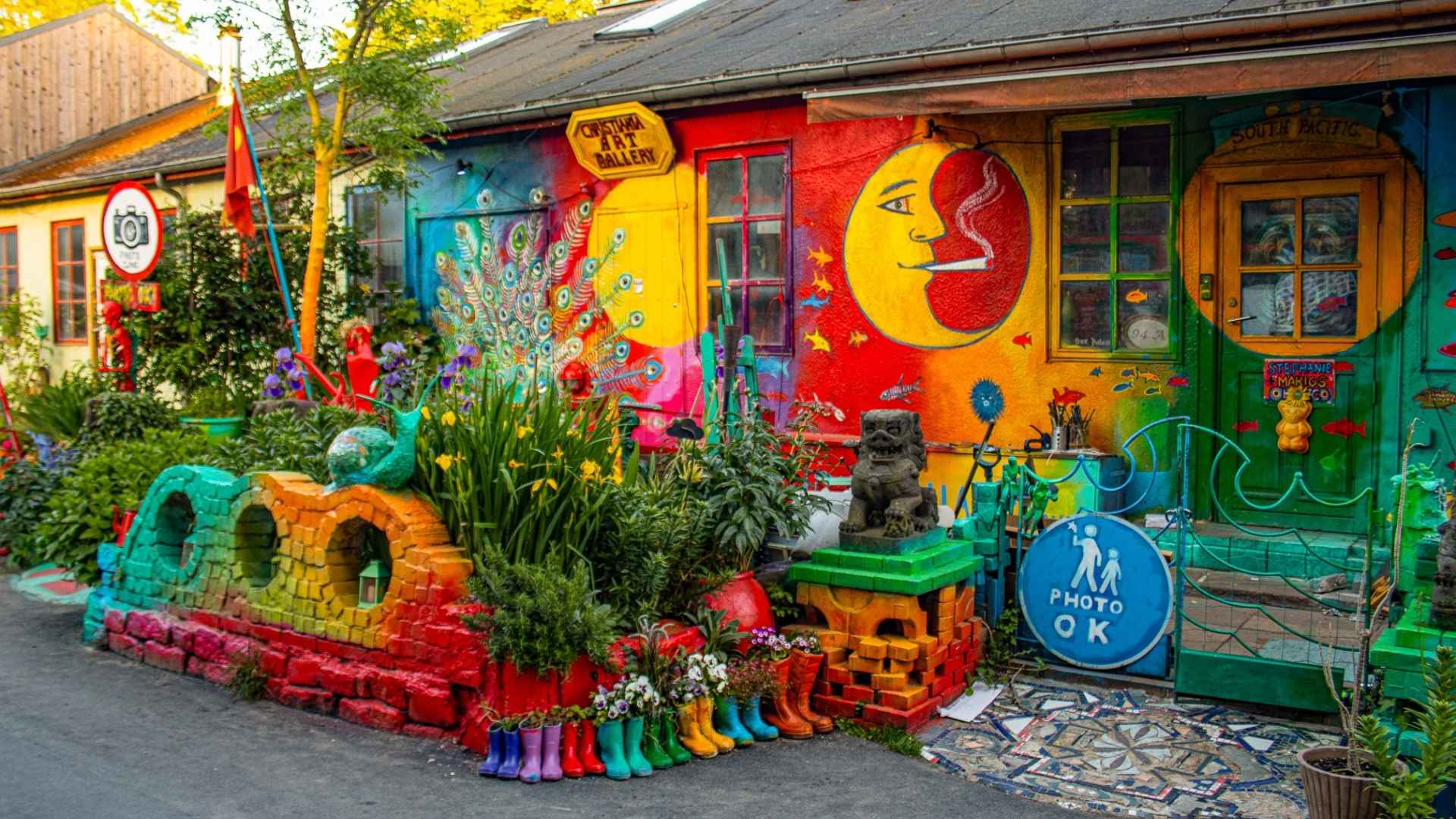
Freetown Christiania, on the other hand, is a self-proclaimed autonomous community located within the Christianshavn district. It was established in 1971 by squatters in a former military base and operates with its own unique set of rules, largely independent of the Danish government. It’s famous for its alternative lifestyle, vibrant street art, and distinctive atmosphere, attracting around half a million visitors annually.
How do you get to Christianshavn?

Christianshavn is a 10-minute walk from Strøget across the Knippelsbro bridge. The Christianshavn Metro station (M1 and M2 lines) sits at Christianshavns Torv.
Copenhagen Harbour Buses also stop here, which is a scenic way to arrive from Nyhavn or other waterfront locations.
Once you're in the neighbourhood, everything is walkable. The canals and ramparts make for natural walking routes that loop back to the main square.
If your're on a bike, you should really try to cross The Circle Bridge - it's a fun way to experience some Danish architecture.
Is it worth visiting Christianshavn?
Absolutely, Christianshavn offers a truly unique and charming Copenhagen experience. Its picturesque canal district, with colorful merchant houses and houseboats, is a delight to wander through, especially on a sunny day. Climbing the spiraling spire of the Church of Our Saviour for those panoramic city views is a definite highlight. And Freetown Christiania, with its alternative culture, provides a fascinating, albeit different, insight into Copenhagen’s diverse communities. It certainly won't feel like any other part of the city you visit.
However, it's worth considering a few things. Christiania's "alternative vibe" might not appeal to everyone, and while generally safe, some areas might feel less comfortable. Its past association with "Pusher Street" is something to be aware of, and photography is generally advised against there. Christianshavn is also less overtly touristy than, say, Nyhavn.
The best time to visit is when the weather is pleasant, allowing you to fully enjoy canal-side activities and outdoor cafes. You'll need at least half a day to see the main sights, but a full day allows for a much more relaxed exploration. For those with limited mobility, some older, cobbled areas might present challenges. To easily prioritize what to see and make the most of your visit, consider using StoryHunt for insightful audio guidance.
How to explore Christianshavn your way?

Want to go beyond the main sights and discover Christianshavn's maritime history, canal architecture, and local favourites? You can discover everything from BLOX to CopenHill and to Christiania with StoryHunt, which creates custom audio walks with an interactive map, tailored to your interests.
Download StoryHunt for Android and iOS here.
Explore at your own pace and let the stories guide you through Copenhagen's most characterful canal district - or explore some of the other neighbourhoods of Copenhagen.







.avif)


.avif)








.avif)




.avif)


