
.webp)


TLDR: Wall Street offers a historical and symbolic journey through American finance, showcasing iconic landmarks like the NYSE, Federal Hall, Charging Bull, and Fearless Girl. While indoor access is limited, the street itself provides a tangible link to history and economic power. Easily accessible via subway, and best experienced on weekdays for its true vibe.
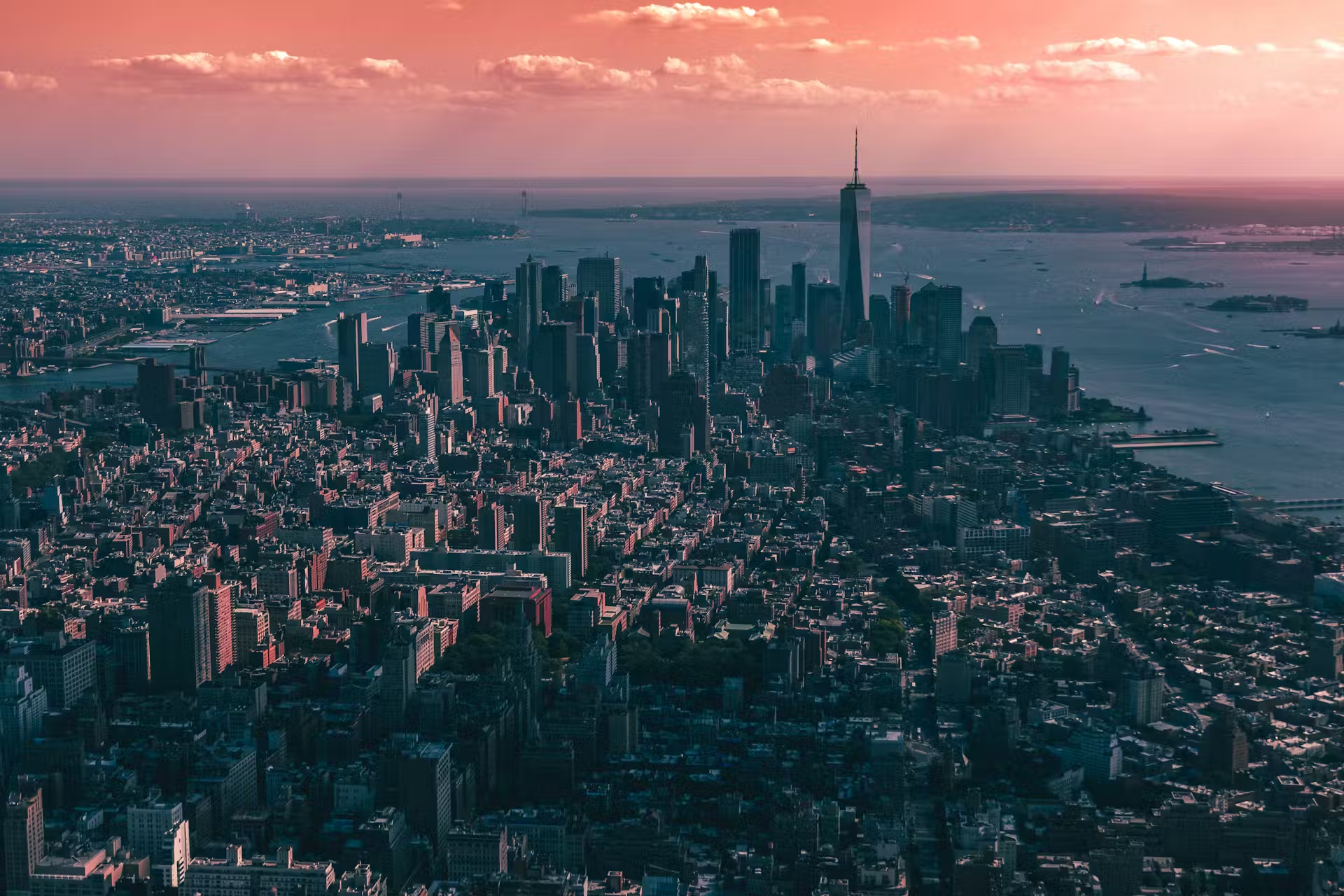
Stepping onto Wall Street feels like walking through a living history book, yet it's also the thumping heart of global finance. As a fellow explorer, I recently navigated its storied pavements and gathered practical insights for you.
This article will peel back the layers of this iconic street, from its ancient origins to its modern-day appeal, helping you decide if this legendary corner of New York City deserves a spot on your itinerary.
What is the story behind Wall Street?

Imagine standing on a muddy path, hearing the distant sounds of settlers building a protective barrier. That's the genesis of Wall Street. In 1653, Dutch residents of New Amsterdam erected a timber and earth wall, originally called "Het Cingel," to guard against perceived threats. What began as a defensive frontier eventually transformed into a bustling commercial hub.
Fast forward to 1792, and you'd see 24 stockbrokers gathering under a buttonwood tree, their signatures on an agreement laying the groundwork for the New York Stock Exchange and the very fabric of American finance we know today. Yet, this area carries a complex past, a weight you can almost feel in the air.
For a period in the 18th century, it was also New York City's primary slave market, a stark reminder of its challenging history. Today, Wall Street isn't just pavement and buildings; it’s a global emblem of ambition and economic power, intertwined with stories of both innovation and past upheavals.
What is Wall Street in New York famous for?
Wall Street, though a relatively short stretch in bustling Lower Manhattan, resonates worldwide as the epicenter of the American financial system. Its fame largely stems from hosting the New York Stock Exchange (NYSE), an imposing structure that stands as the world's largest stock exchange. When you stand before it, you can almost hear the echoes of historic trades.
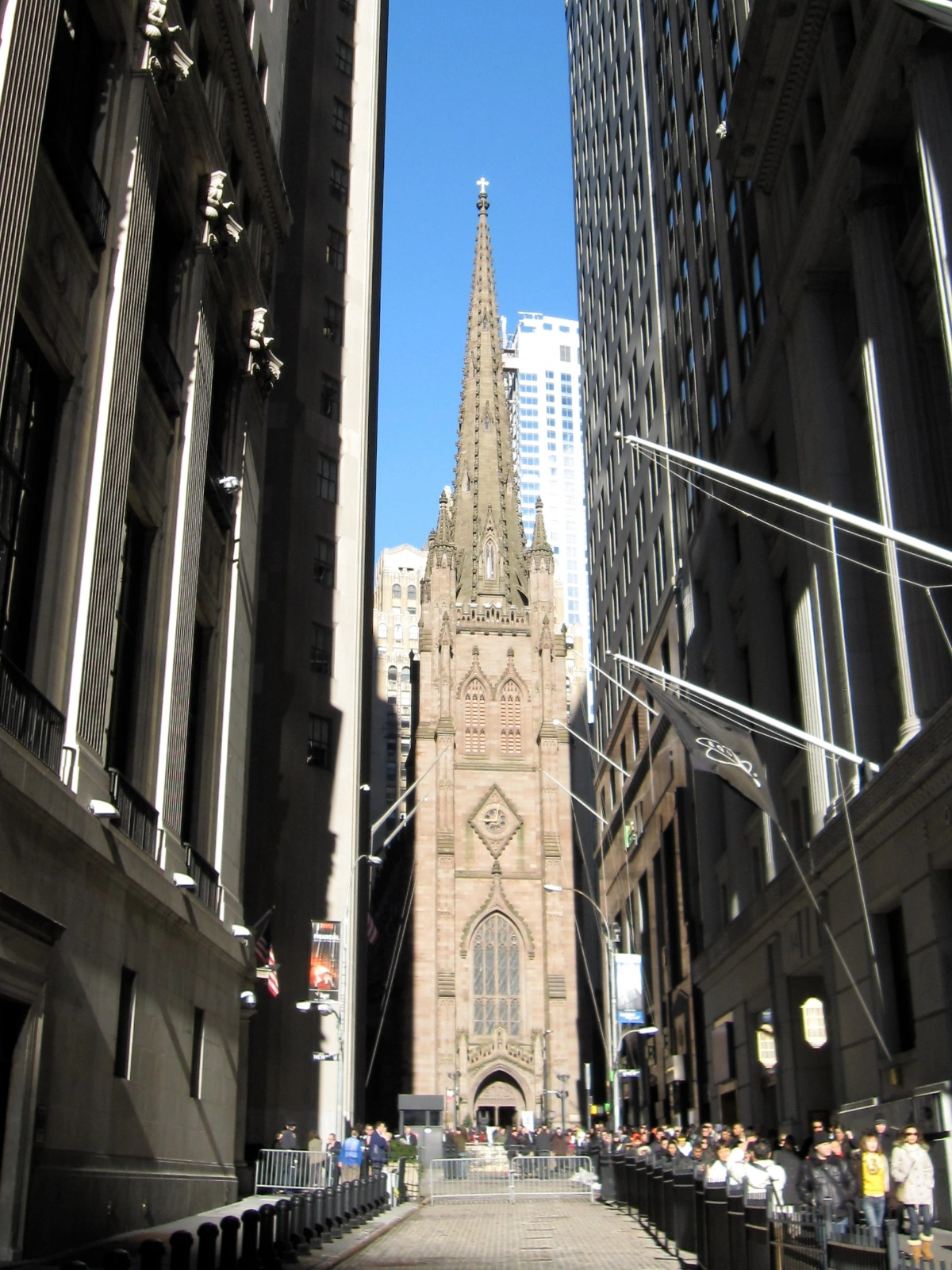
Beyond its immediate financial significance, the street boasts a rich tapestry of history. You'll find Federal Hall National Memorial, a powerful site where George Washington took his oath as the first U.S. President. Nearby, the bronze Charging Bull sculpture, an iconic symbol of financial optimism, draws crowds, while the Fearless Girl statue, positioned directly opposite the NYSE, represents empowerment. Don't miss Trinity Church, a beautiful historic church whose quiet graveyard holds the resting places of many prominent New Yorkers.
Why is it called Wall Street?

The origin of the name "Wall Street" is surprisingly literal and steeped in the city's early colonial days. When New York was still New Amsterdam, Dutch settlers in 1653 constructed a defensive wooden wall. This formidable barrier, standing twelve feet high and reinforced with sharpened logs, stretched across Lower Manhattan. Its purpose was to safeguard the colony's northern boundary from potential attacks by Native Americans and rival British forces.
While the wall itself never saw battle and was eventually dismantled in 1699, its presence left an enduring mark. The path that ran alongside this fortification naturally became known as Wall Street. It's fascinating to think that the Dutch initially called this stretch "Het Cingel," meaning "the Belt." Today, you can still find a plaque at the corner of Wall and Broadway, marking the spot where a city gate once stood, a subtle nod to its protective origins.
Can you visit Wall Street in New York?
Yes, absolutely! Wall Street is openly accessible to the public, inviting you to explore its eight blocks in Lower Manhattan's Financial District. It's a popular destination, and while the New York Stock Exchange closed its public tours after 9/11, its impressive facade at the intersection of Wall and Broad Streets is still a powerful sight. You can’t step inside to witness the trading floor, but seeing its grand exterior is a must.
Directly across, Federal Hall National Memorial offers a free, engaging museum experience, marking the place where George Washington became president and the Bill of Rights was drafted. Just a short walk from Wall Street, you'll find the famous Charging Bull sculpture in Bowling Green Park, a magnetic photo spot. Don't forget to wander through Stone Street, one of New York's oldest paved roads, giving you a sense of stepping back in time.
Is Wall Street near Times Square?

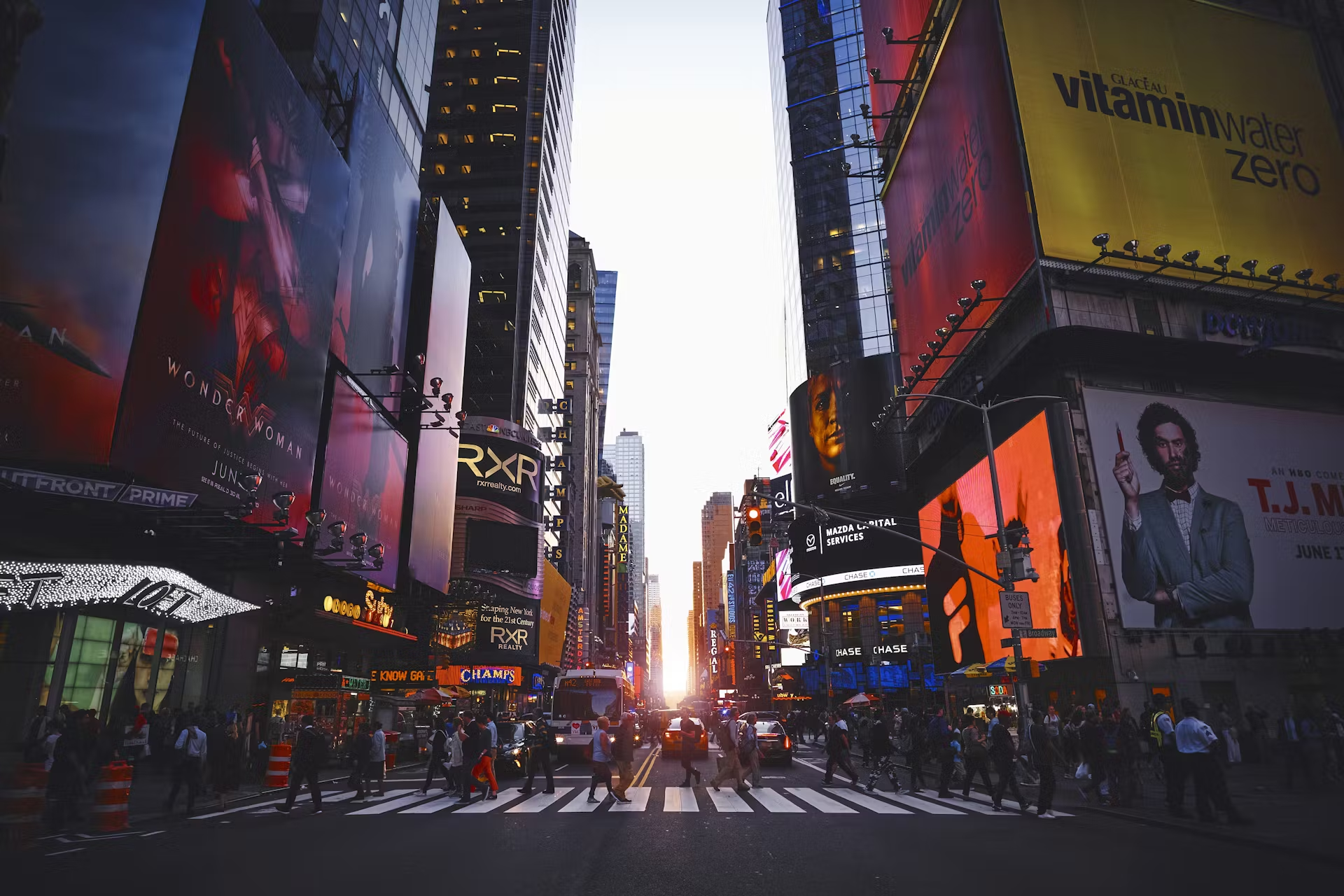
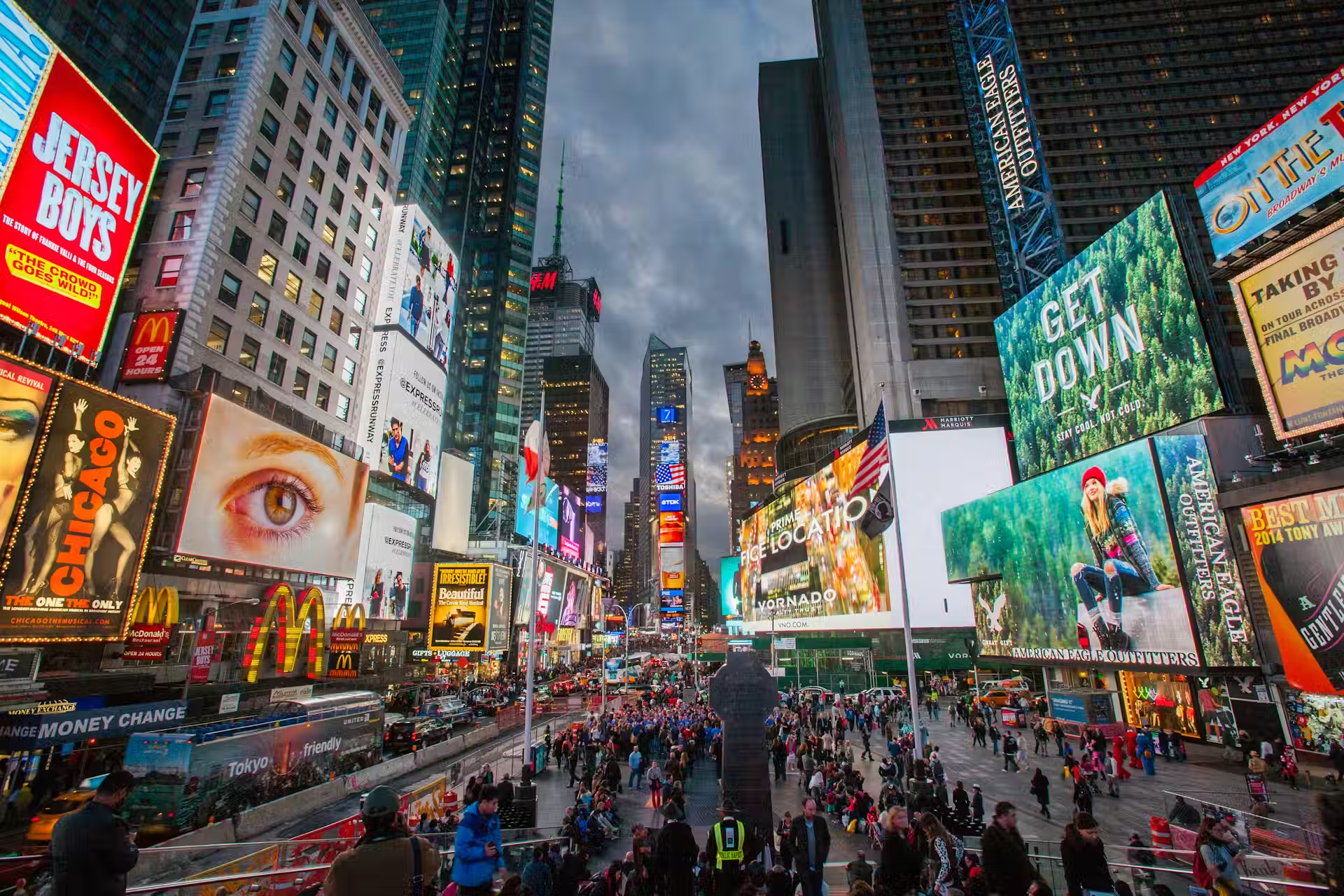
No, Wall Street and Times Square are not close neighbors; think of them as being at opposite ends of Manhattan's bustling core. Wall Street anchors the historical financial district in Lower Manhattan, while Times Square glows in Midtown, several miles north. The physical distance between these two iconic New York landmarks is typically between 4 to 6 miles (6 to 10 kilometers).
However, New York City’s excellent public transit system makes connecting them incredibly easy. You can hop on a subway and find yourself transitioning from the historic financial hub to the neon-lit spectacle of Times Square in as little as 12 to 16 minutes. Taxis or rideshares are also an option, usually taking about 10-12 minutes depending on traffic.
So, while not within walking distance, seeing both is entirely practical within a single day.
Who owns 93% of the stock market?
When you consider Wall Street as a symbol of economic might, it’s interesting to note the concentration of wealth it represents. While many people might feel like they're participating in the stock market, the reality is that ownership is heavily skewed. In the United States, approximately 93% of the stock market's total value is held by the wealthiest 10% of households.
This means that while a record 58% of U.S. households did own stocks in some form in 2023, often through retirement accounts or mutual funds, the vast majority of the market's value is concentrated among a smaller, more affluent segment of the population. The richest 1% alone, for example, command around 54% of public equity markets. It’s a powerful illustration of the financial disparities that exist beneath the iconic facade of Wall Street.
Is it worth visiting Wall Street?

For many, Wall Street absolutely merits a visit, especially if you appreciate American history, economic development, or impressive architecture. You’ll stand before the New York Stock Exchange, even if public entry isn't permitted, and walk the same ground where George Washington took his oath at Federal Hall. Capturing a photo with the Charging Bull is almost a rite of passage, and seeing the Fearless Girl statue adds a layer of modern symbolism. Trinity Church provides a stunning architectural and historical counterpoint to the surrounding modern financial giants.
However, set your expectations correctly. If you envision a frantic trading floor filled with shouting brokers, you might be underwhelmed. Electronic trading has shifted much of that energy indoors. Weekends are quieter, making them ideal for leisurely historical exploration, but weekdays offer a better sense of the district's active pulse. The area can be very crowded around popular photo spots, so prepare for company. Overall, it feels less like a vibrant financial spectacle and more like an open-air museum.
What else can I do in New York?
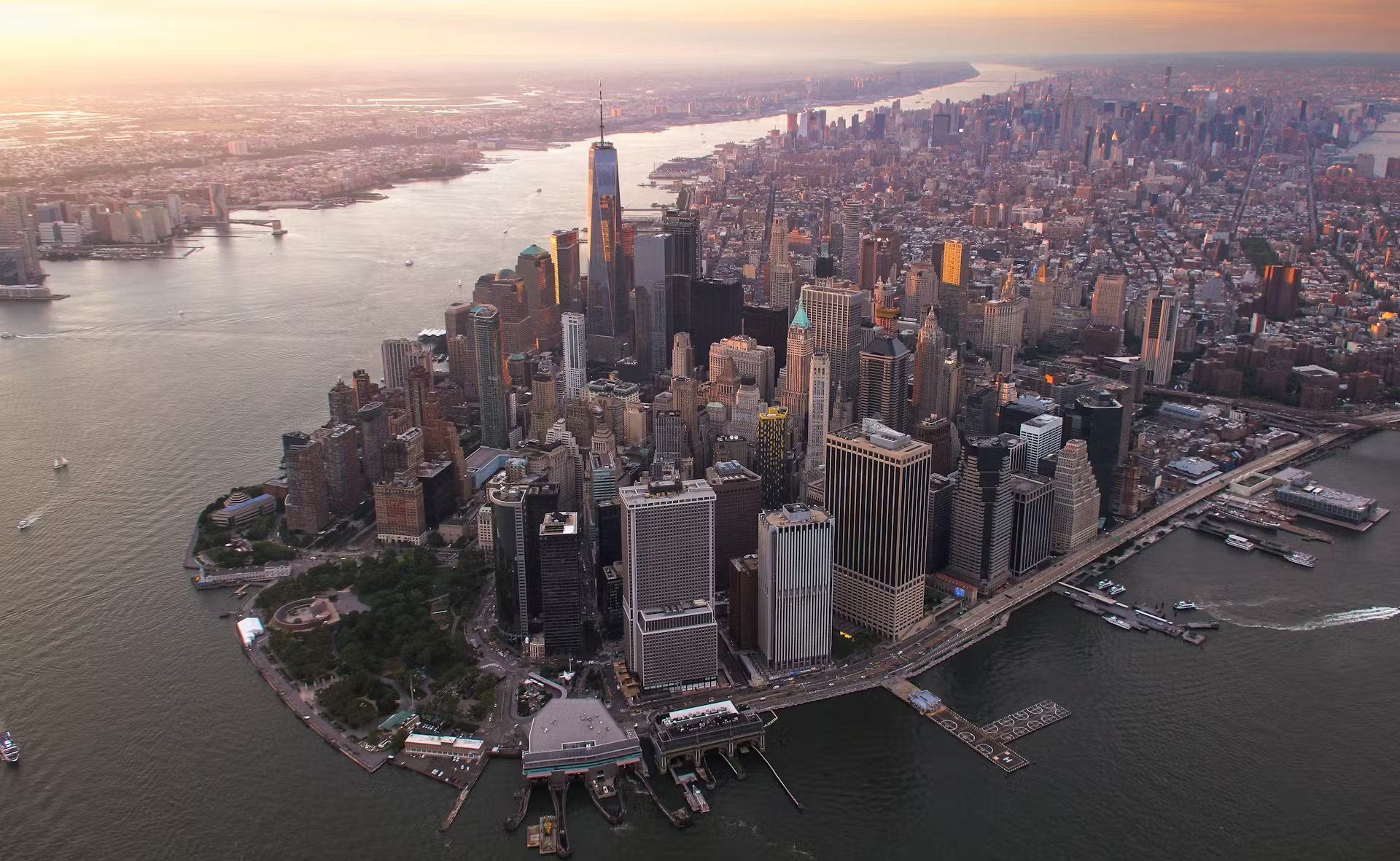
Beyond Wall Street itself, the immediate Lower Manhattan area is packed with compelling experiences that extend your journey through history and urban beauty. Here are a few must-sees within easy reach:
- Federal Hall National Memorial: Directly opposite the New York Stock Exchange, step inside this historical gem where George Washington was inaugurated.
- Charging Bull and Fearless Girl: Snap your photos with these powerful bronze sculptures. The Fearless Girl now stands proudly in front of the New York Stock Exchange.
- 9/11 Memorial & Museum and One World Observatory: Pay your respects at the serene memorial pools, explore the poignant museum, and then ascend to the One World Observatory for breathtaking, expansive city views.
- Stone Street & Fraunces Tavern: Wander down Stone Street, one of Manhattan's oldest paved streets, offering a European village feel with excellent dining. Nearby, Fraunces Tavern, a historic pub, provides a glimpse into colonial life where George Washington once gathered with his officers.
- Elevated Acre: Discover this hidden rooftop park, a peaceful urban oasis with grass and a boardwalk, offering unique vantage points of the East River and Brooklyn.
- Battery Park and Staten Island Ferry: Stroll through Battery Park at Manhattan's southernmost tip for stunning views of the Statue of Liberty. For an even closer look and spectacular skyline panoramas, take the free Staten Island Ferry. It’s an unbeatable experience.















.jpg)


.jpg)
.jpg)



.jpg)


















.avif)


